 by
by Rafflesia is the largest flower in the world, and probably the craziest one too. It is a plant that has no stem, no leaves, no chlorophyll, and no true roots. In the old days, some Sabahan people believed rafflesia was an ominous flower and stayed away from it. Today, it is a major tourist magnet. Everyone wishes to have one growing on their land, as many travelers are willing to pay just to see this corpse flower.
Kabayau Forest
At an elevation of 750 metres above sea level, the Kabayau Forest of Tamparuli is about an hour’s drive from Kota Kinabalu (KK). It is the closest place to KK where you can see the rafflesia flower. However, catching a bloom is a rare treat that requires good timing and luck. A rafflesia bud takes 15 months to bloom, only to completely wither within a single week, meaning its bloom represents a brief 1.6% of its total lifespan. The moment I received news of a bloom, I rushed to Tamparuli over the weekend to see it.
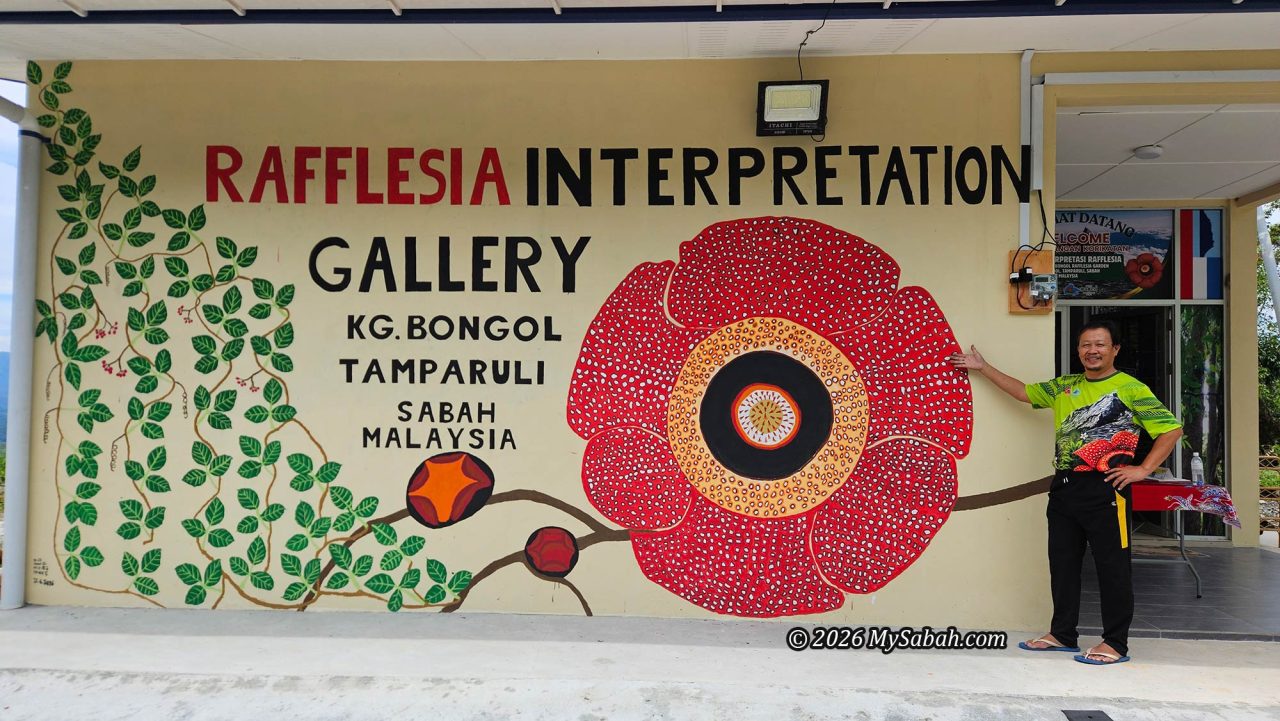
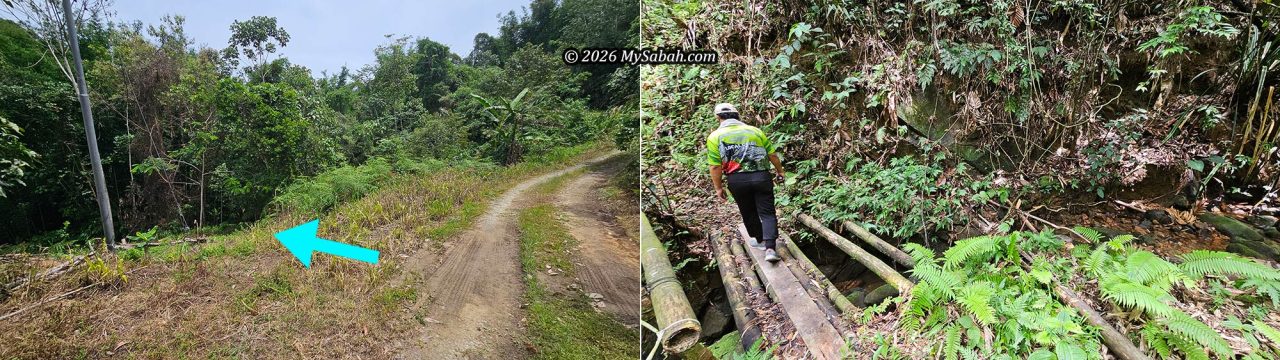
Mt Kinabalu Bongol Rafflesia Garden is the starting point of the rafflesia tour. After a briefing at the gallery by Dr. Julius, a renowned botanist and the caretaker, he took me to the edge of Kabayau forest by a two-minute drive in a 4×4. We got off our car and walked about 12 minutes on a descending jungle trail, as the flower grows on a slope. Kabayau forest is a lowland mixed dipterocarp forest located on state-owned land in Kampung Bongol village.
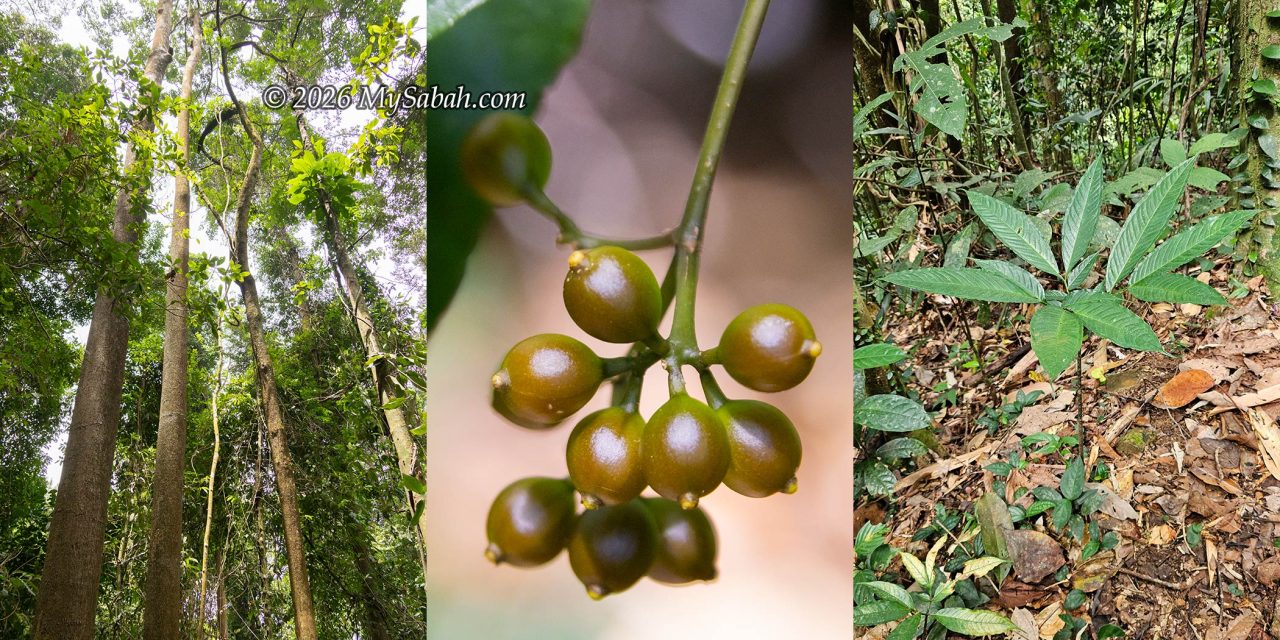
Similar to the nearby Crocker Range Park, Kabayau forest contains a diversity of flowering and fruiting plants. It is estimated that an acre contains about 300 plant species. While we walked along the trail, Dr. Julius passionately introduced many special flora, such as herbs that soothe toothaches, towering Seraya putih, wild tuhau, ginger, kantan, and other local fruits and herbs. It felt like window-shopping in a supermarket with an expert guide.
Then he stopped at a tree vine, which is the host of the rafflesia. Rafflesia is a parasitic flower, and this ordinary-looking vine is a Tetrastigma vine or liana that acts like a food pipe feeding the rafflesia water and nutrients. It is amazing that an ugly liana can produce such a magnificent flower.
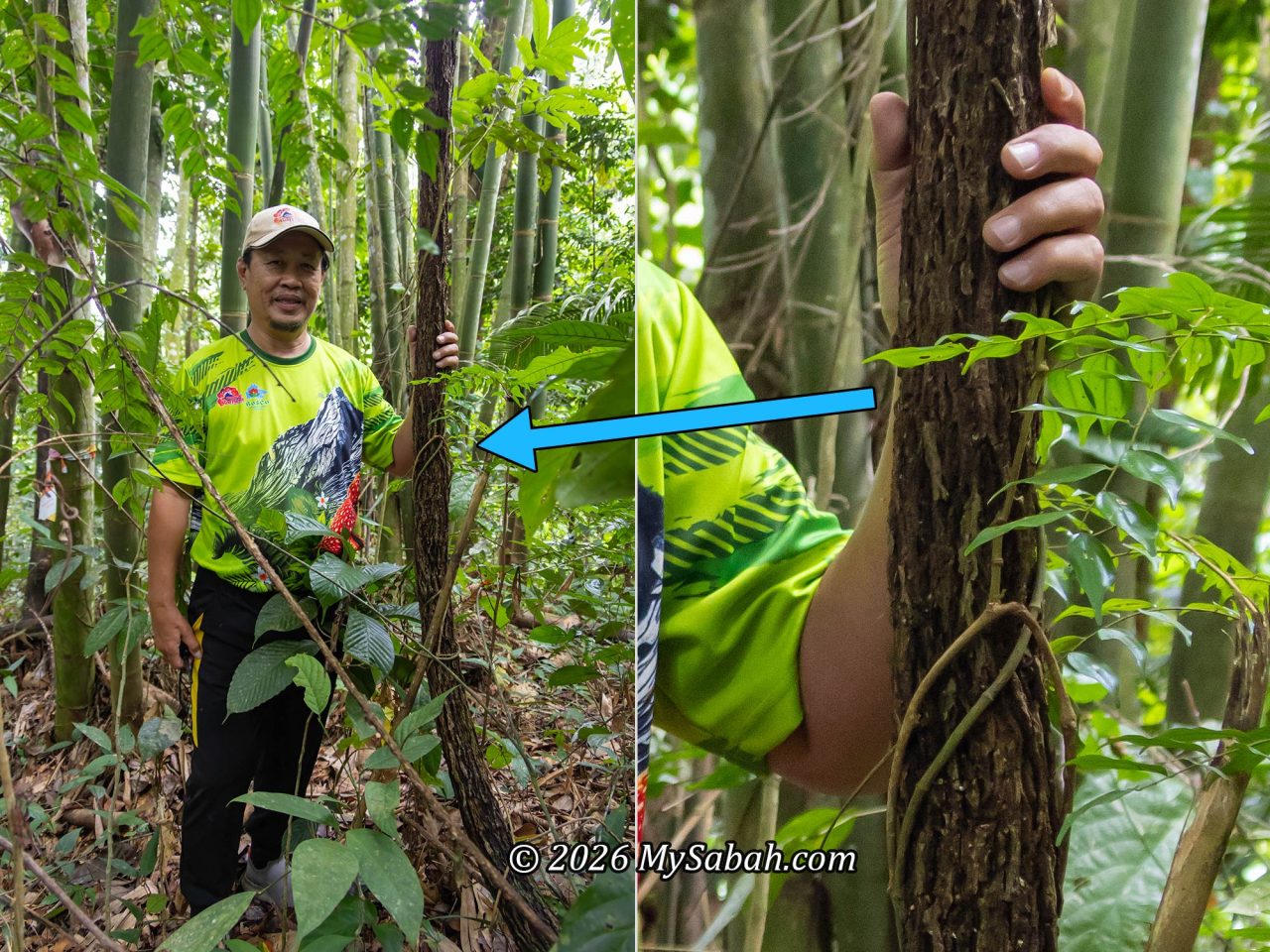
In Sabah, four Tetrastigma species have been found so far: Tetrastigma leucostaphylum, Tetrastigma diepenhorstii, Tetrastigma rafflesiae, and Tetrastigma papillosum. Rafflesia keithii lives in the first three vine species. Beyond protecting the environment, pest control is also important. This site once had nearly ten buds and everyone was thrilled, until all of them were killed by wasps that drilled holes into them.

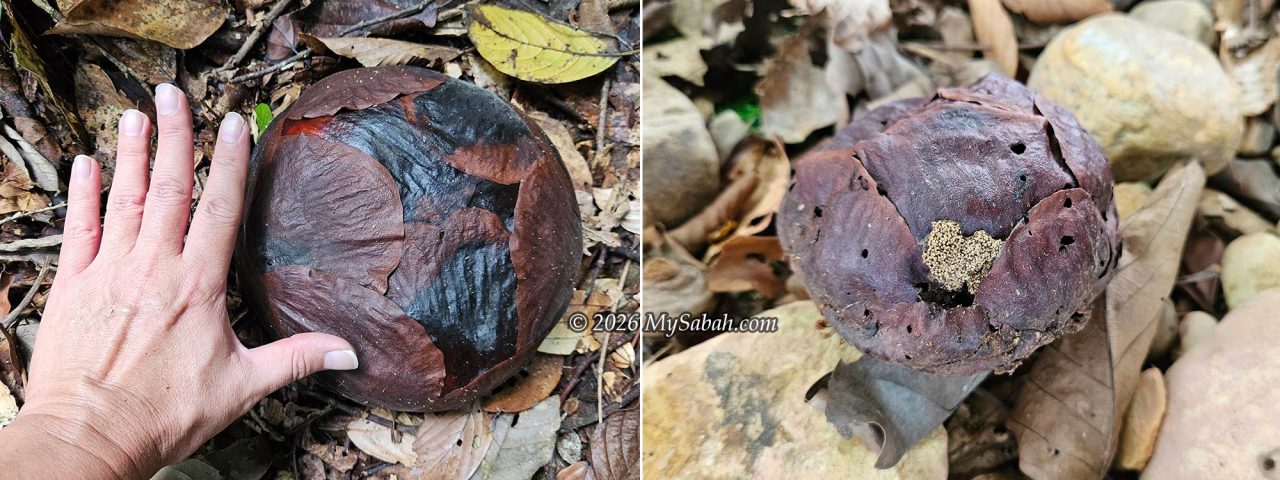
The Biggest Flower?
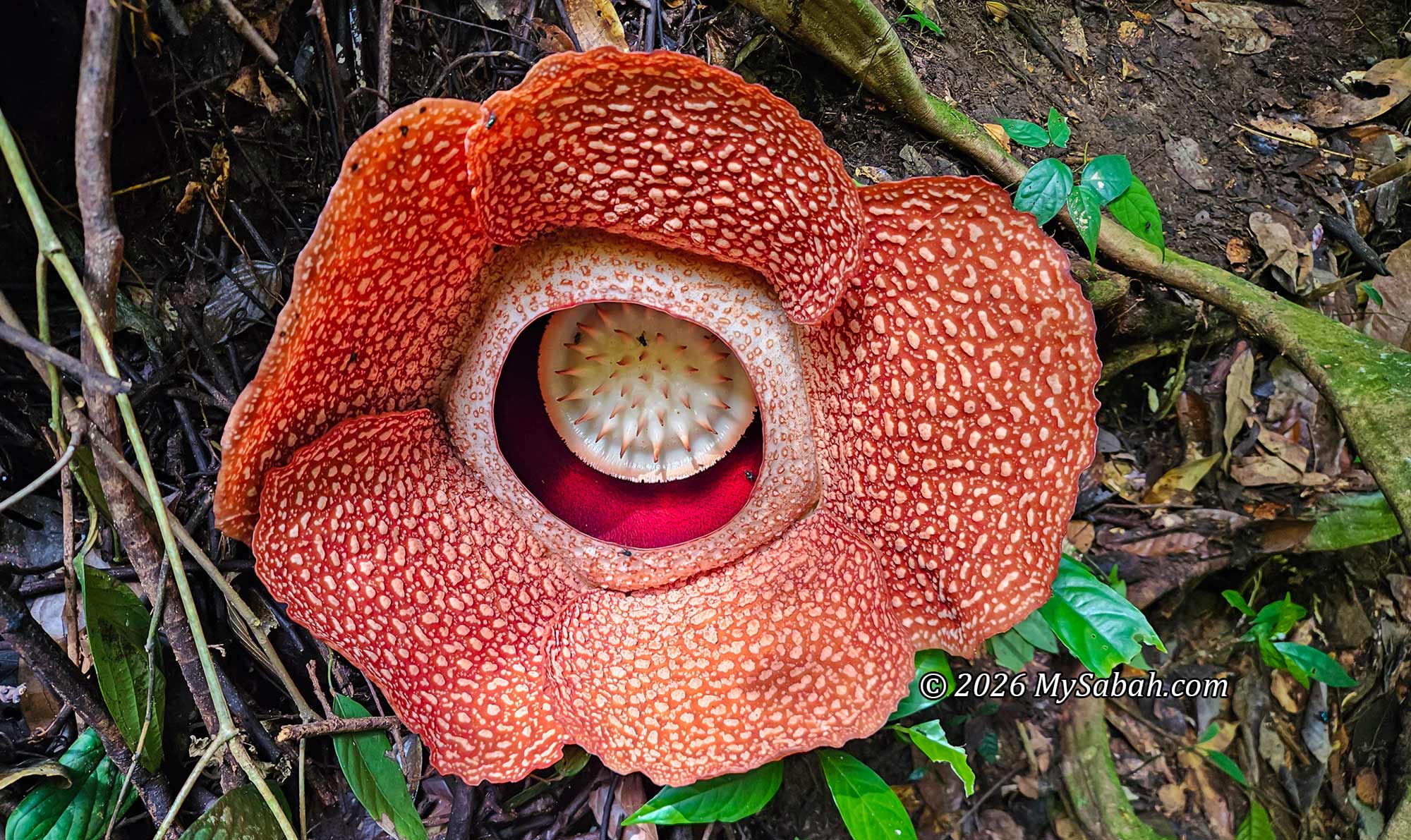
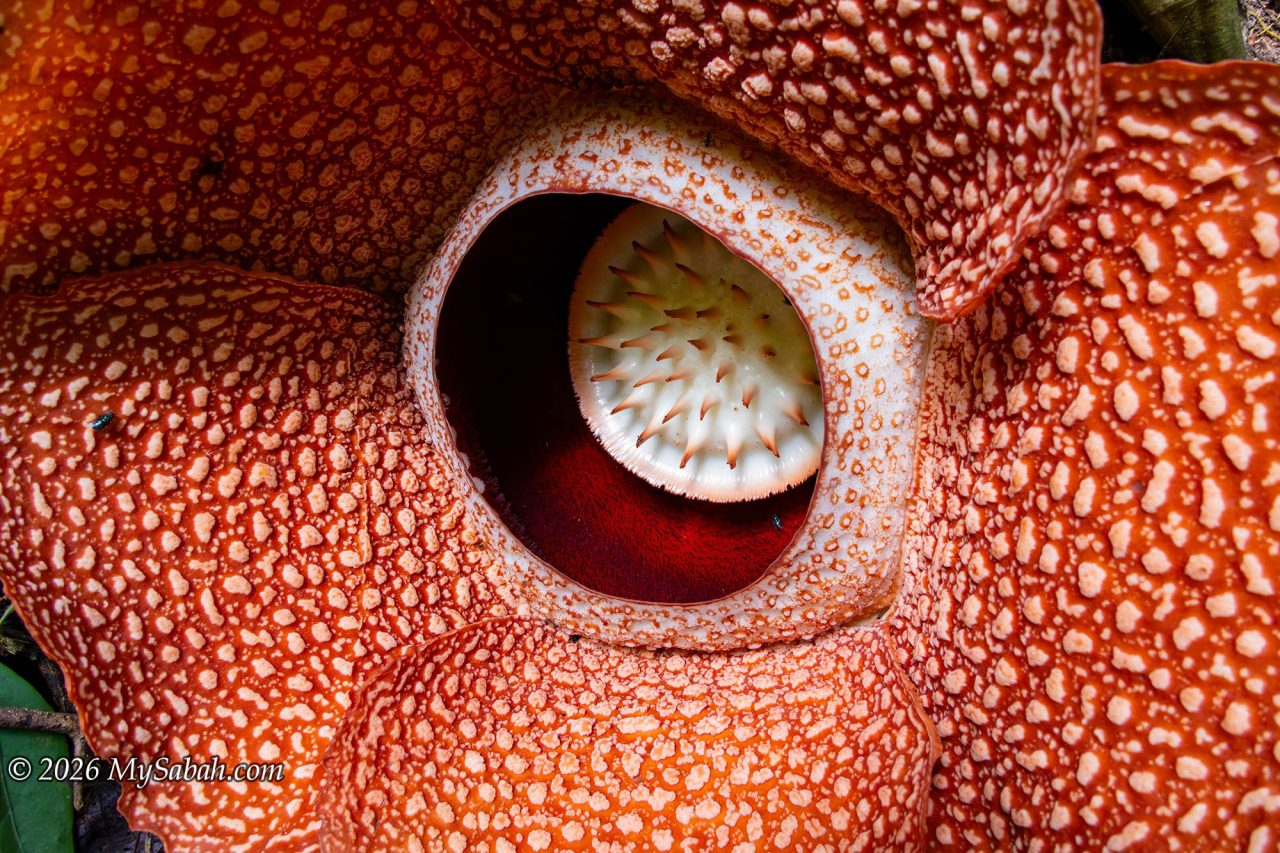
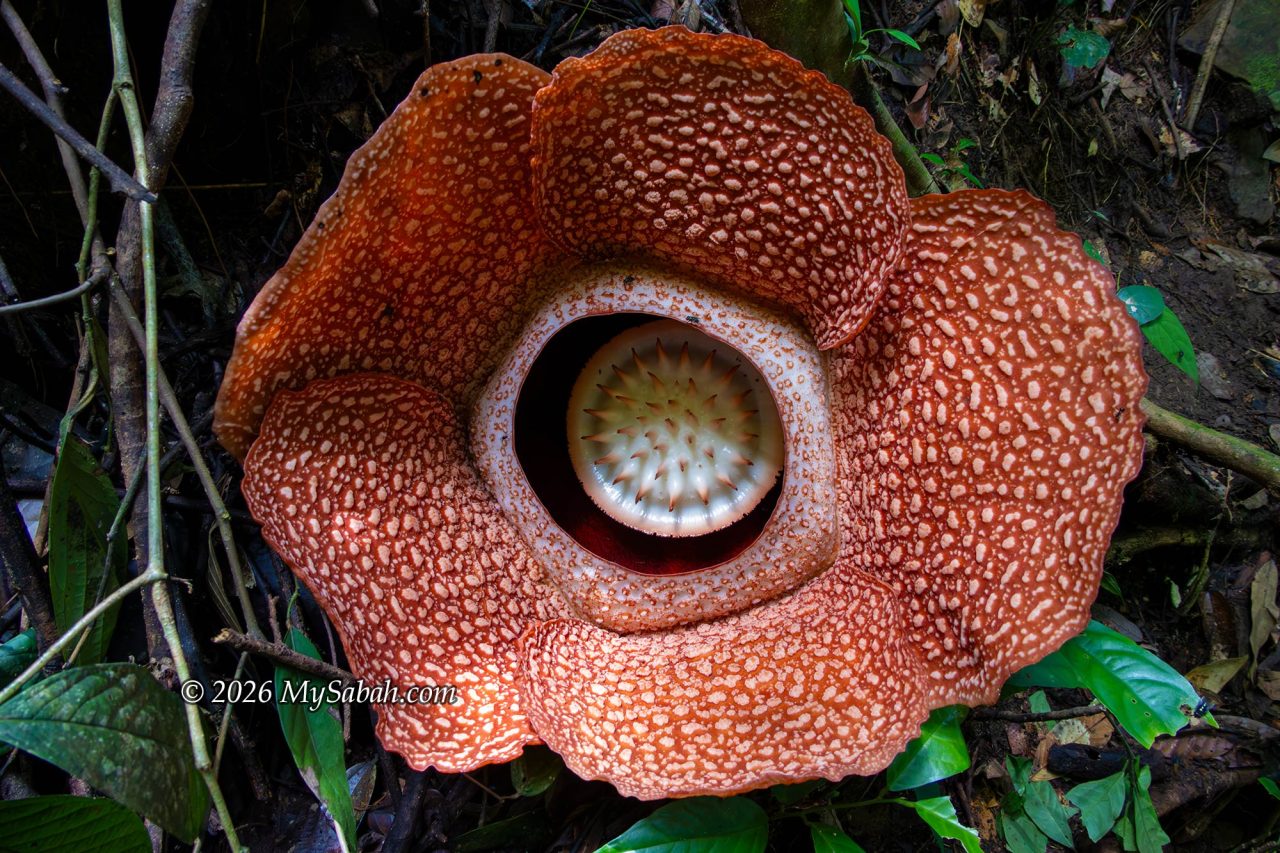
Finally, we reached the rafflesia flower on its second day of blooming, and its petals had not fully extended yet. It was a Rafflesia keithii, the largest rafflesia species in Sabah, which is endemic to Sabah. It is named after Henry George Keith, the former Forest Conservator of North Borneo, and husband of Agnes Keith, the American author of the book Land Below the Wind that made Sabah famous.
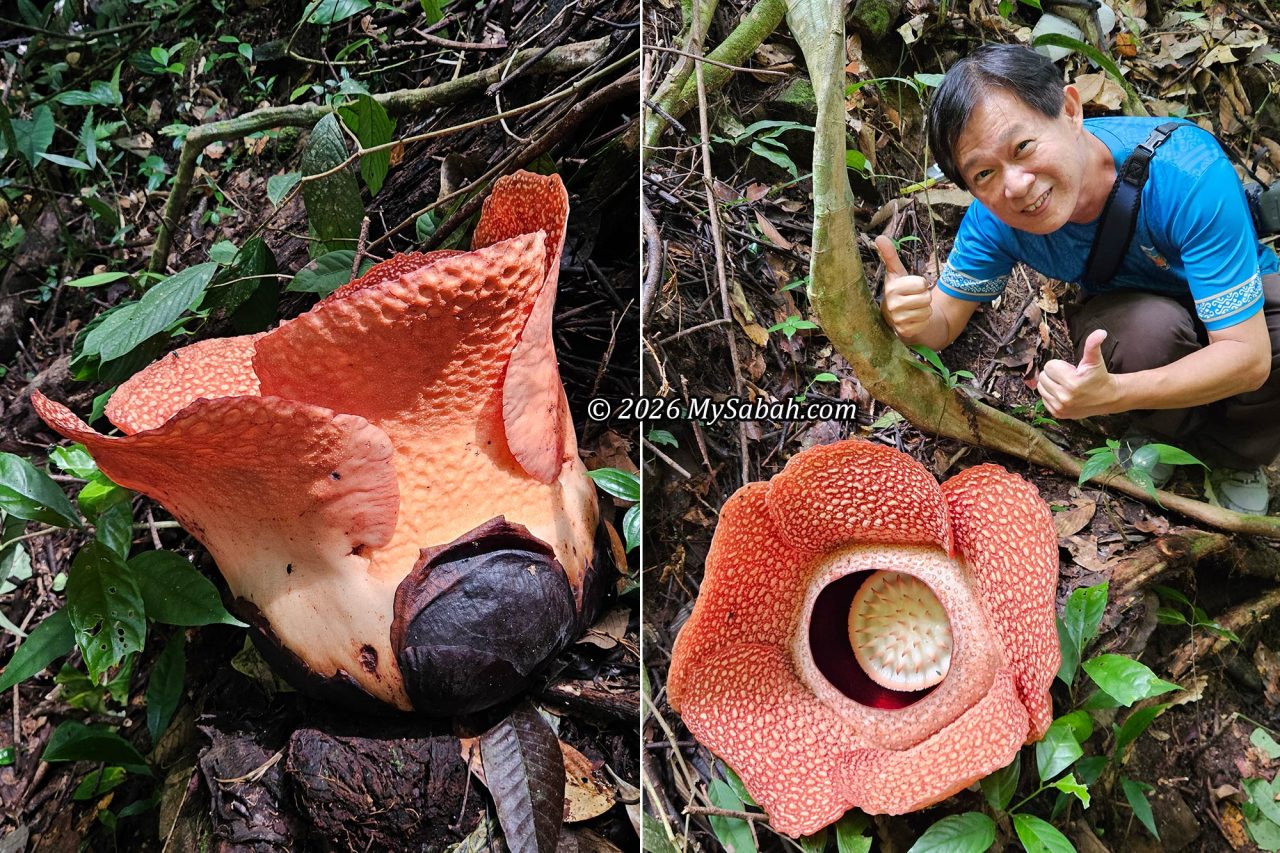
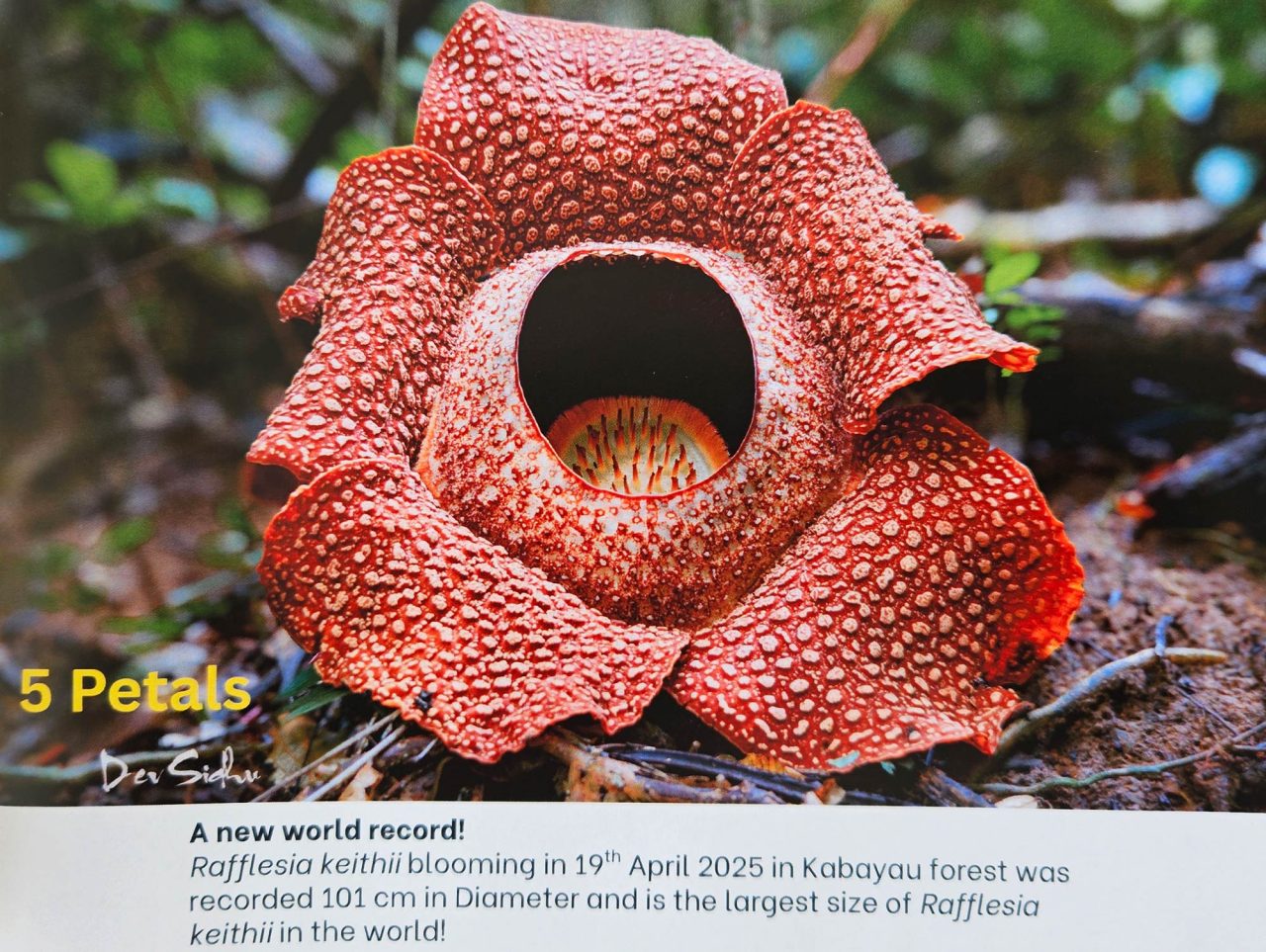
I have seen Rafflesia keithii a couple of times in Poring and Ranau, but the rafflesia flowers here seem to be larger, probably because they grow on fertile soils of a natural forest habitat. The largest Rafflesia keithii in the world was recorded at this site on 19 April 2025, with a diameter of 101 centimeters. This flower needs a lot of water, and the soil on this hill is fertile and frequented by dense fog and rain.
The rafflesia that I saw was about 88 centimeters in diameter. “It’s a female flower so it’s smaller,” Dr. Julius said. “When a male flower blooms, I can smell its odor from quite a distance away. Male flowers are also bigger with brighter colors.” He was right; this female flower was not overly smelly, and I had to get a bit closer to sense the dead-rat-like odor. Still, the smell attracted a lot of buzzing bluebottle flies, which are the main pollinators of rafflesia.
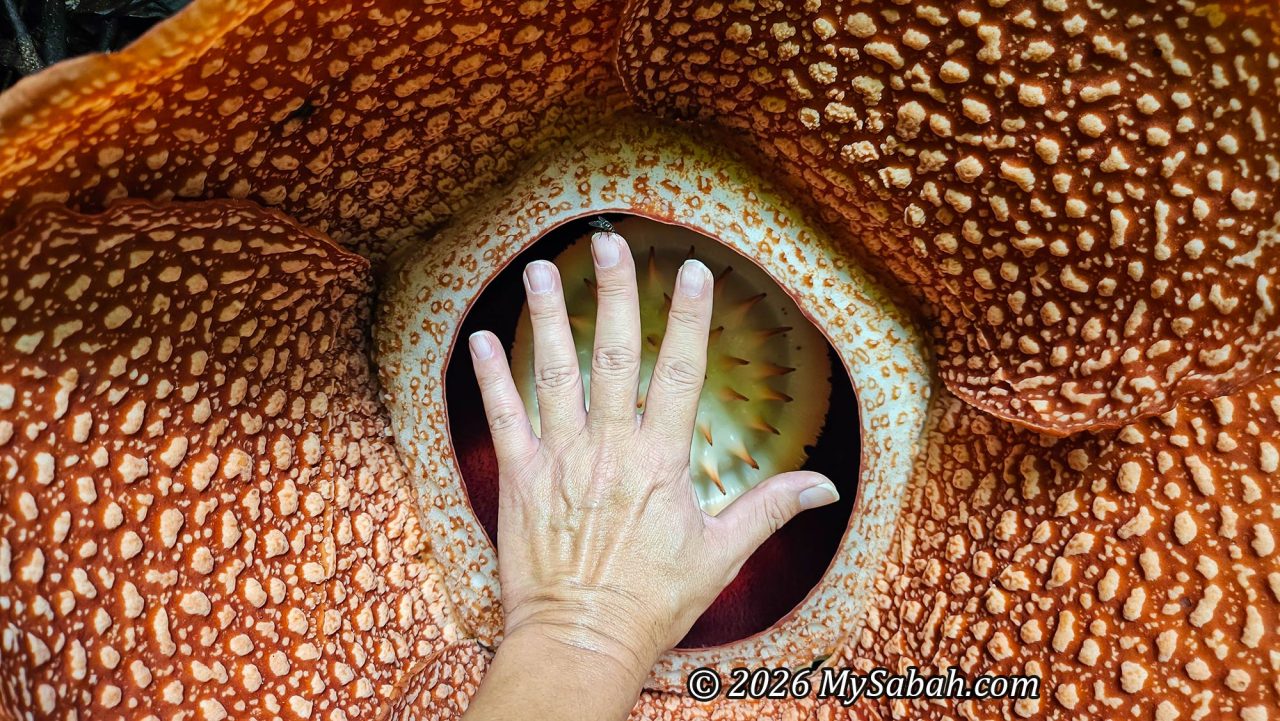
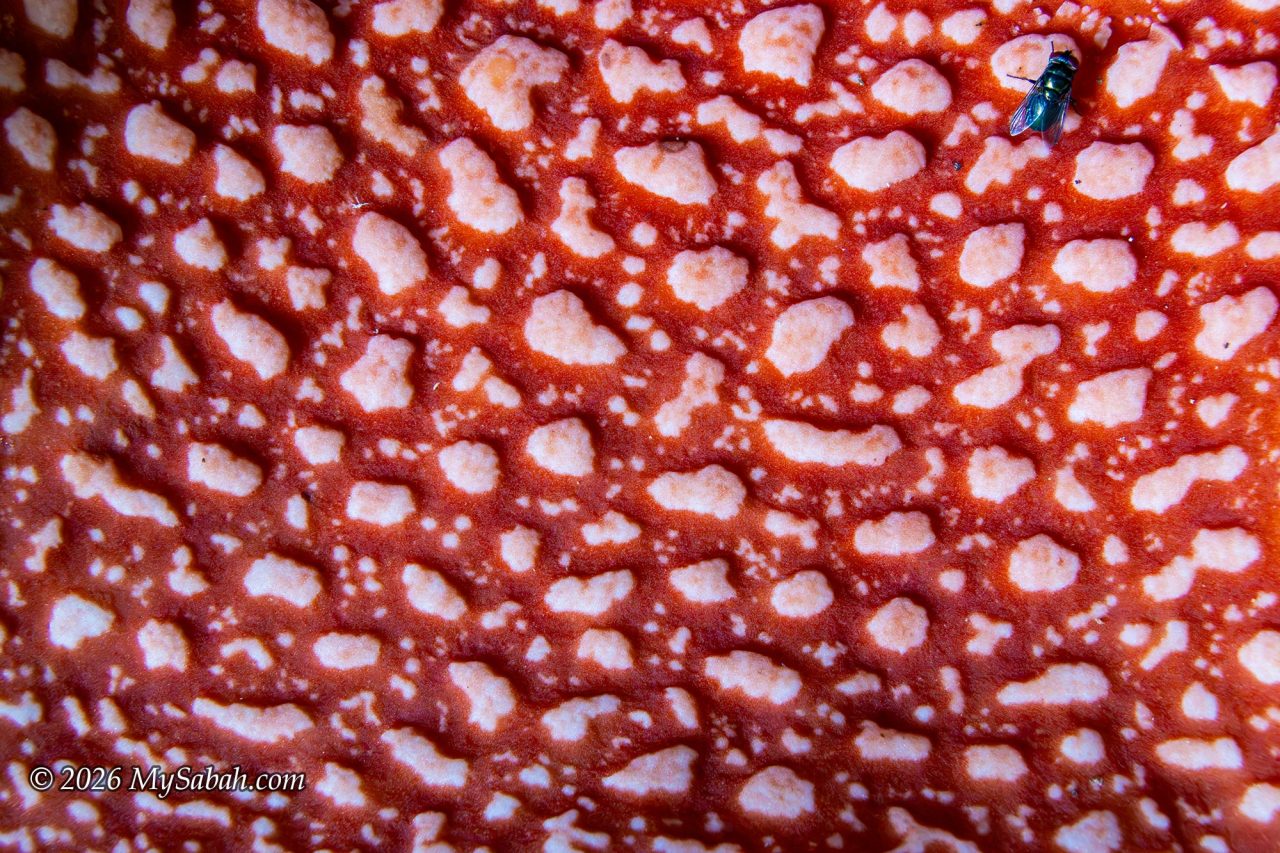
Female flowers are smaller but rarer, with a 20% or lower chance that a bud is female. Dr. Julius can predict the sex based on the shape and size of the bud, though he is not 100% sure until it blooms, which reminds me of a gender reveal party. Growing out of a vine with no leaves and no stem, the rafflesia looks so strange that it almost looks fake. The raised, lighter-colored warts mimic the look of a rotting carcass. It is no accident that rafflesia resembles decaying flesh, as it really wants to look and smell like a carcass to attract flies.
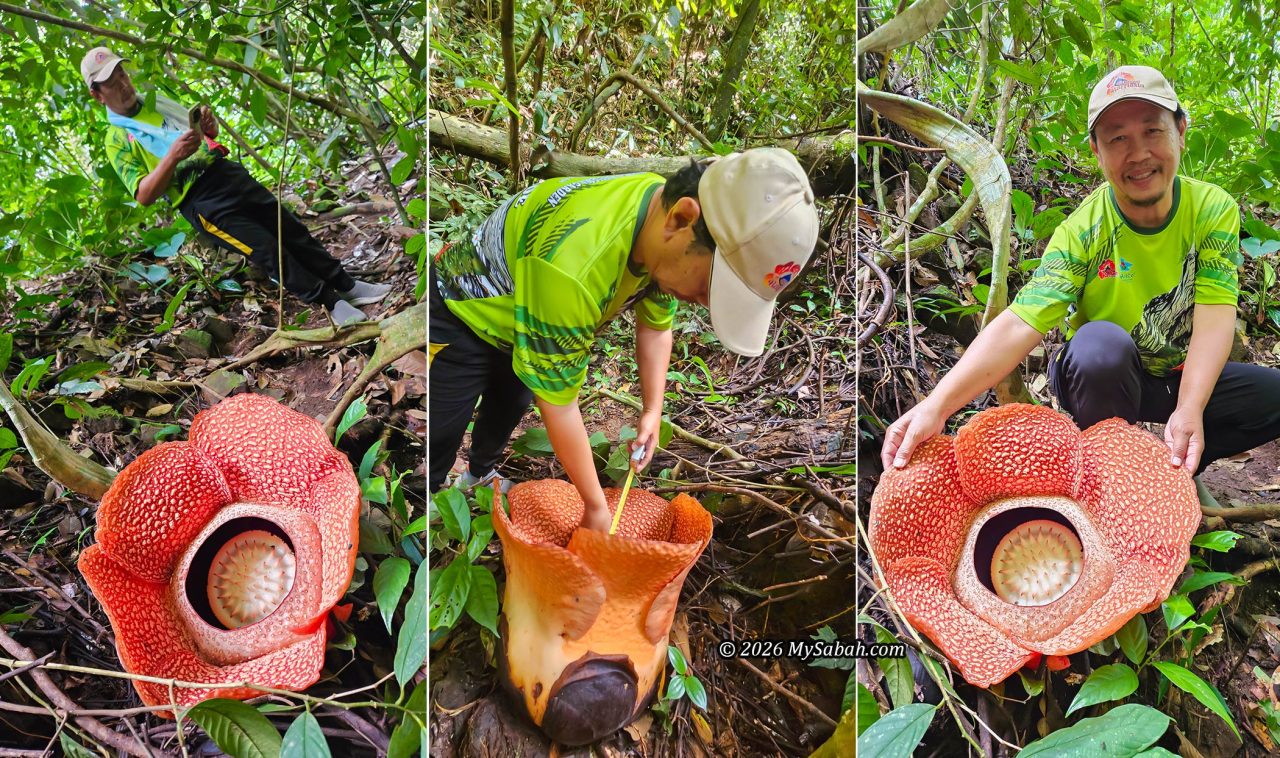
The best time to see the flower is during the first four days of its bloom. Day three is peak, when its petals are fully open and extended. On day four, the color turns darker, and from day six onward, it shows clear signs of withering.
The Rafflesia Gallery
Launched on 27 June 2026, Mt Kinabalu Bongol Rafflesia Garden’s Interpretation Gallery is Malaysia’s first community rafflesia interpretation gallery. On the walls, there are great photographs and information about the rafflesia, as well as the flora and fauna of Kabayau Forest.
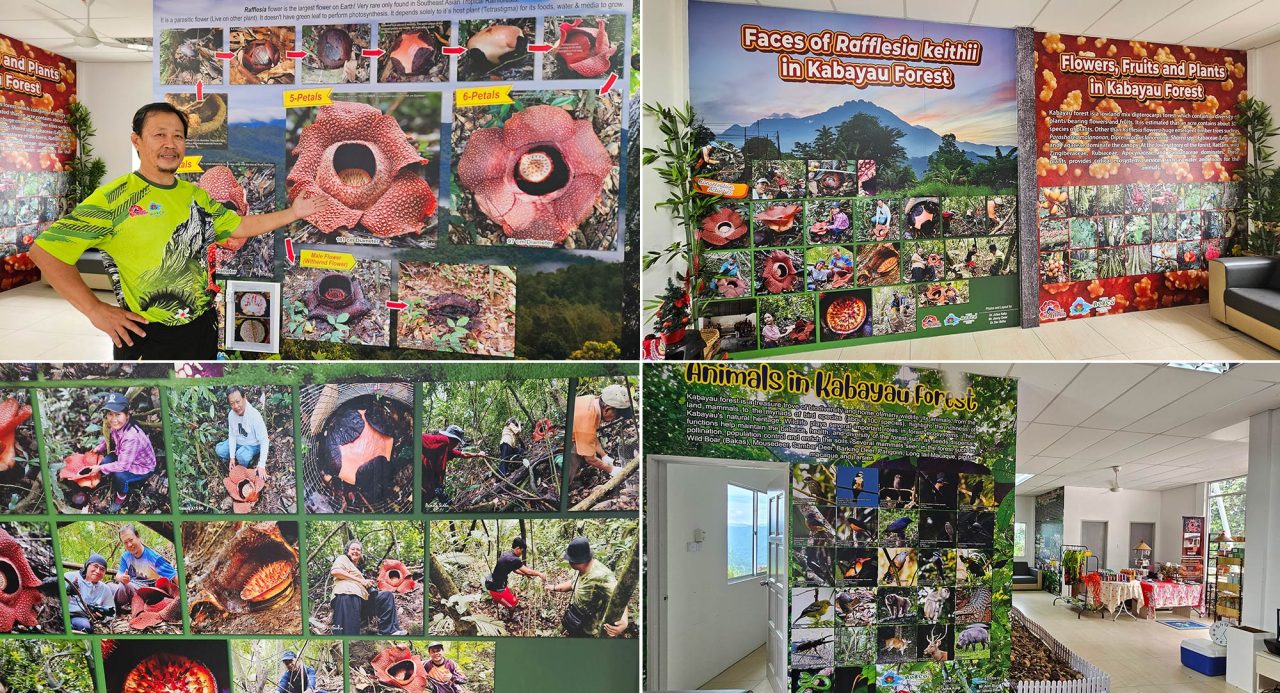
One of the stories on the wall caught my attention:
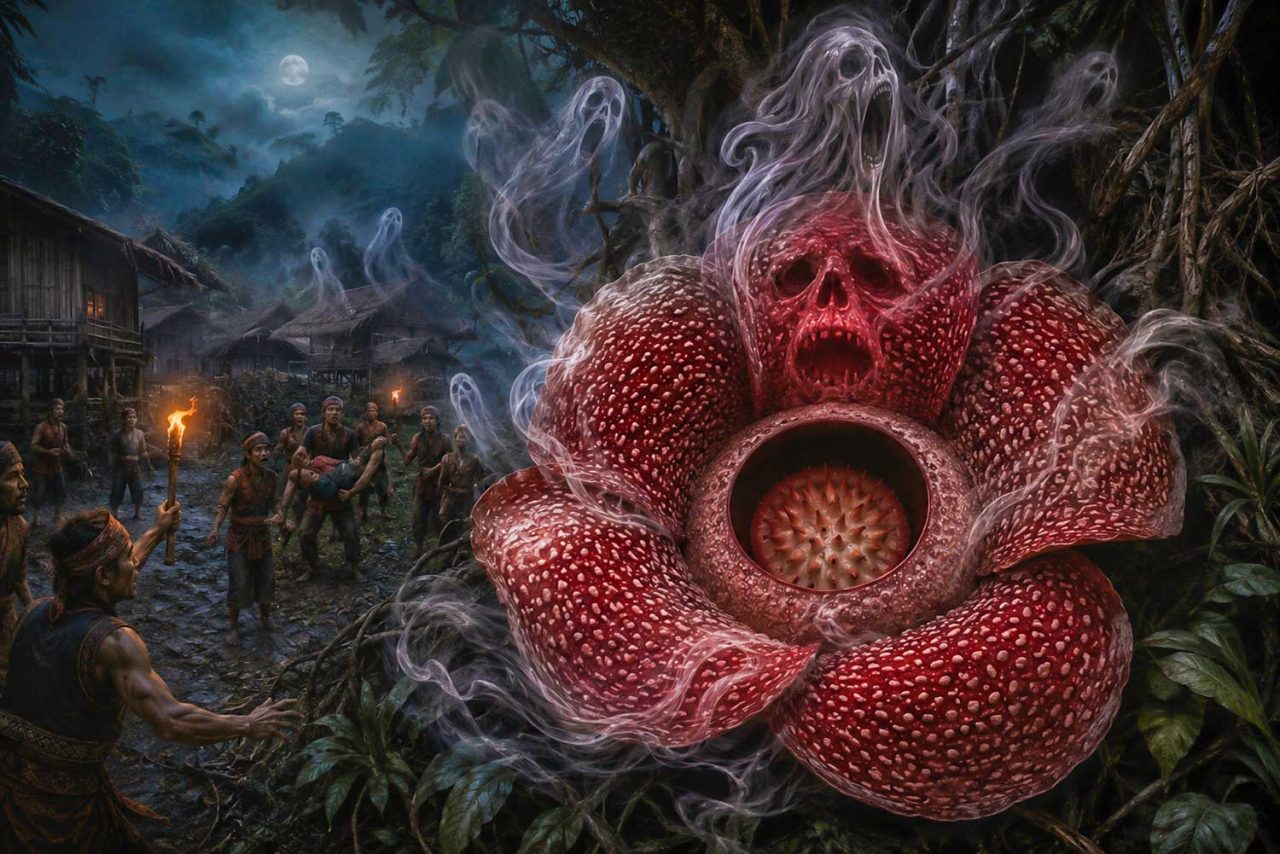
“The Rafflesia flower was first discovered inside the Kabayau forest, Kg. Bongol, Tamparuli by local villagers in the 1950s. They named it ‘Raat Sukat’ which means flower with smelly odor. The flower was red, so big and smelly that it was feared by the villagers then, as they believed it was a ‘Wusak Rogon Gayo’ or very big bad ghost flower that brings them bad luck. Because they observed that every time the flower was in full bloom, someone in their village died. Meaning this flower was related to dead people.”
In contrast, people in Peninsular Malaysia historically used Rafflesia as a traditional postpartum medicine.
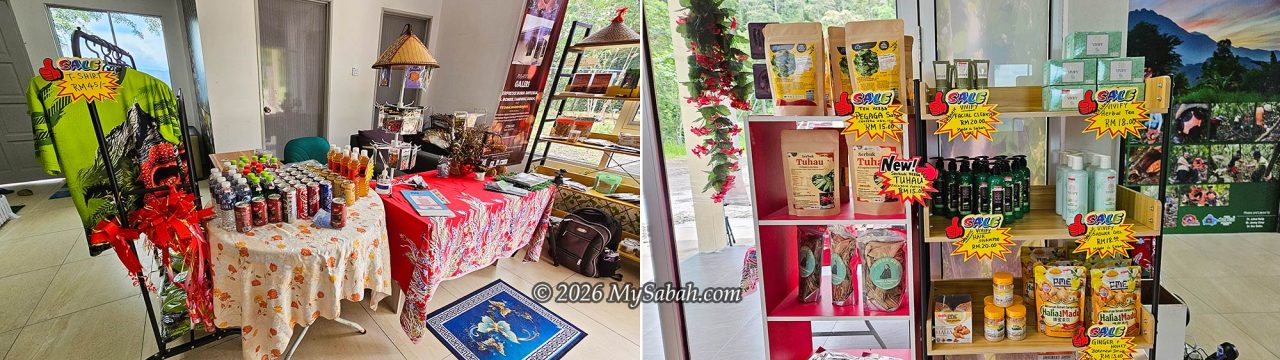
Dr. Julius Kulip previously worked at at Forest Research Centre, Sabah Forestry Department as a Forest Botanist and Ethnobotanist for 22 years since 1988. Then he joined UMS in 2011 as Senior Lecturer at the Institute for Tropical Biology & Conservation for 12 years. After he retired in 2022, his company (Botanicals Sabah Sdn. Bhd.) began collaborating with the community to develop the rafflesia site. It is a success story of conservation and community-based tourism. At present, the site is managed by Koperasi Bongol Rafflesia Tamparuli Berhad, a community-based corporation. The once unlucky land of Kampung Bongol has become one of the most valuable assets of the village today.
Fees and Activities
To see the rafflesia flower, you pay an entrance fee (RM20 for Malaysians, RM30 for non-Malaysians). Note: Minimum 4 people required. For fewer than 4, either wait for other tourists to join or pay the difference to make up 4 pax. There are discounts for children and senior citizens (65+). You can follow their Facebook page for the latest blooming information. You may also check out the growing buds, or visit their rafflesia gallery, which is open daily from 8:30 AM to 5:00 PM.
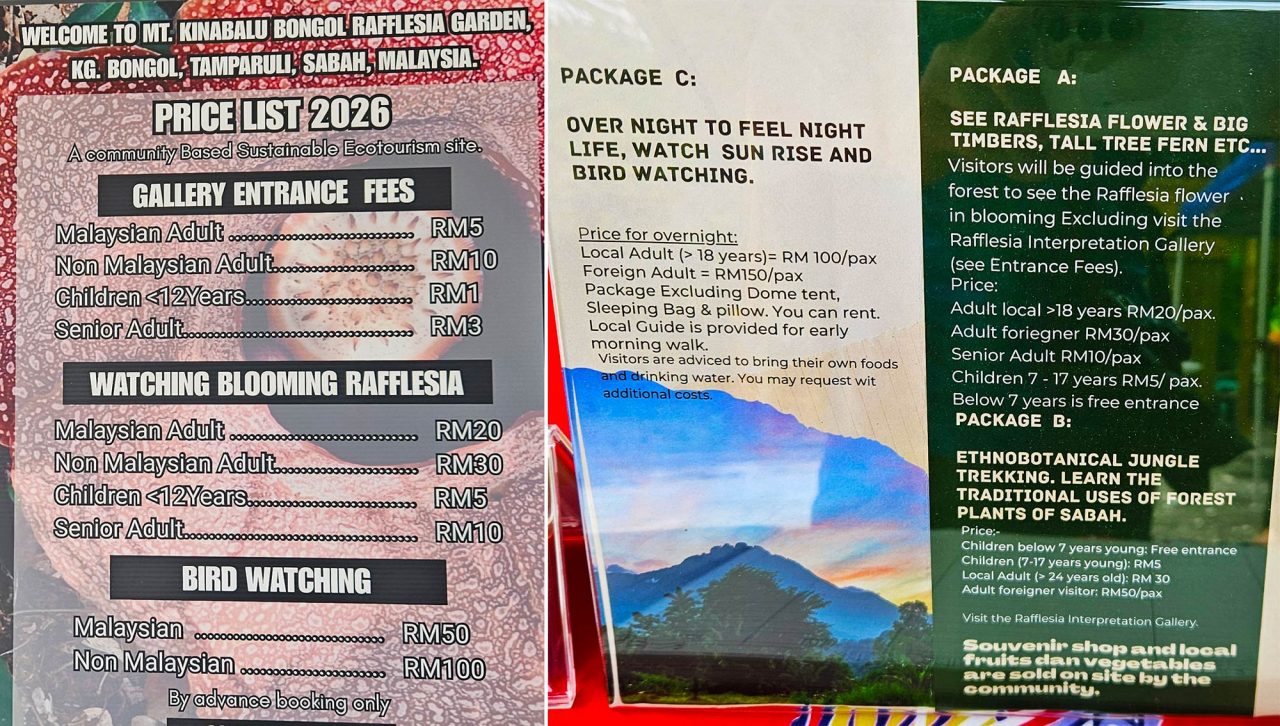
Please note that Kabayau Forest is a two-minute drive from the gallery along a gravel road, requiring a 4×4. You can pay a RM10 transport fee per car (can be shared by four passengers) to have them drive you there, or you can walk if you do not mind the distance. Make sure to wear good hiking shoes, as the trail can be slippery after rain. FYI, you can rent a pair of rubber waterproof hiking shoes (Adidas Kampung) from them for RM2.
Kabayau Forest is a real rainforest, so you can do other nature activities or use it as an outdoor classroom for educational tours. About 100 bird species live here, so birdwatching is recommended. You can find Bornean endemic birds such as the Bold-striped Tit-Babbler, White-fronted Falconet, and Banded Kingfisher. Wild boar, mouse deer, sambar deer, barking deer, pangolins, long-tailed macaques, pig-tailed macaques, and tarsiers also live in the forest.
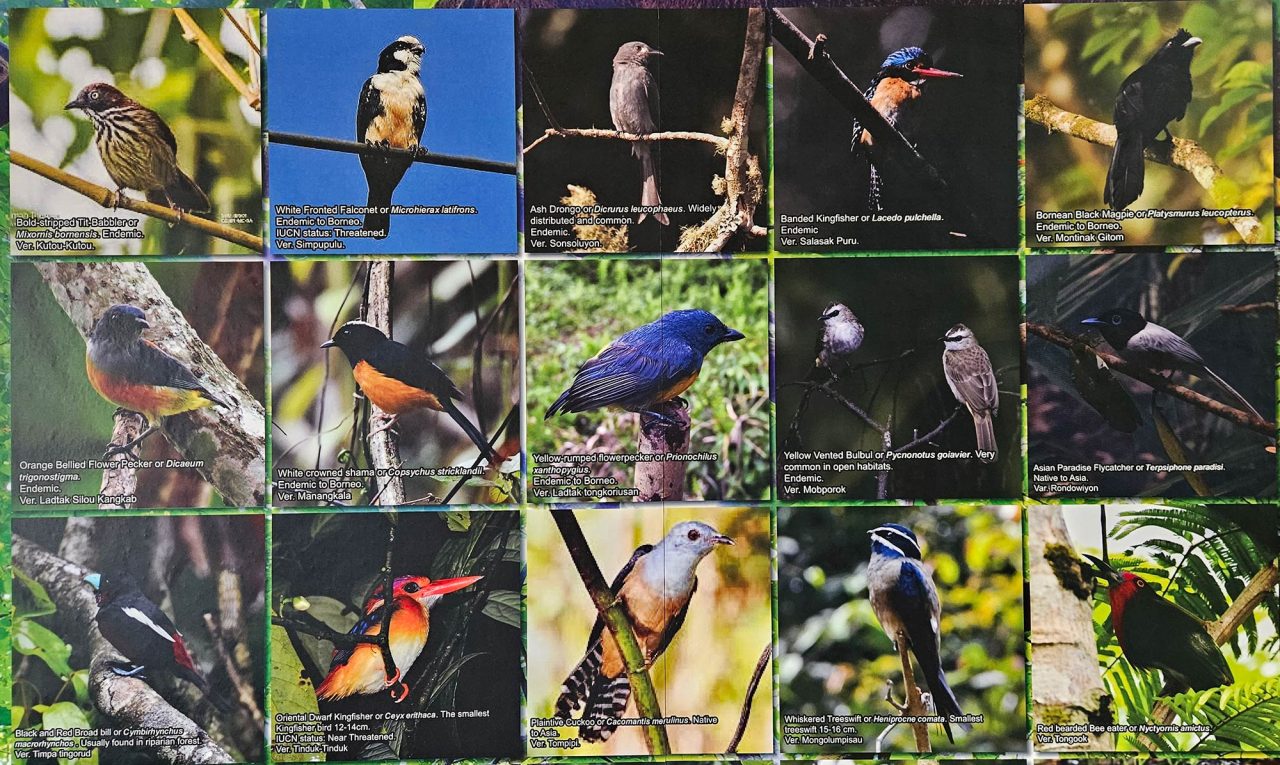
Camping is allowed, and there is a spot with a clear view of Mount Kinabalu. The daytime temperature is about 25°C (77°F), while at night it can drop to 16°C (61°F), so bring warm clothing. The area also has high insect diversity, making it a great site for entomology tours and macro photography.
Location and Contact
Mt Kinabalu Bongol Rafflesia Garden (and gallery) is open from 8:30 AM to 5:00 PM every day. Walk-ins are welcome. The entrance sits right next to the busy Tamparuli-Kundasang Road (see Location Map), where thousands of tourists pass by everyday without knowing there is a rafflesia site. The location is becoming increasingly well known, attracting visitors from Japan, China, Korea, Singapore, India, USA, Canada, Australia, and Turkey.
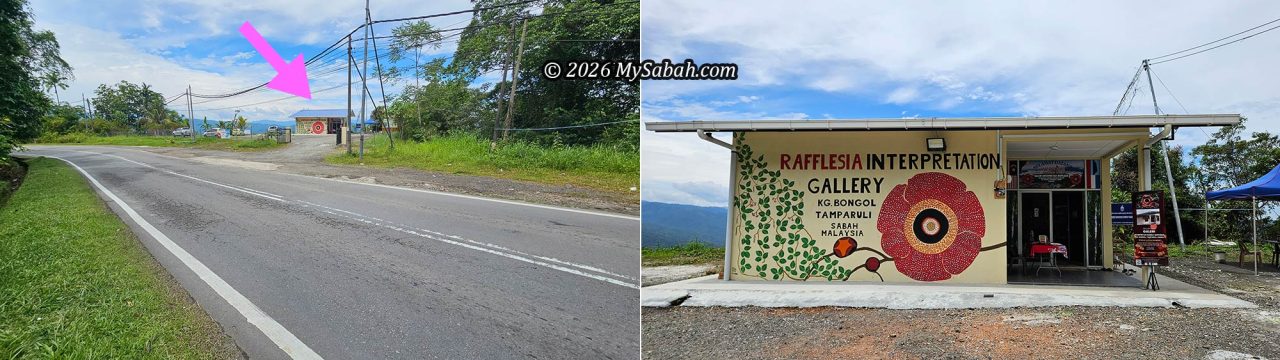
You can follow their social media to stay updated on the blooming:
Facebook: Mt Kinabalu Bongol Rafflesia Garden
Contact (Whatsapp/Phone):
Dr. Julius Kulip: +60 13-8016374
Mr. Jaimond Lambun: +60 13-8978732
Photos taken in Tamparuli, Sabah, Malaysia Borneo