 by
“Why did they do this?” I asked myself as I stood on a 39-metre-high limestone hill with more than 100 ancient coffins beneath my feet. I’m talking about Agop Batu Tulug, a unique cave burial site in Sabah where Borneo’s heaviest farewell took place.
Ancient Burial of Borneo
Imagine someone died. Their body was placed inside a wooden coffin, known locally as a lungun, carved out of a single massive tree trunk of Borneo ironwood, or Belian (Eusideroxylon zwageri). Belian wood is so dense and heavy that it can sink in water. The villagers would transport the coffin, which is extremely heavy, by boat along the river. They would then land near this steep hill, carry the coffin, and climb the equivalent of about 12 storeys to reach the cave. This is a backbreaking manual labour.
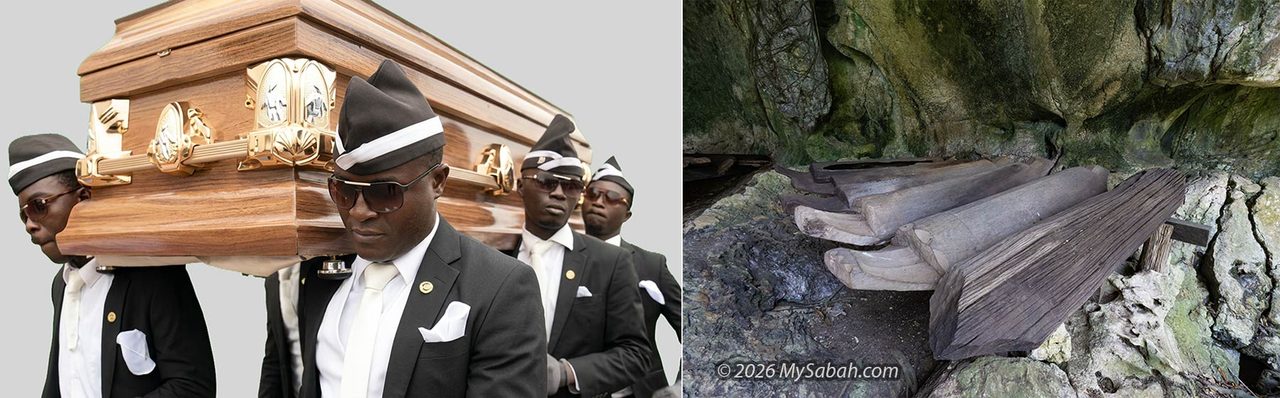
Dropping a coffin was taboo. If a coffin fell, it could not be carried up to the cave or taken back home. Instead, it had to be buried immediately at the foot of the stairs. If everything went well, the coffin would be placed inside a cave.
The people believed that after death, a person would continue living in another world. What they were doing was essentially moving the deceased, along with their personal belongings serving as burial items, in a coffin (their apartment) to a new home (the afterlife). This symbolised a break between the living and the dead, ensuring that the deceased would not return to disturb the living.
Cave Burial Sites of Sabah
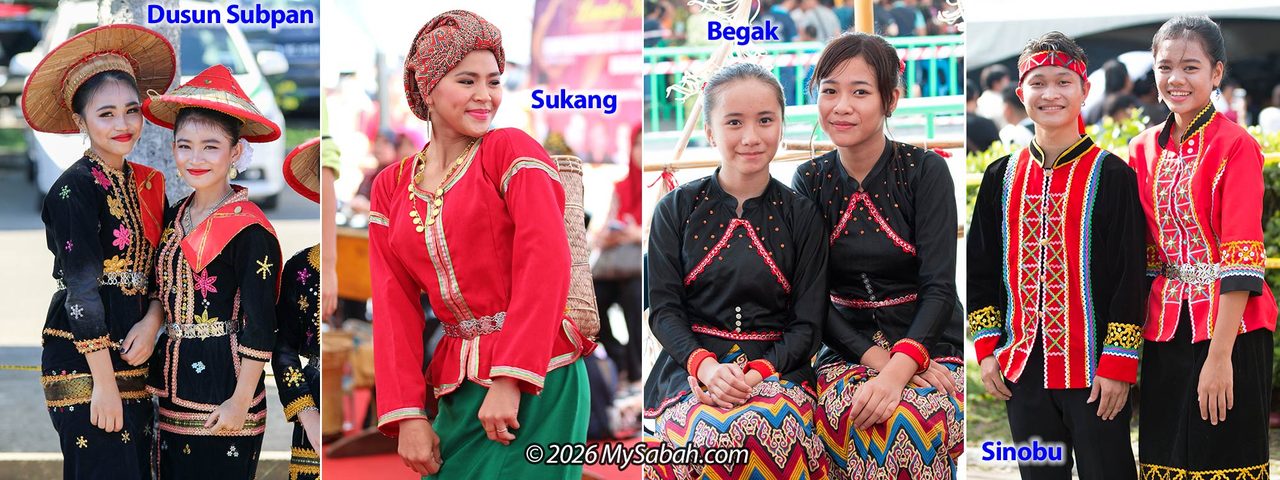
At least 13 wooden coffin burial sites like this have been found along the east coast of Sabah. Most are situated along the Kinabatangan River, while others are located in Lahad Datu, Kunak, and Semporna. Many indigenous communities in Sabah, including the Orang Sungai, Dusun Subpan, and Murut Tangala have practised this burial tradition for nearly 1,000 years. A small number of communities still practise it today.
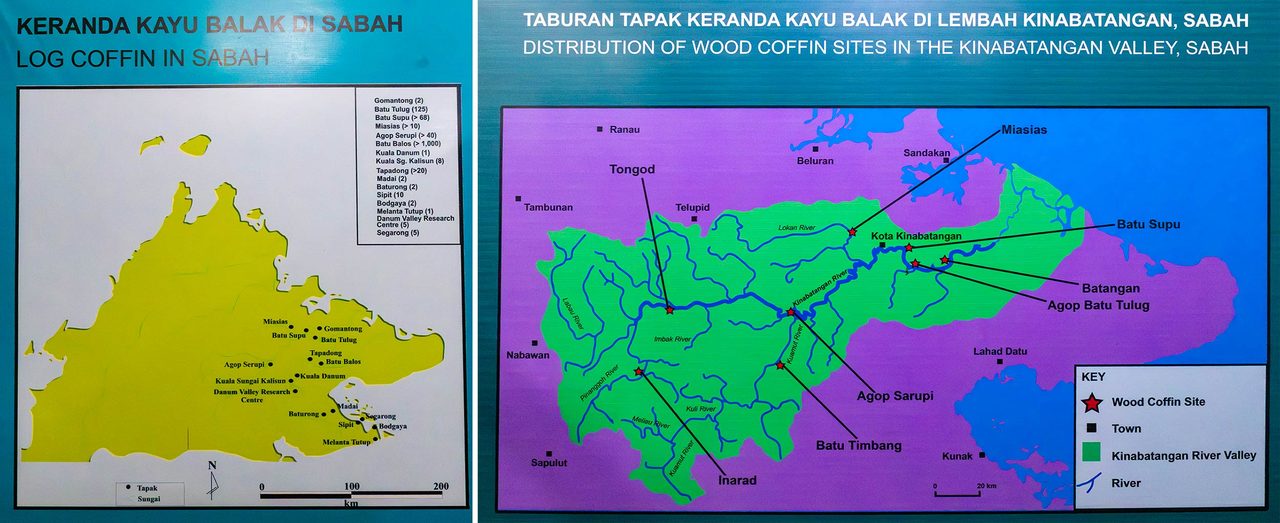
The main reasons for this tradition were: 1) to protect the bodies from flooding and wild animals, and 2) to place the deceased on higher ground, bringing them closer to heaven. Rather than burying the dead underground, people placed hollowed-out wooden coffins on elevated platforms or stacked them inside limestone caves, such as Agop Batu Tulug, Batu Balos, and Tepadung.

The log coffins were crafted by splitting a solid tree trunk in half and hollowing out the interior. Most were made of Belian wood, but other durable hardwoods, such as merbau (Fabaceae) and kapur (selangan batu), were also used. Some coffins feature animal head sculptures and have beautiful motifs carved into their lids.
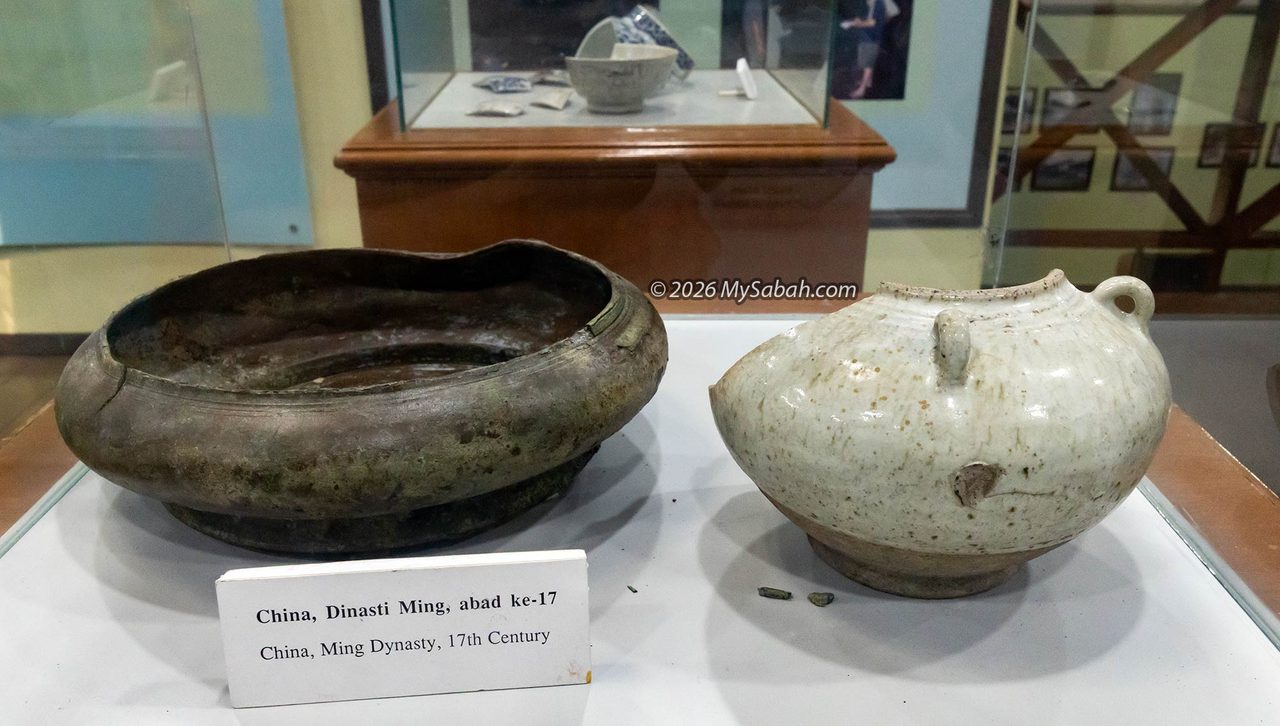
Similar burial traditions have been documented in other parts of Southeast Asia and China. Although the practice in Sabah has sometimes been linked to contact with foreign traders, particularly those from China, its precise origins remain uncertain.
Agop Batu Tulug, the Resting Place
Most of these ancient burial sites are off-limits to outsiders because they are located inside protected forests or on land considered sacred by local communities. Fortunately, Agop Batu Tulug welcomes curious visitors who want to explore this mysterious and ancient burial tradition of Sabah at the actual site.
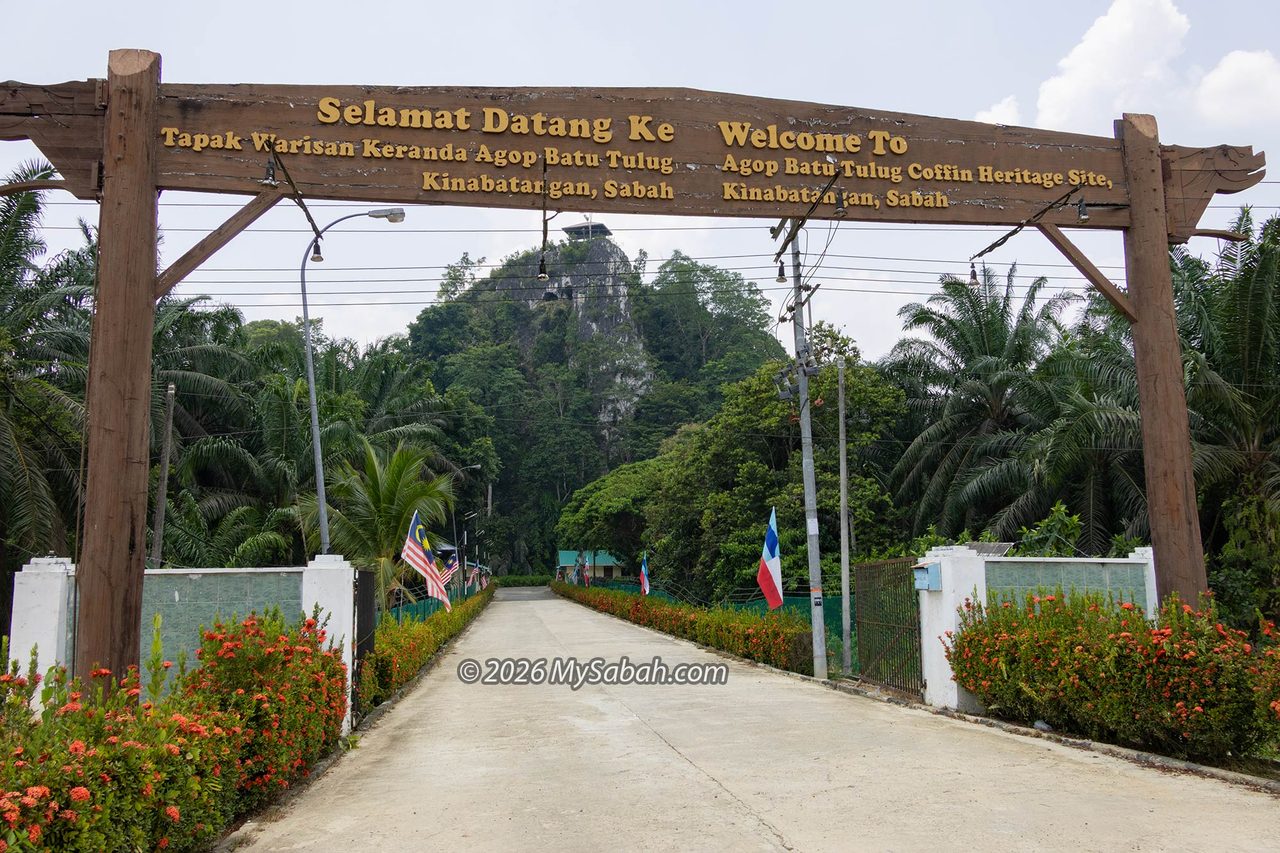
In local dialects, agop means “cave”, batu means “rock”, and tulug means “sleeping place”. Together, Agop Batu Tulug translates to “cave of the resting place”. It is a small, secluded limestone hill standing 39 metres (128 feet) tall in the Kinabatangan District. Forming part of the Labang Limestone Formation, which dates back 20 to 25 million years, the hill has been weathered and eroded over time, creating several large cave chambers.
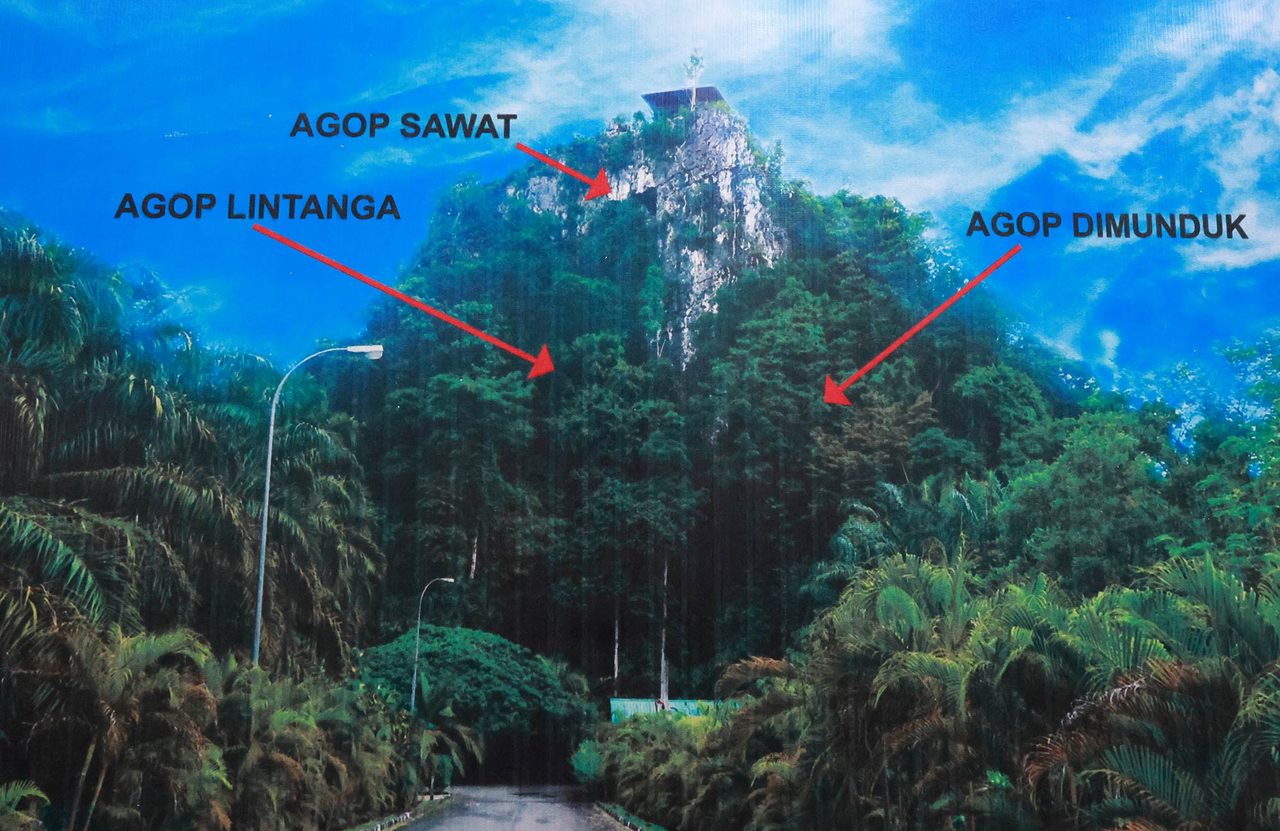
Agop Batu Tulug was used as a wooden log coffin burial site approximately 500 to 900 years ago. The caves contain about 125 coffins. The site was discovered in 1894 and has been preserved as a heritage site by the Sabah State Museum since 1996, under the name Batu Tulug Archaeological Museum. I had wanted to visit this place for a long time, and I finally made it there in 2026.
Visiting the Site
From a distance, Agop Batu Tulug looks like a gigantic, whitish-grey rocky hill with weathered cliffs rising above the forest canopy. The two large cave openings near the top resemble the eyes of a skull staring into your soul. Historically, this area was inhabited by the indigenous Orang Sungai, who lived along the 560-kilometre-long Kinabatangan River, the longest river in Sabah.
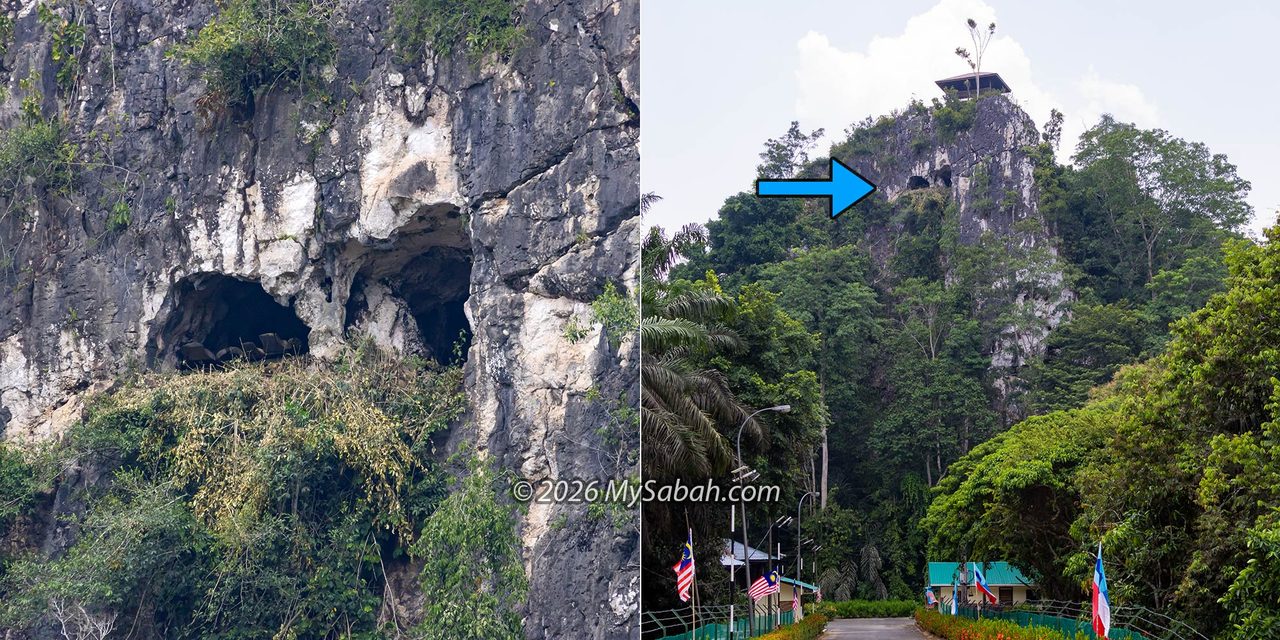
This archaeological site is open to walk-in visitors. For a small entrance fee, visitors can explore the caves and climb the coffin hill. It is a DIY tour, with information boards in English and Malay explaining what you see. No guide accompanies you.
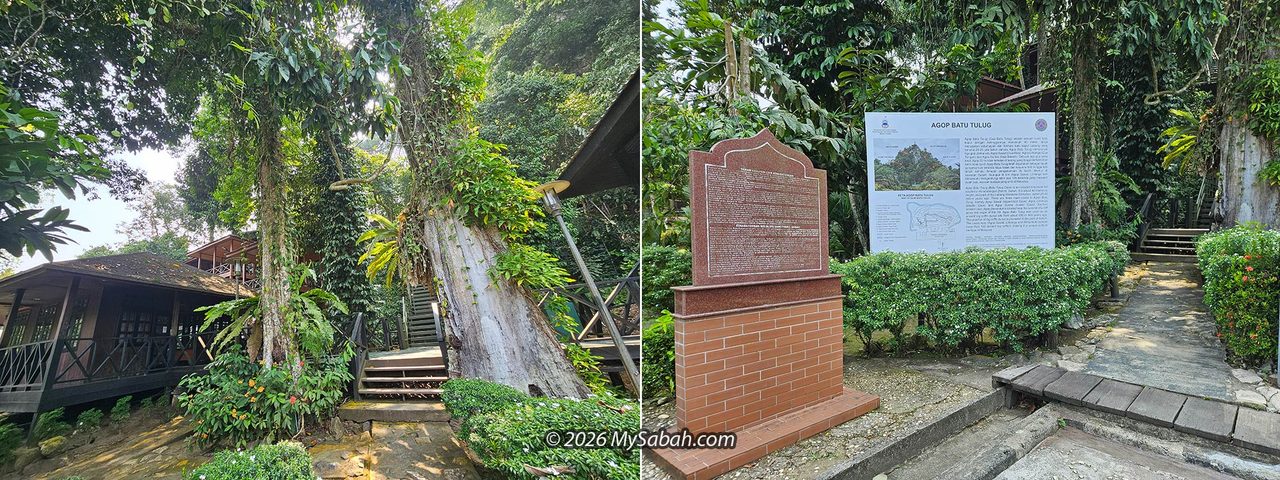
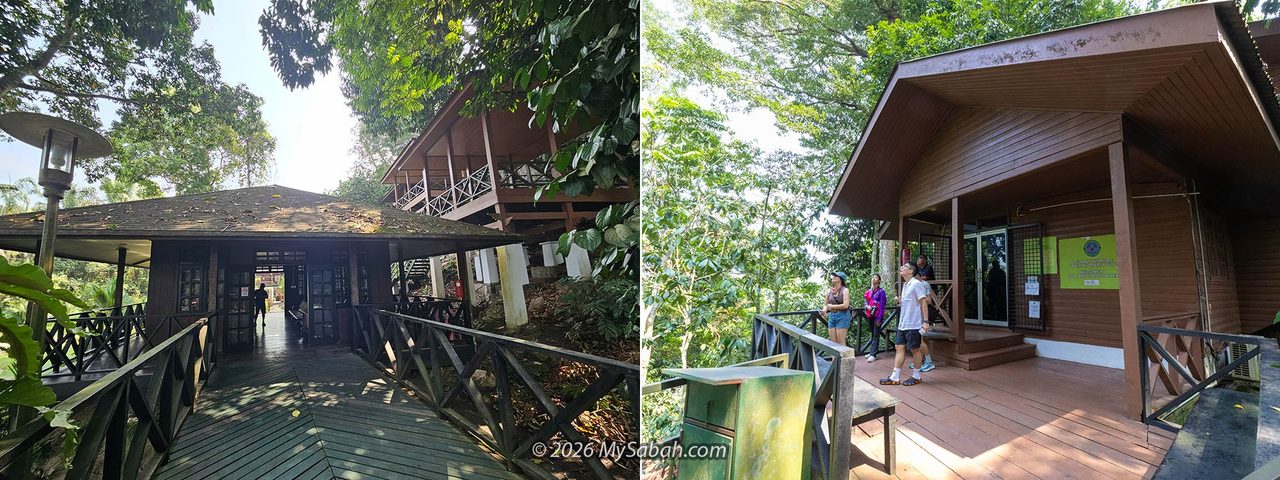
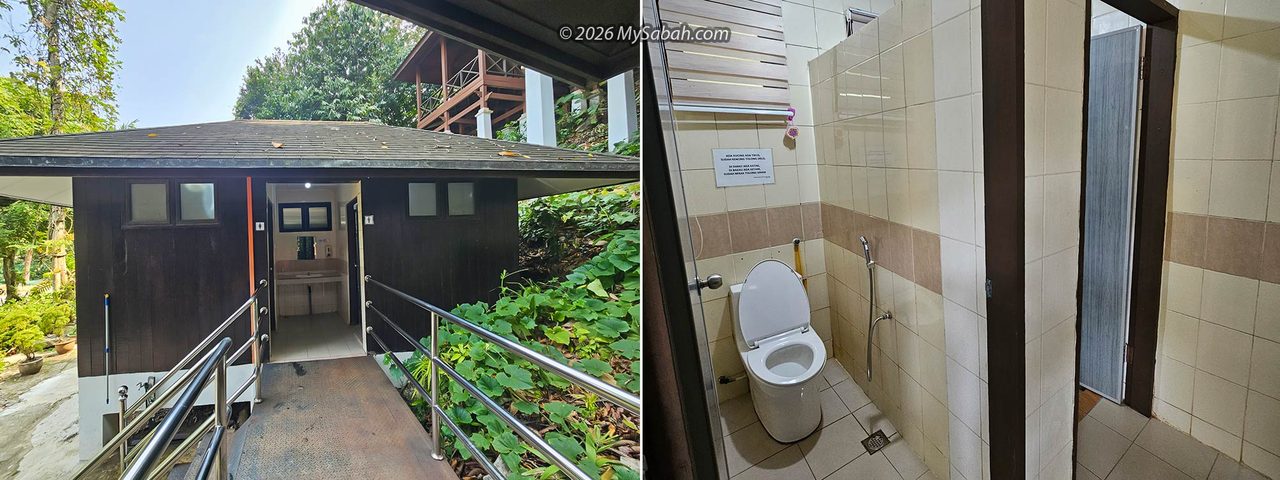
The entrance is at the foot of the hill, where the office buildings, amenities (including toilets and a surau prayer room), parking area, and gallery are located. Despite the sunny weather, the starting point was dimly lit by the shade of dense trees, setting the right mood for a burial site. I could hear macaques fighting somewhere behind the trees. It didn’t sound welcoming at all.
Explore the Exhibition Gallery
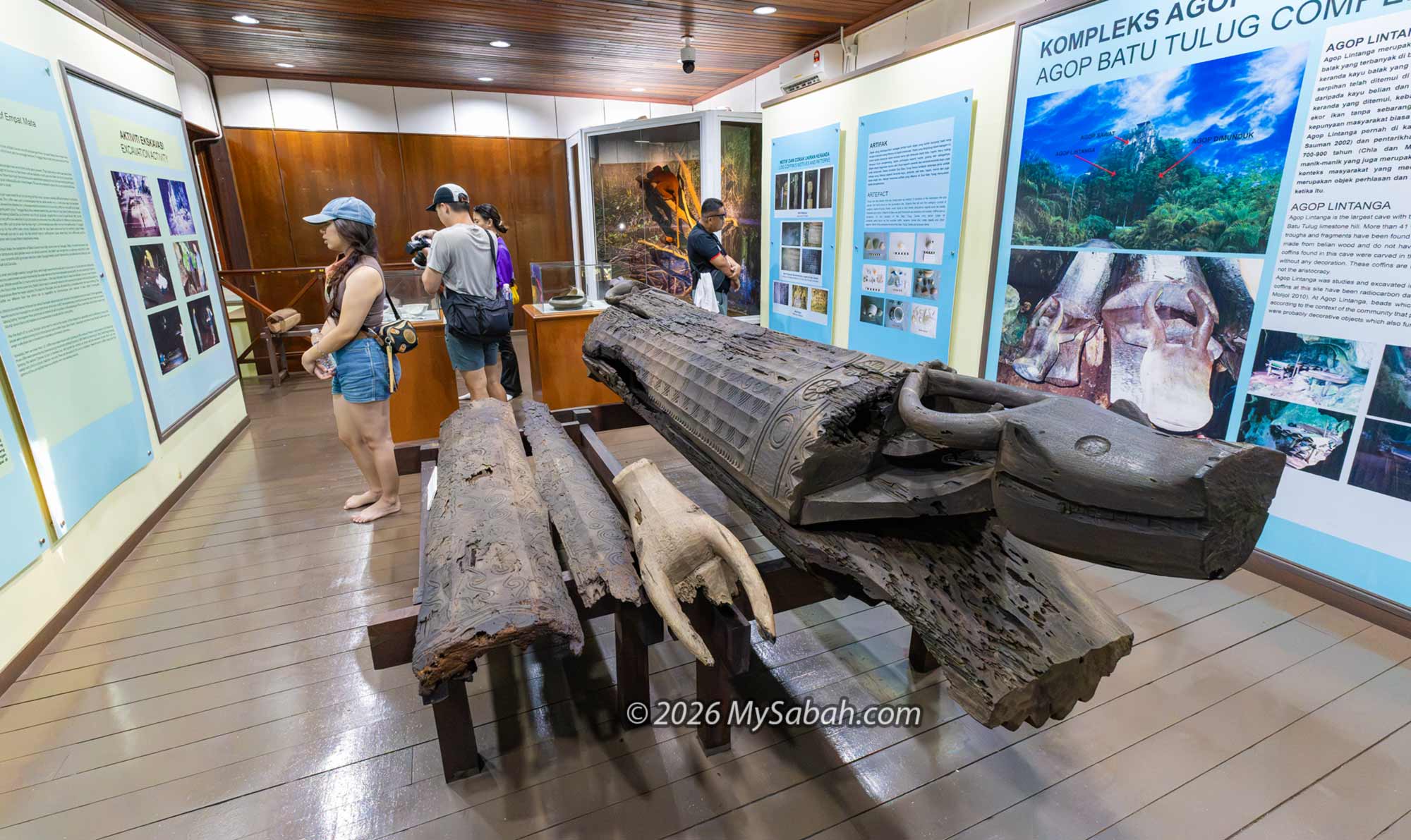
Before starting the climb, I browsed the two-storey gallery to learn more about the burial culture. The first thing that caught my attention was a wooden coffin carved with a buffalo’s head and decorated with interesting motifs. It reminded me of a local legend known as the “4-Eye King”.
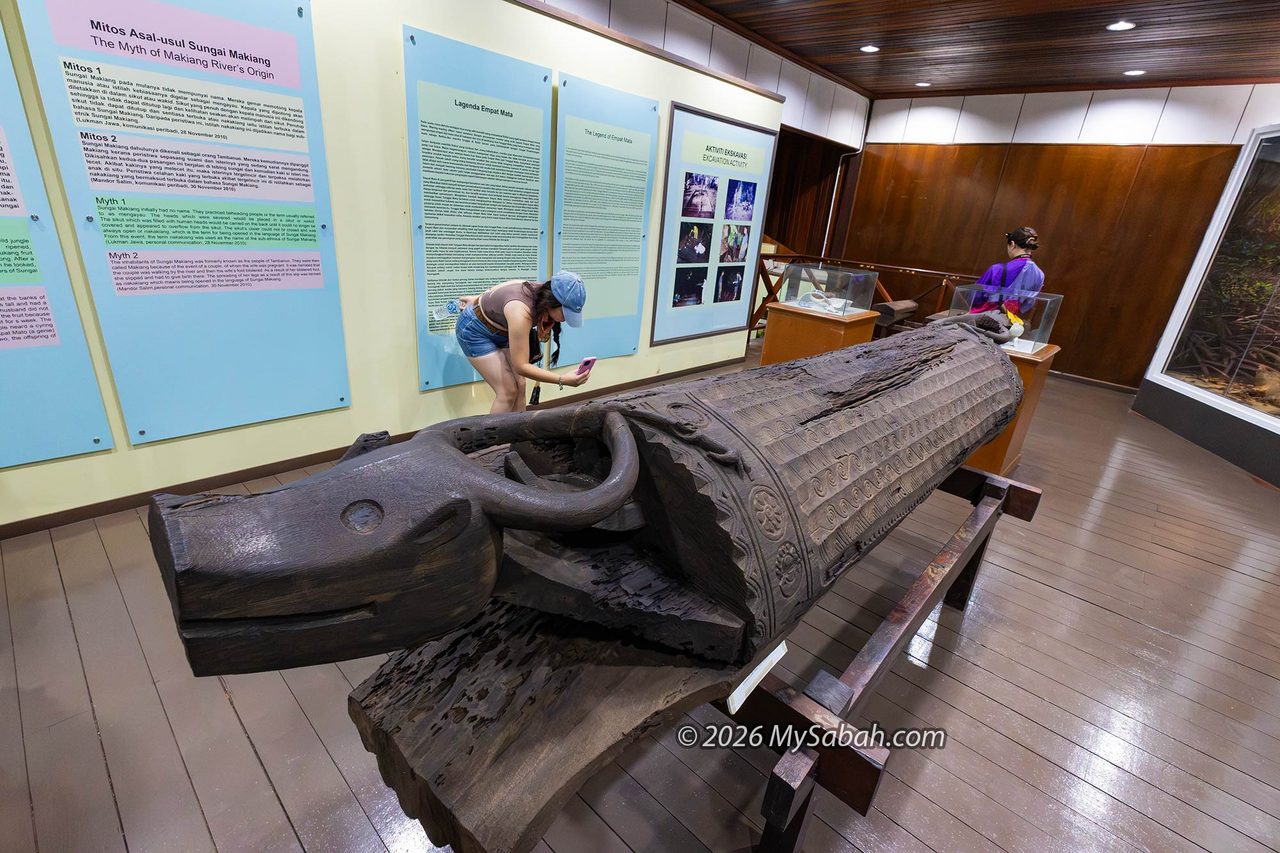
According to the legend, a cruel king named Raja Apat Mato was lured into trying out a fancy log coffin owned by his elder brother, Sinsila Mato. While the tyrant was lying inside the coffin, Sinsila Mato trapped him inside and ended his life. It is a long story, so I’ll let you read the full version at the gallery.
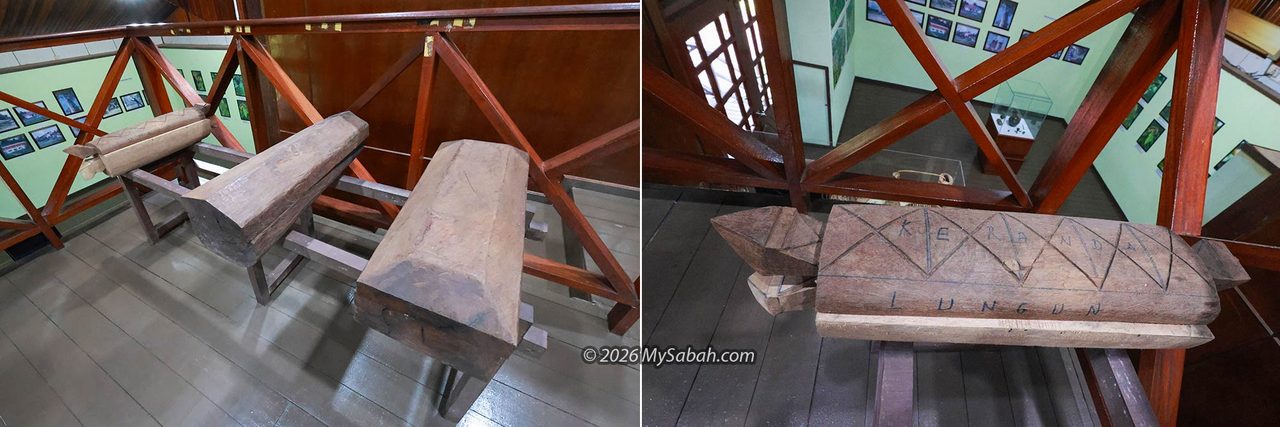
The largest coffin found at Agop Batu Tulug measures 11 feet 3 inches long, while the smallest measures 4 feet 5 inches. It is believed that coffins decorated with protruding buffalo or cow heads were associated with high-status individuals.
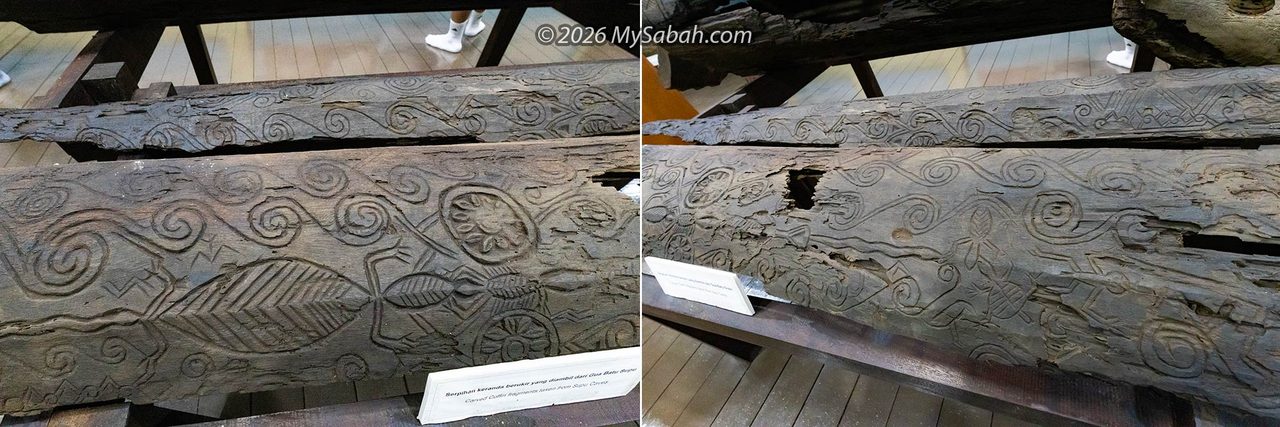
The gallery also contains artefacts, photographs, and information boards in English and Malay detailing the culture, daily life, legends, and myths of the local communities, as well as Sabah’s cave burial sites. Many ancient burial caves have been raided for gold and antique heirlooms. Fortunately, some artefacts survived the thefts and are now displayed here.
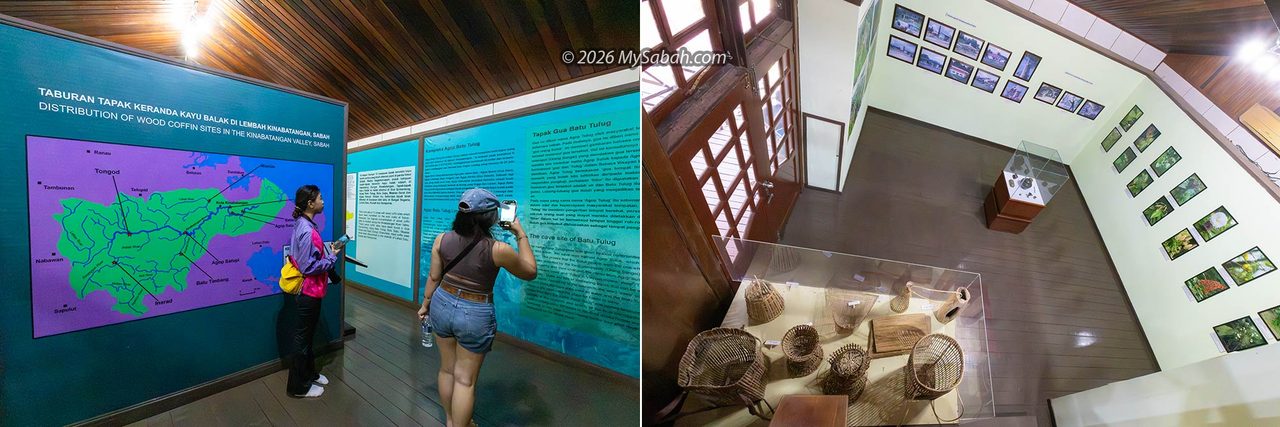
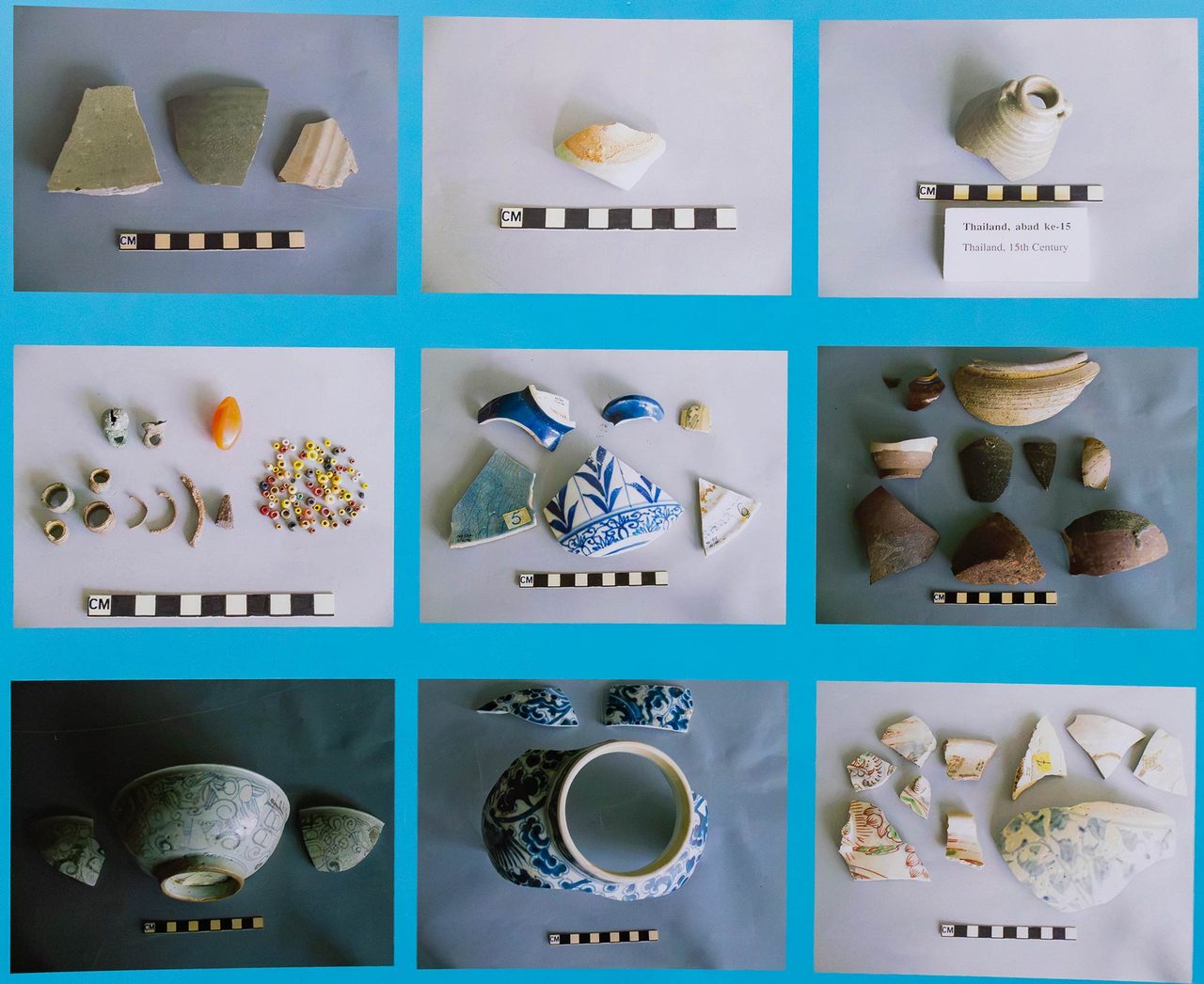
Artefacts recovered from the Batu Tulug excavation site include objects used in daily life, rituals, and burials, such as brass ornaments, stone tools, beads, bracelets, and ceramics. You will also find Chinese pottery among them. This has led some people to suggest that the coffins belonged to Chinese people. However, there is no verified evidence to support this claim. The pottery was more likely acquired through trade with Chinese merchants.
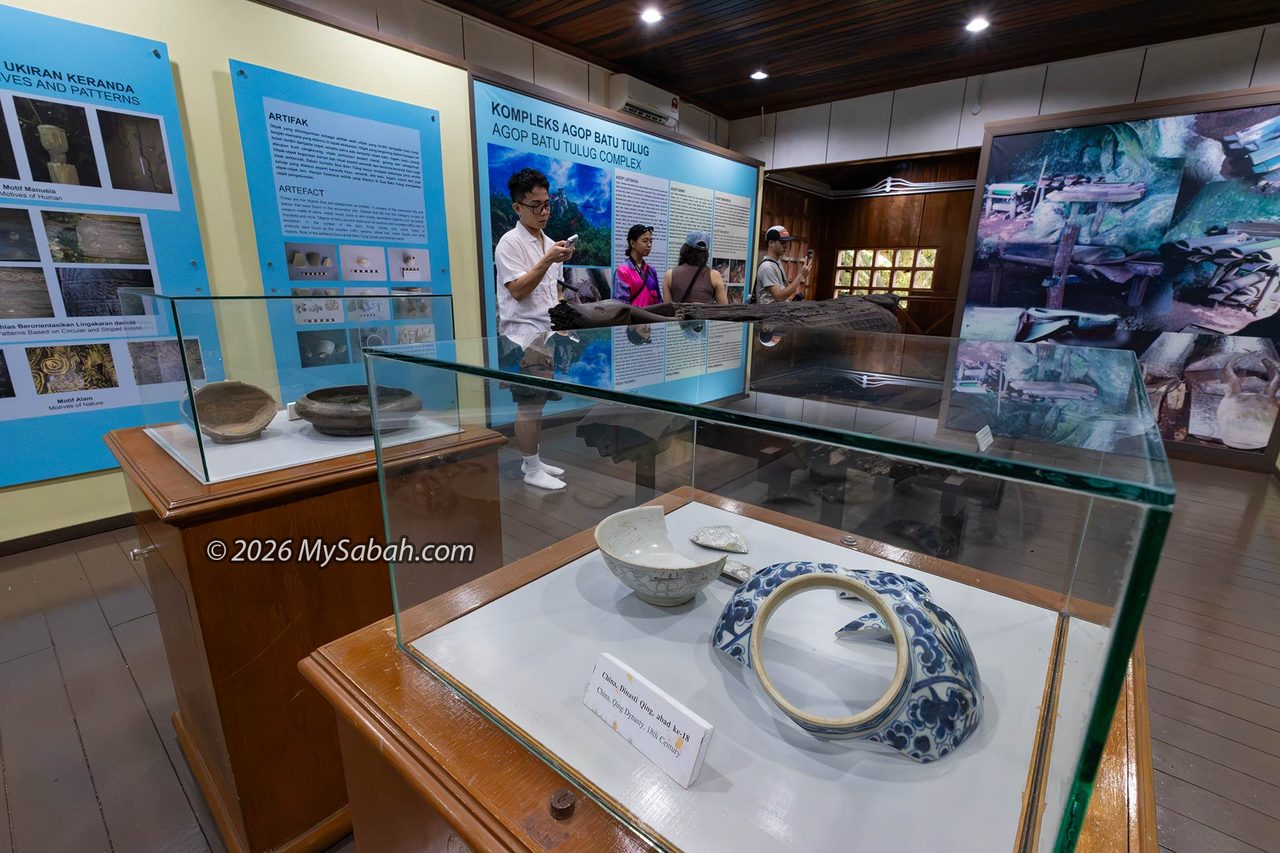
After enjoying some air-conditioning in the gallery, I proceeded to the first burial cave. Outside the gallery, a 40-metre-long, flat wooden boardwalk leads to the entrance of the largest cave here, Agop (Middle Cave).
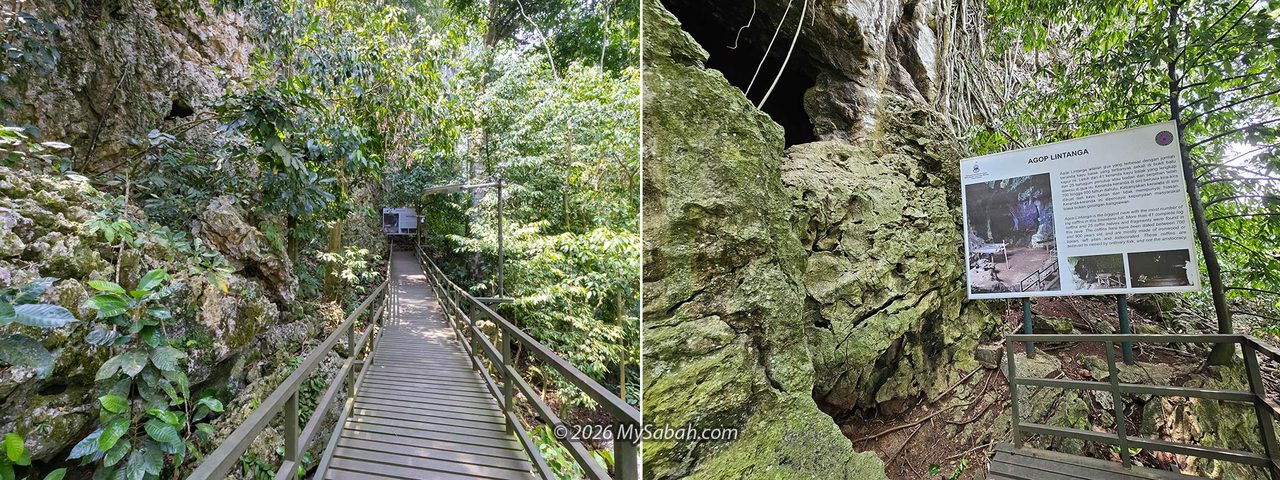
Agop Lintanga (Middle Cave)
The entrance to Agop Lintanga is a narrow passage between rocks that allows only one person to pass through at a time. I wondered how they managed to bring the large coffins into the cave. Perhaps they used another entrance.
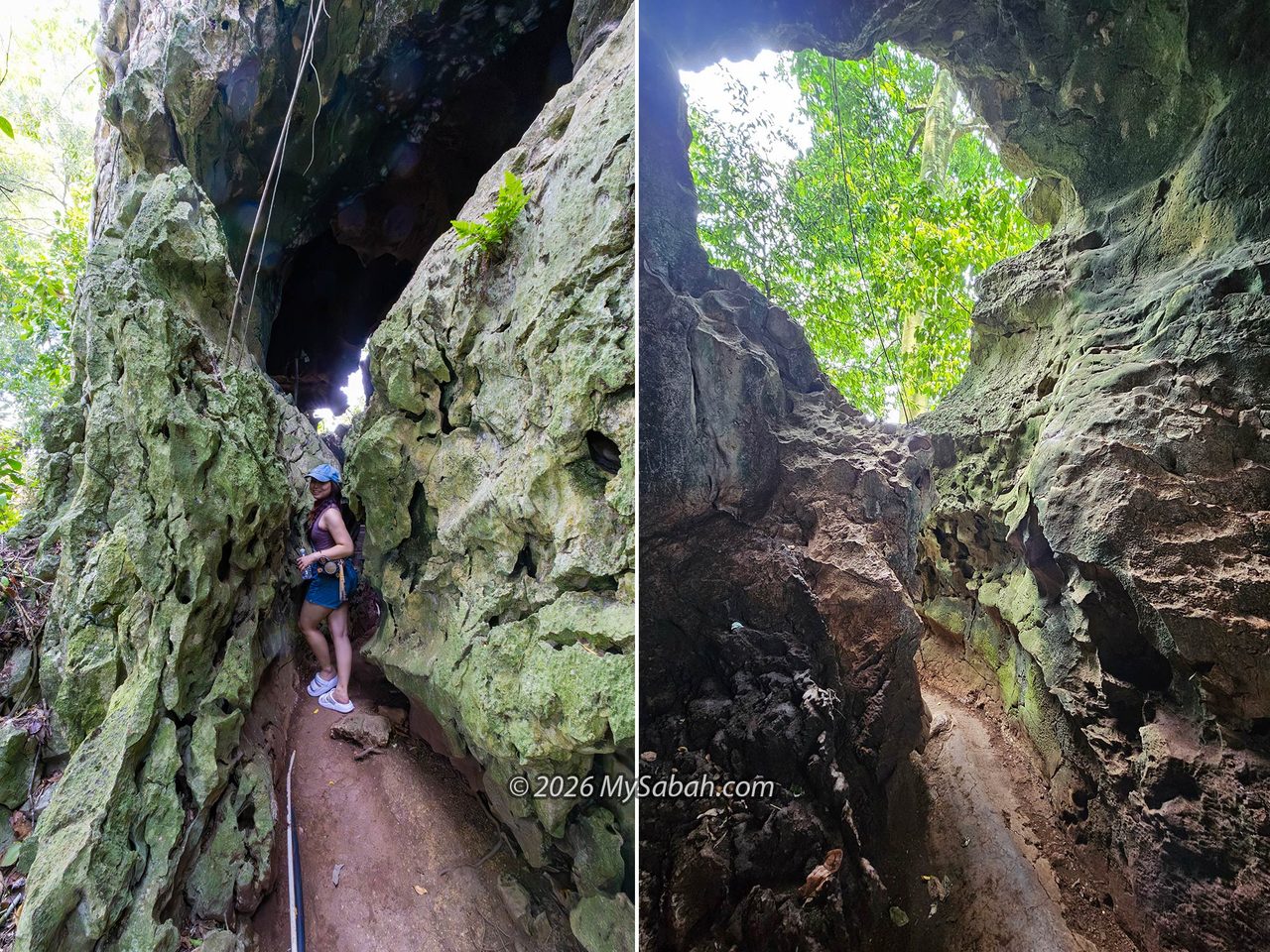
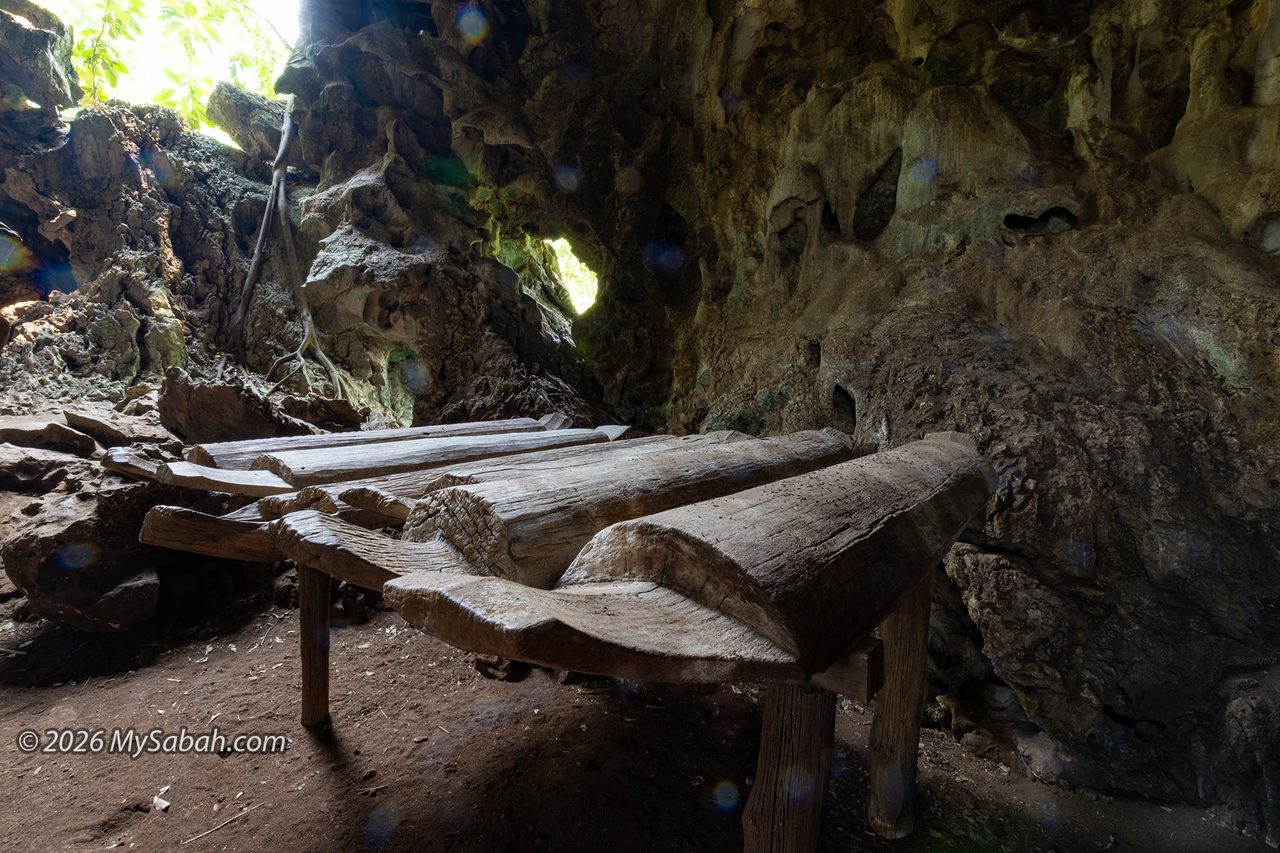
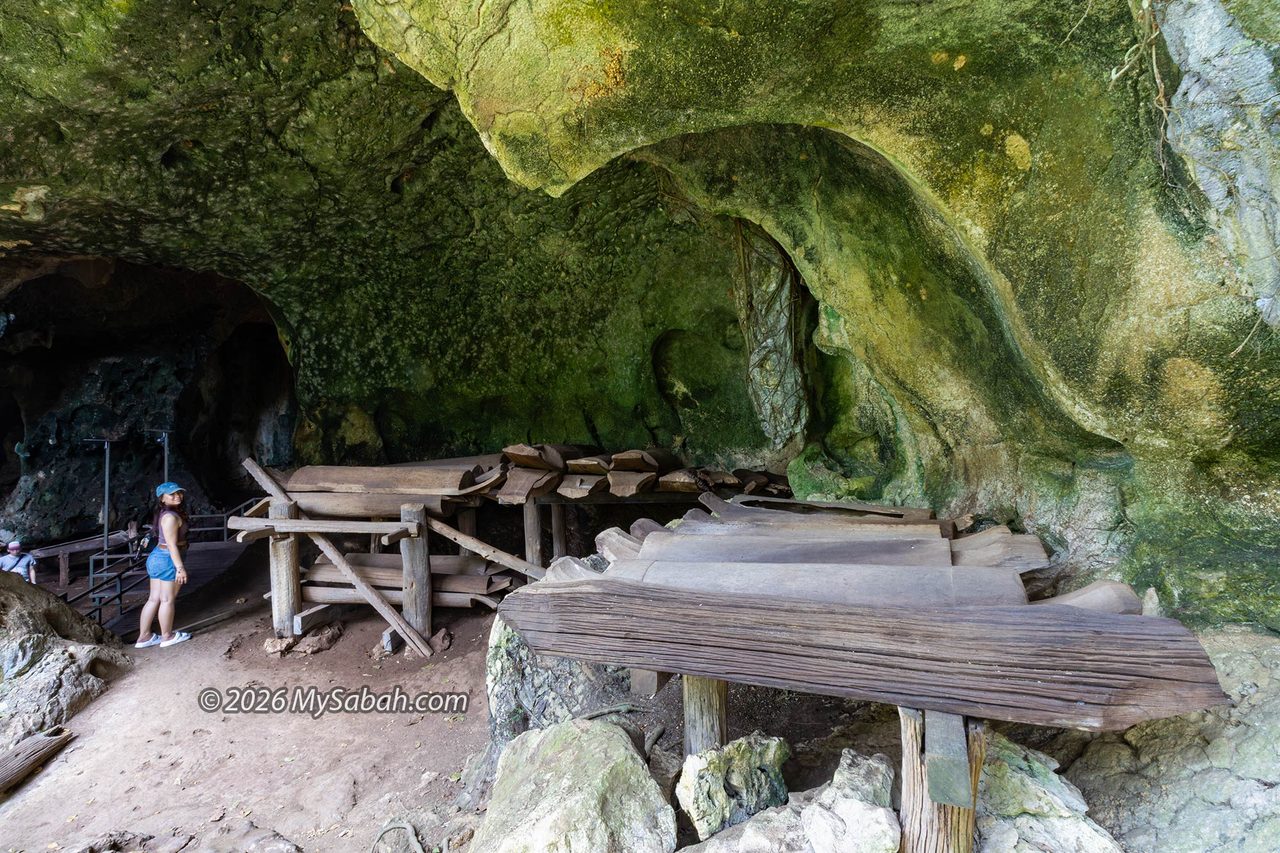
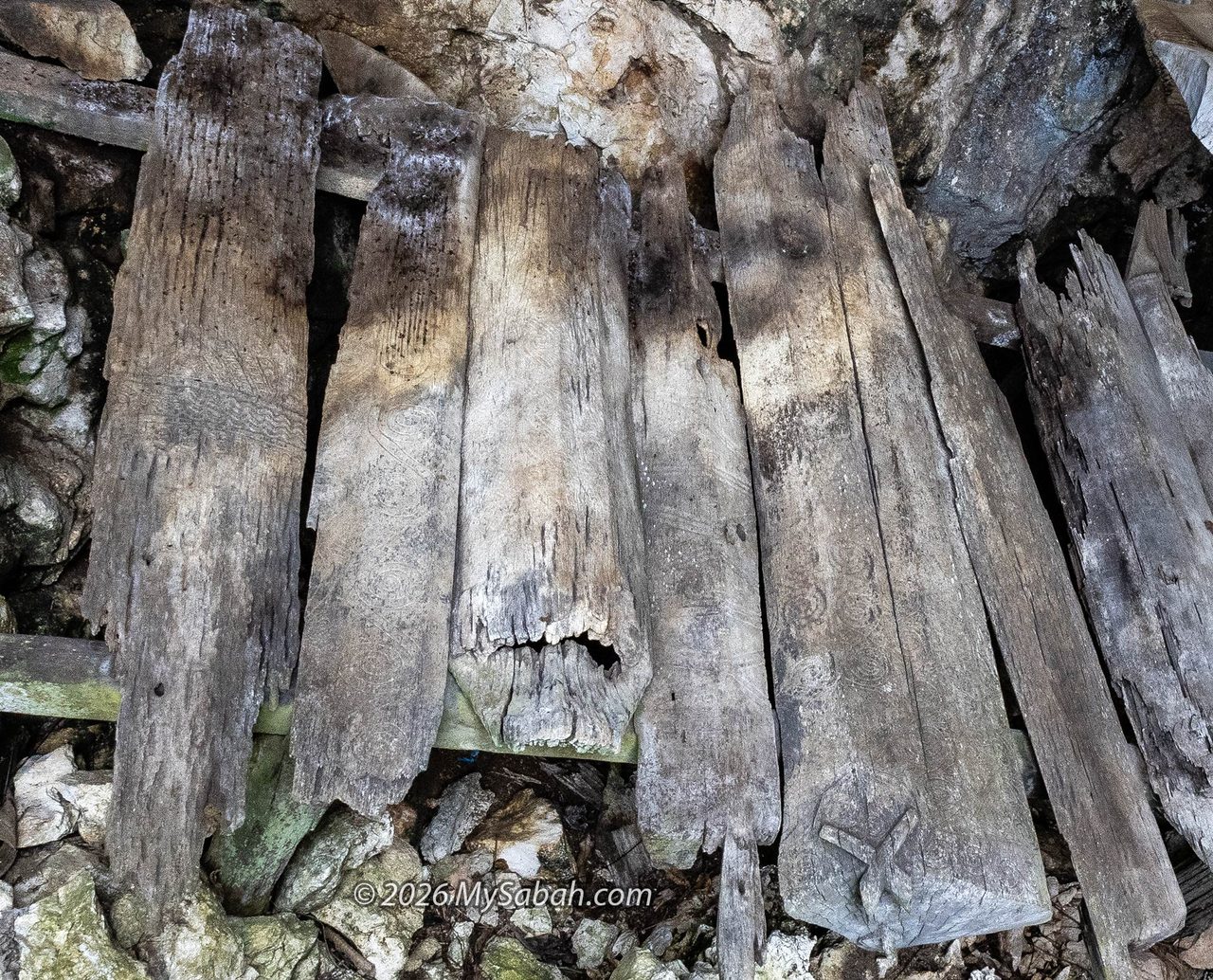
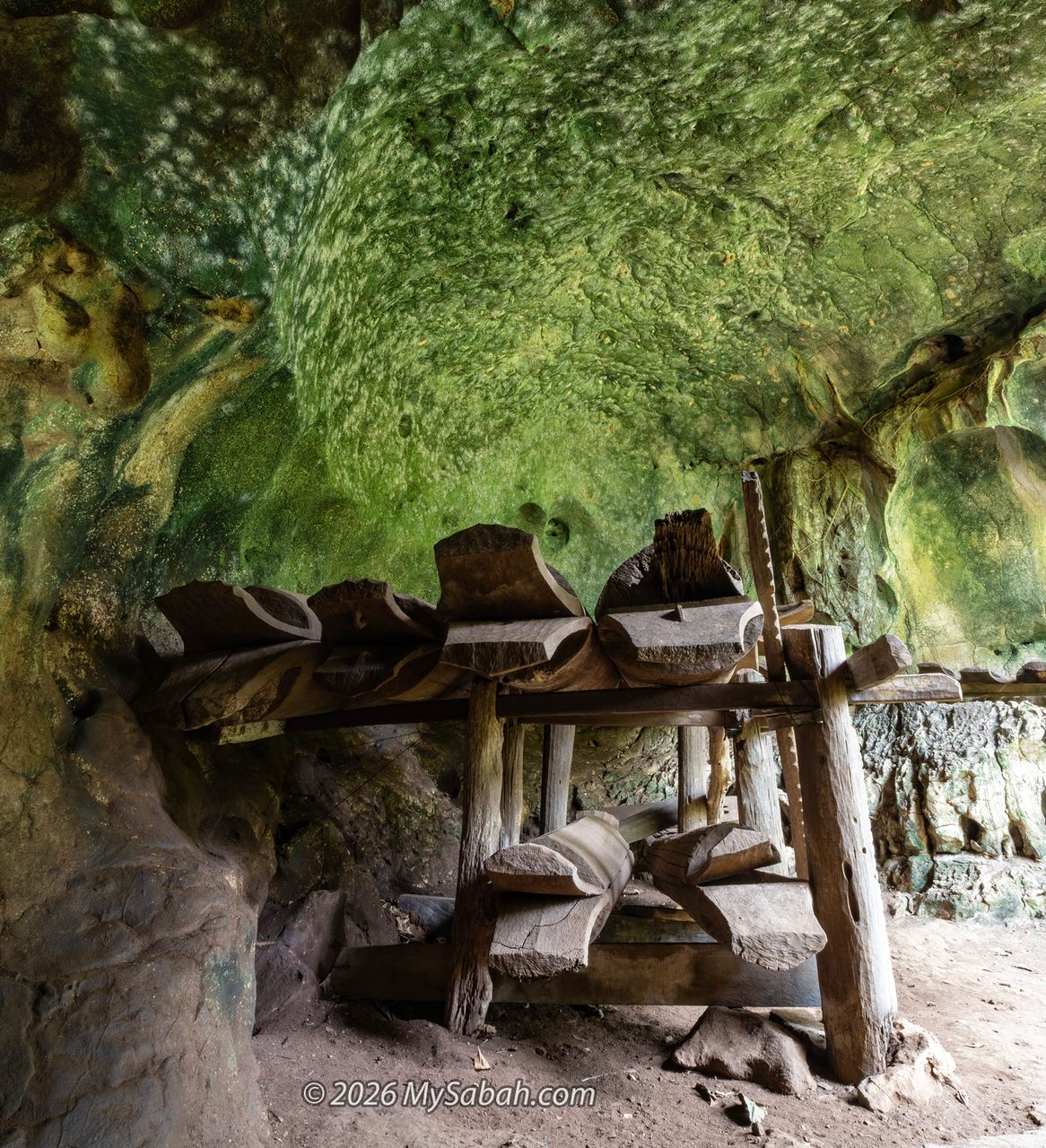
Agop Lintanga contains the highest number of log coffins on this hill, with more than 41 intact coffins and 25 coffin halves, lids, and fragments. They have been dated to between 700 and 900 years ago.
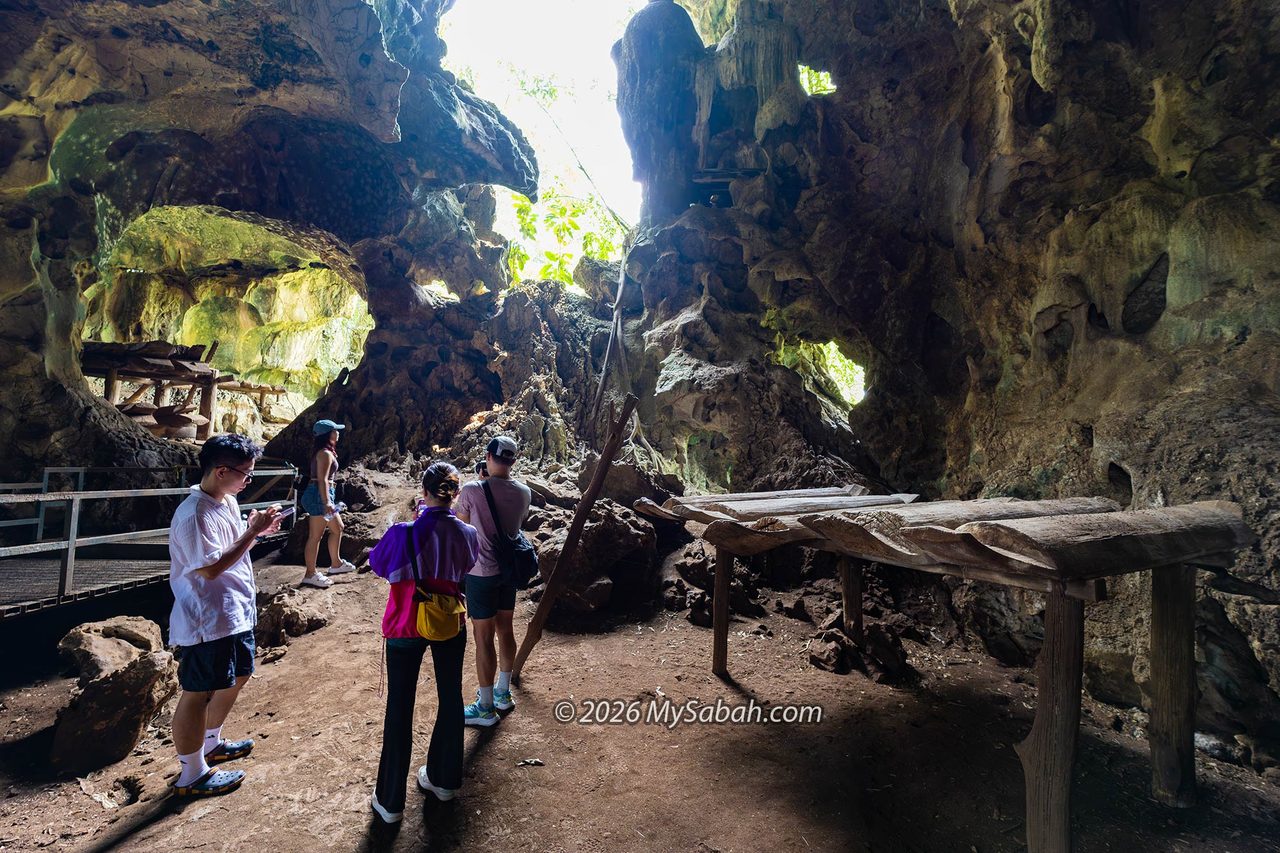
Most of these coffins are made of Belian wood. As they were used by ordinary people rather than the nobility, they are generally plain and undecorated, although some feature simple carvings resembling crocodile mouths or fish tails. The coffins are neatly stacked on raised wooden racks, in rock crevices, or on stable rock surfaces.
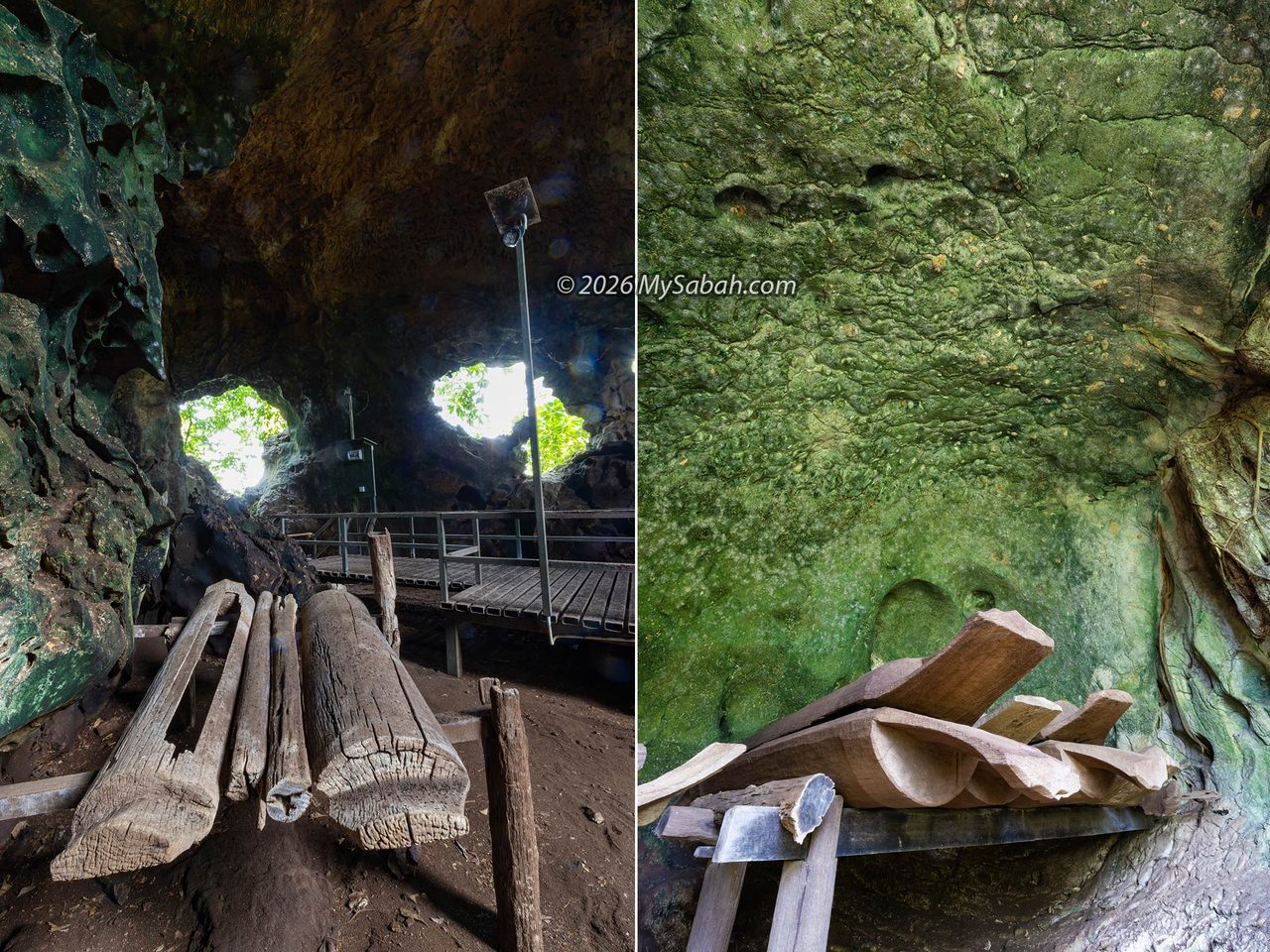
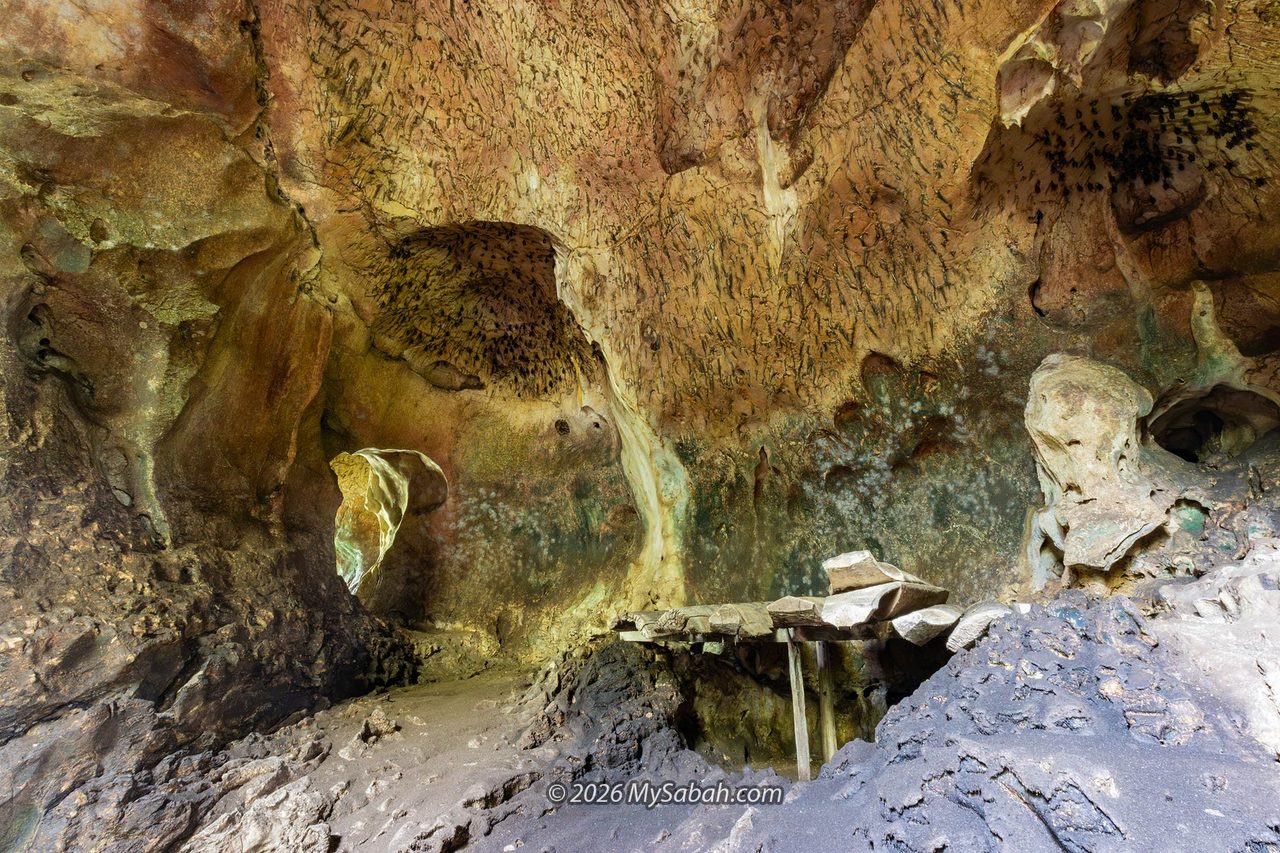
Unlike the dark and humid caves we commonly imagine, this cave is well-lit during the day thanks to several large holes and openings on different sides. I felt at peace inside. Nothing creepy about it. Parts of the rock walls have a greenish hue, probably caused by algae and cyanobacteria.
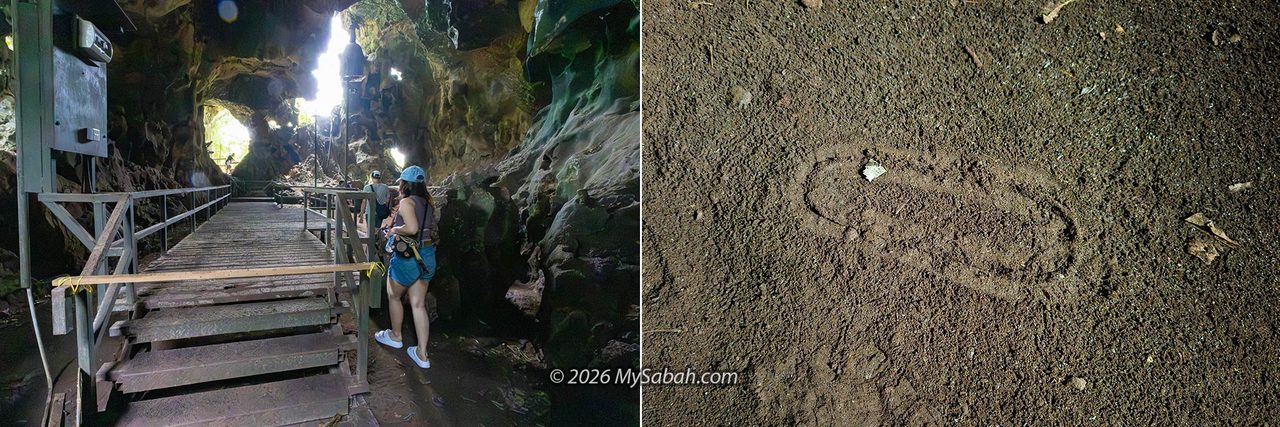
I could smell a mild ammonia odour in the air and hear bats screeching overhead. A raised section of boardwalk keeps visitors away from the bat guano but it’s closed, so I walked across the soft carpet of guano to get a closer look at the coffins. I also admired the geological formations in the limestone.
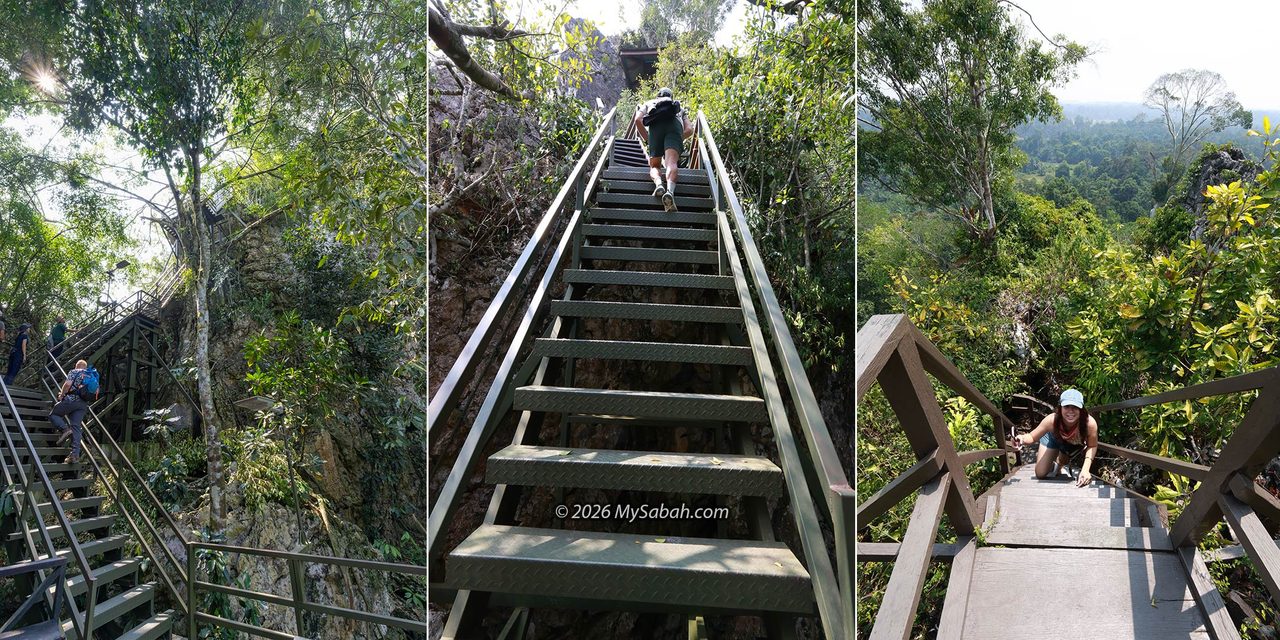
After spending some time there, I exited the cave and proceeded to the next cave, Agop Sawat, located near the top of the hill. The climb started with a steep stairway. It was so steep that after just five minutes of climbing, my legs were already complaining. As I climbed higher and emerged from beneath the tree canopy, I lost the shade and found myself exposed to the scorching sun.
According to Dusun Subpan culture, burial ceremonies were never conducted early in the morning. Instead, they took place strictly after noon, as the sun began to set, during what was known as the “dying sun” period. This was based on the belief that burying someone under the rising sun would invite more deaths in the village.
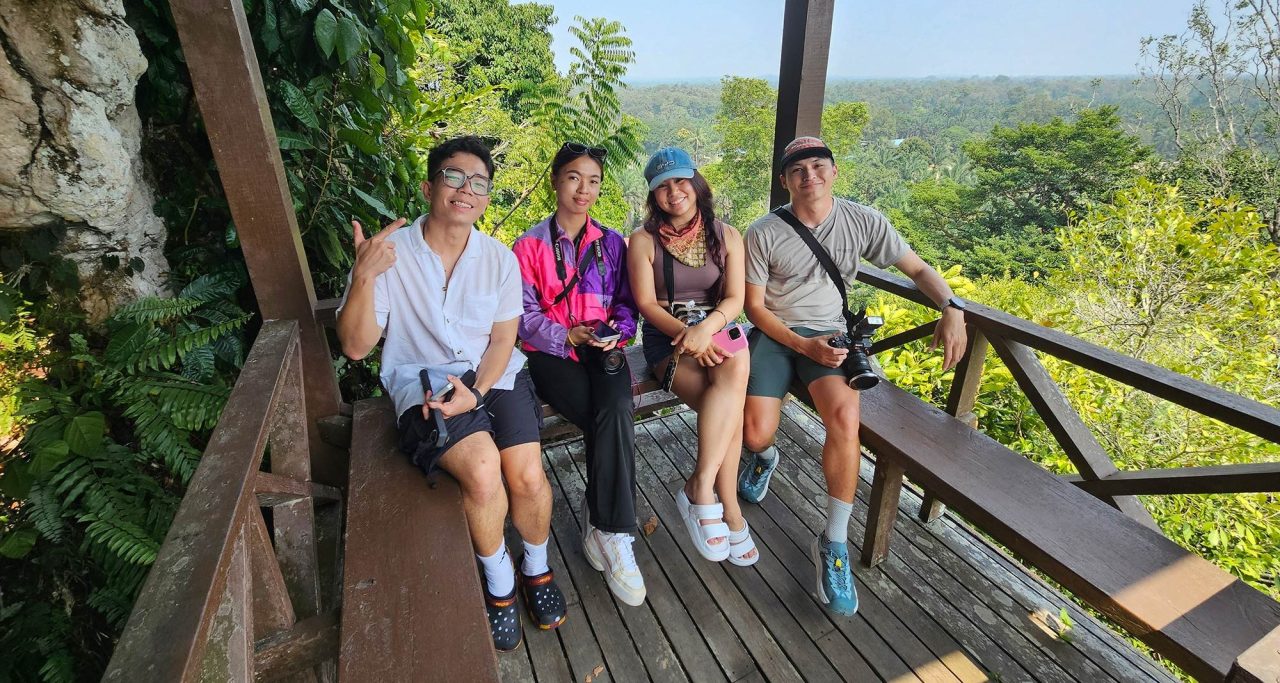
Imagine villagers having to carry a heavy coffin on a stretcher up a steep, narrow trail under the afternoon sun. They were not allowed to drop the coffin either. “Which feels heavier, their hearts or the coffin?” I wondered.
Reaching the Hilltop
After climbing the stairs for 15 minutes, I reached the last shelter at the top of the hill. With the help of the staircases and handrails, the climb wasn’t too bad.
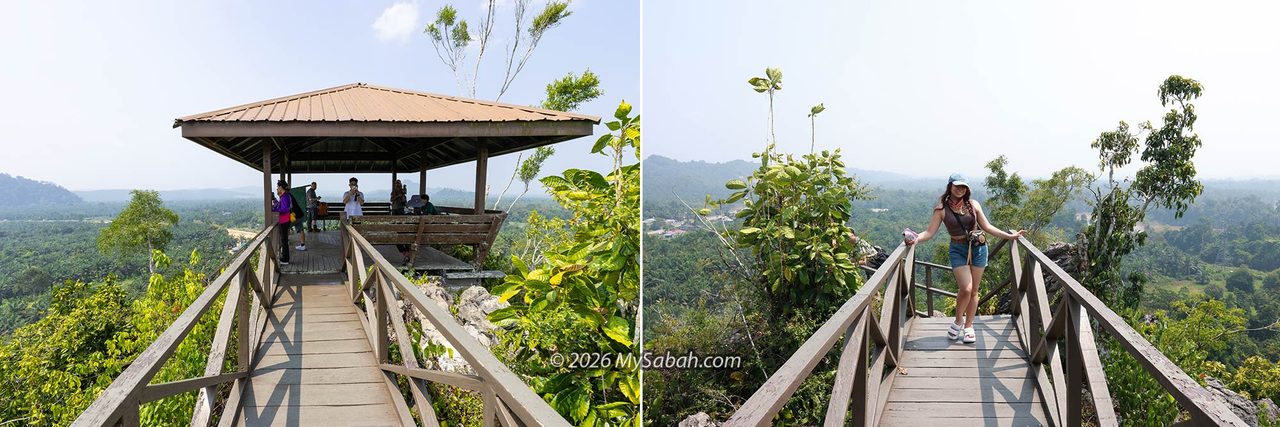
Did you know that this hill used to be an island? During the Late Pleistocene, the area around Batu Tulug was covered by river water or a sea bay, making Batu Tulug a small limestone island.
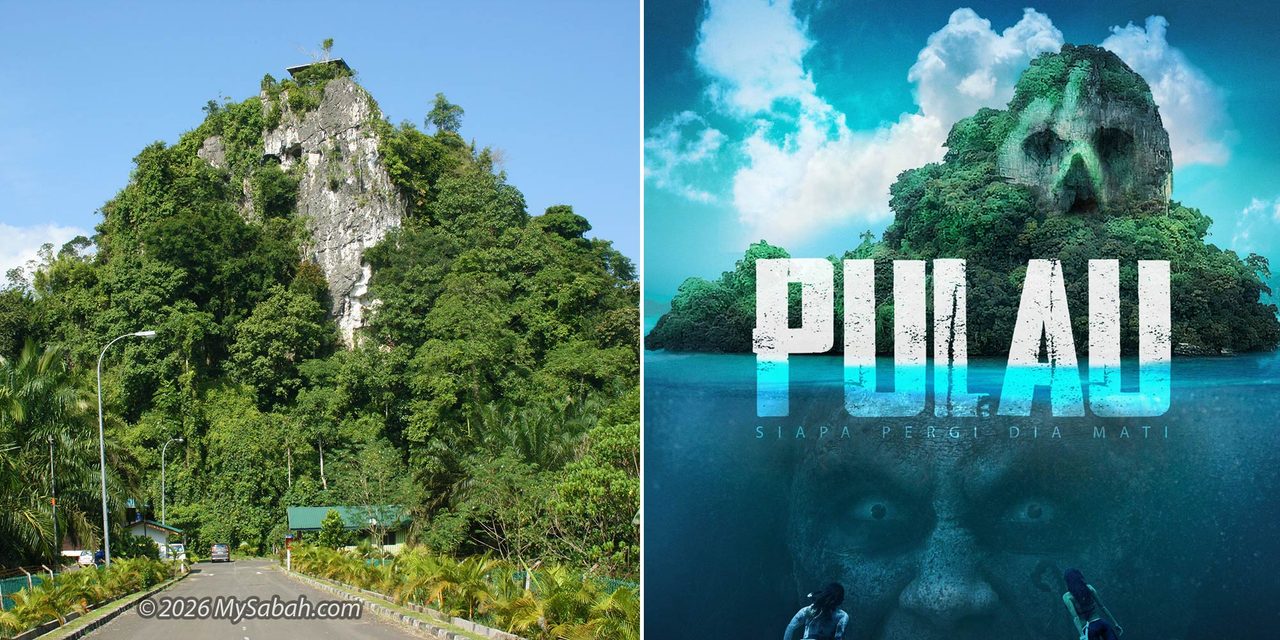
This 39-metre-high limestone hill resembles a giant tower and offers panoramic views of the surrounding landscape. I could see Kampung Batu Puteh, which was named after a white stone near the riverbank, as well as the Kinabatangan River and a large iron bridge spanning it in the distance.
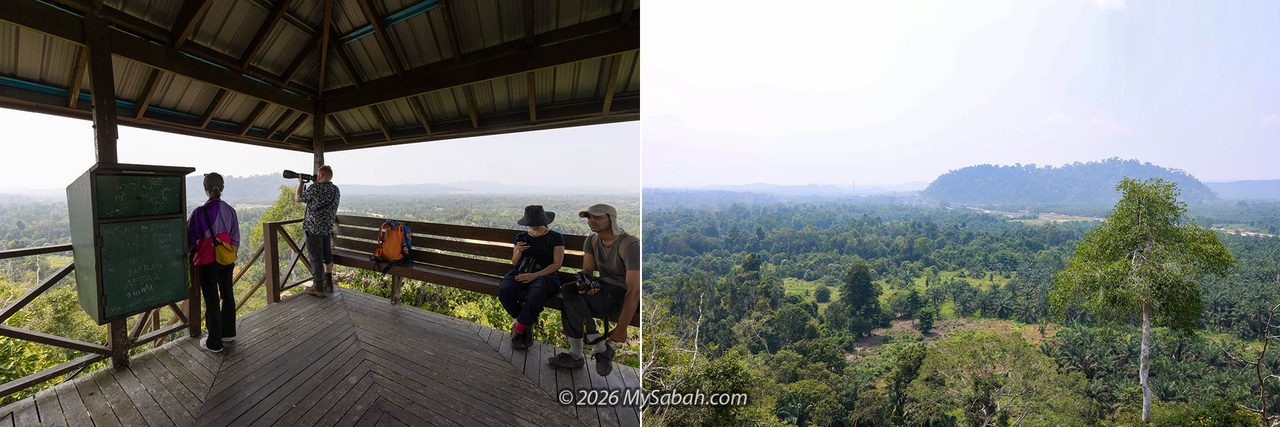
Excavation research indicates that the site was not inhabited during pre-Holocene times and that humans began using it in the Late Neolithic period, about 3,000 years ago. Even today, the area remains sparsely populated, perhaps because of its remote location. The nearest town, Kota Kinabatangan, has only a few rows of shop lots.
Agop Sawat (Upper Cave)
Agop Sawat (Upper Cave) is just a short walk from the shelter. This cave is situated at the highest point of the hill, suggesting that it was reserved for high-status individuals, such as prominent figures or village chieftains. This interpretation is supported by the presence of coffins decorated with protruding buffalo head sculptures.
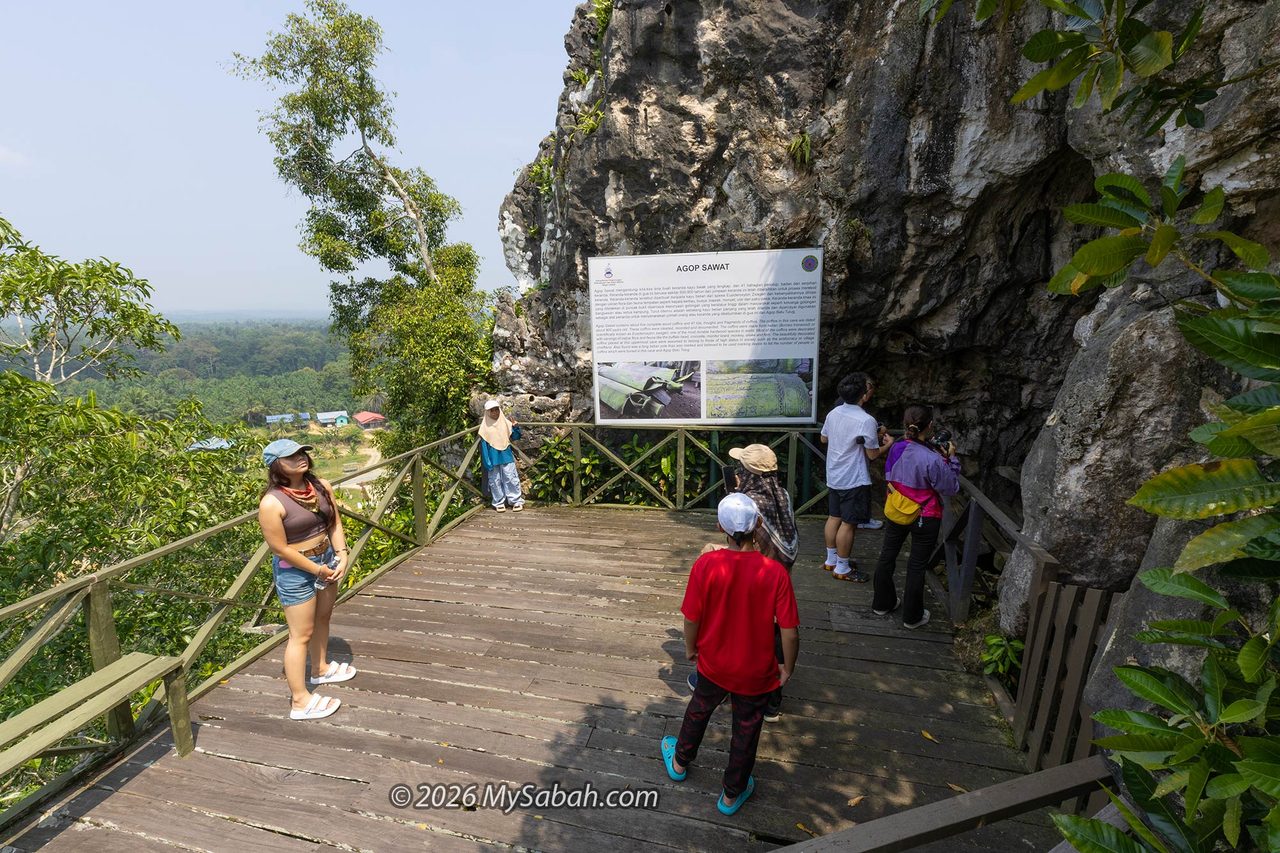
During the era of animism, the Orang Sungai believed that everything had spirits and specific roles. The buffalo represented power and strength. The crocodile was associated with death and the forces of darkness, while the bugang bird, dog, rooster, and deer were companions of their heroes.
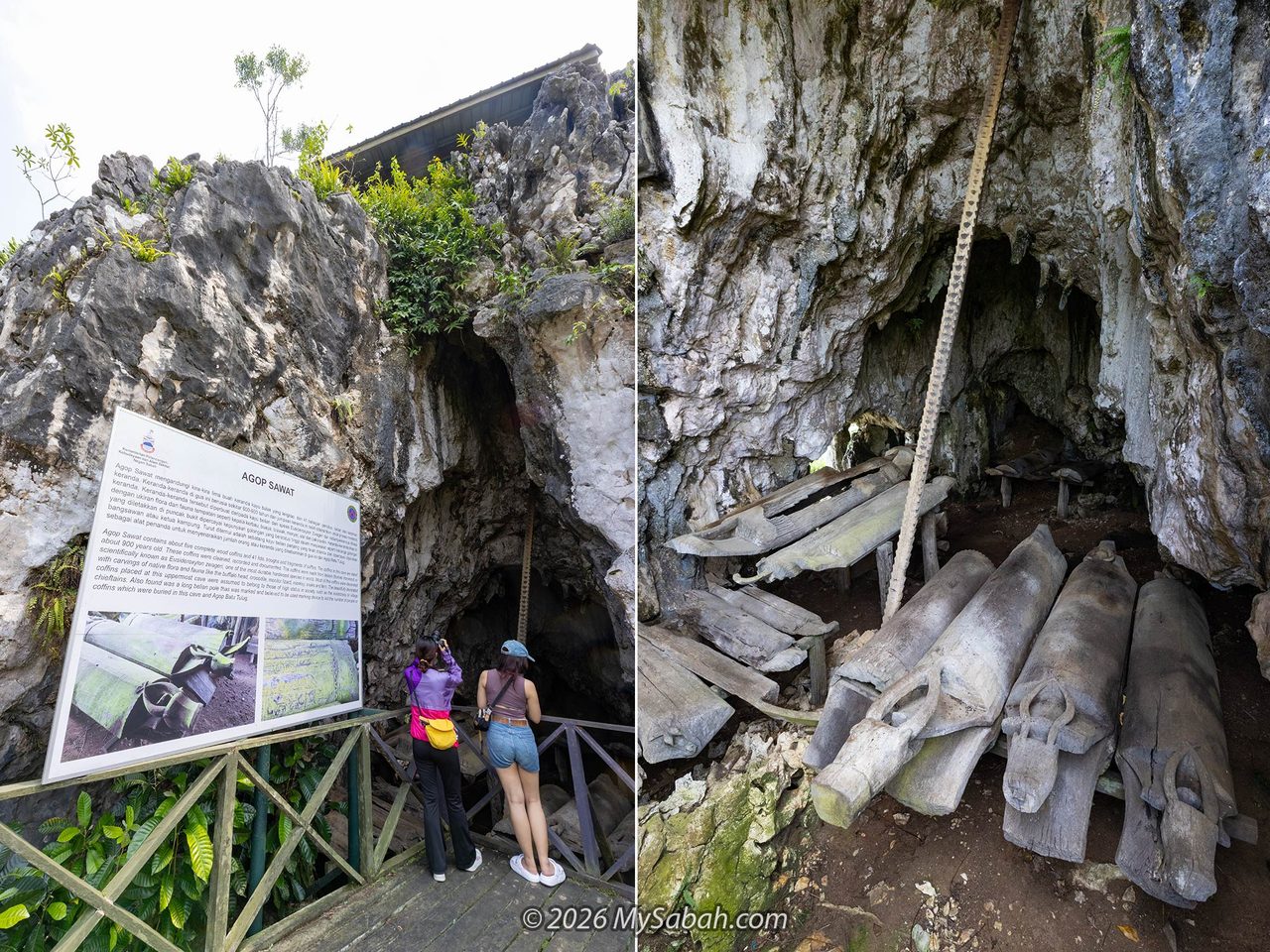
Agop Sawat contains about five complete wooden coffins, along with 41 lids, troughs, and fragments, which have been radiocarbon-dated to approximately 900 years ago. The coffins are richly decorated with intricate carvings of native flora and fauna, as well as geometric patterns. A 21-foot-long Belian pole was used to mark the number of burials.
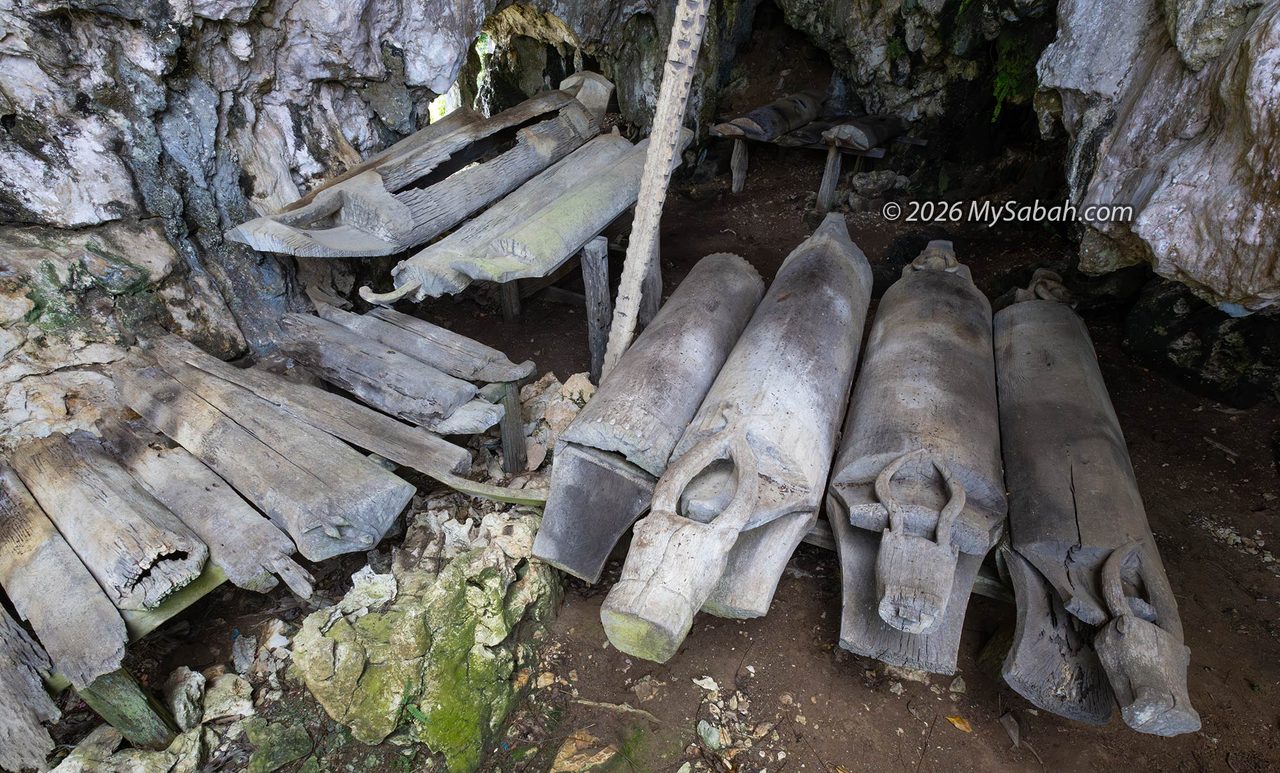
However, the entrance to the cave is sealed. I could only observe the coffins through a wide opening in the cave. The carved motifs on the coffins have faded, and I had to squint to make out the details from a few metres away. To date, about 27 types of motifs have been identified.
Among the Orang Sungai people, particularly the Makiang in Ulu Kinabatangan, hollowed-out wooden log coffins were traditionally used as part of wedding dowries or gift exchanges. They symbolised a promise to live together until death.
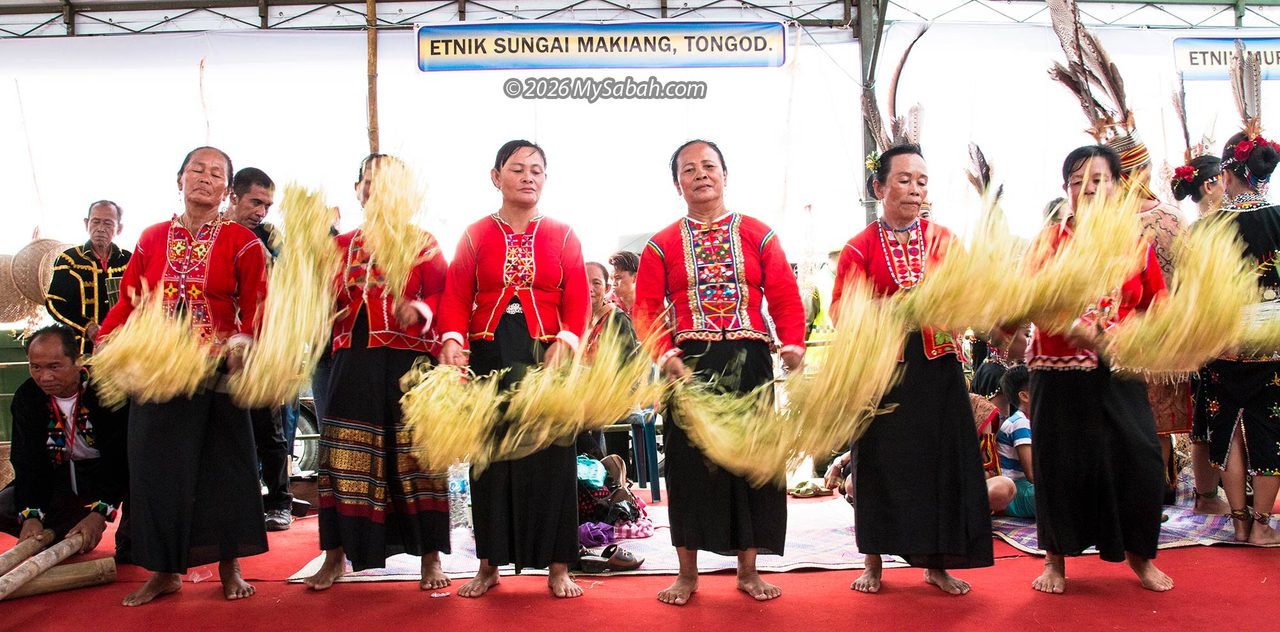
Unfortunately, most cave burial practices ceased nowadays as more Sabahans converted to Islam or Christianity, religions whose followers generally use modern cemeteries for burial. Besides, Belian wood has become harder to obtain, and access to caves is restricted under conservation laws. Nevertheless, it is good to see these historical sites being preserved for future generations to learn about their roots.
A Haunted Coffin Hill
Agop Batu Tulug is said to be one of the most haunted places in Sabah. This is not just a rumour, as the subject has even appeared in the news. A former officer who worked at the site shared several strange incidents, including one involving a female student who was allegedly possessed while visiting the coffins in the cave during a school trip. She stared fiercely at the officer and told him to warn the others not to disturb her. There was also an incident involving a couple who fell ill after allegedly engaging in indecent activities inside the cave.
Three of my friends also had haunting experiences after messing around with the coffins. I have a detailed account of their case (Read Ancient Ghosts from the Coffin Hill of Kinabatangan (True Story)), which has even been featured on television and in a book. So, be respectful and keep quiet during your visit. Don’t say or do anything offensive, and you should be fine.
How to Get There
Agop Batu Tulug is located 107 km from Sandakan city, right beside the main road between Sandakan and Lahad Datu. It is highly accessible, but the distance from major towns is probably the main reason it remains relatively unknown.
Opening hours: 9 am to 5 pm daily.
Ticket prices: RM2.00 for Malaysian visitors and RM15.00 for non-Malaysian visitors.
Location: View Location Map
Facebook: Sabah Museum
What to Bring
Drinking water, sunblock lotion, sun hat, sunglasses, and mosquito repellent.
References
Note: Although Sabah’s cave burial traditions share many similarities across different areas, variations in customs exist among different tribes.
- Ismail Hj. Ibrahim. (2004). “Ukiran Keranda Agop Batu Tuluq dan Agop Miasias: Satu Pemerhatian Analitis tentang Pembentukan Corak pada Permukaan” (Bab 12). In Mohd Sarim Hj. Mustajab (Ed.), Warisan Budaya Sabah: Etnisiti dan Masyarakat. Kota Kinabalu: Unit Penerbitan, Universiti Malaysia Sabah.
- Chia, Stephen. (2014). Inaugural Archaeology Series: Wood Coffin Burial of Kinabatangan, Sabah. Penang: Penerbit Universiti Sains Malaysia. ISBN: 9789838617260.
- Yunus Sauman Sabin. (2004). “Kebudayaan dan Tradisi Pengebumian Keranda Kayu Balak Kuno di Sabah: Satu Pengenalan.” Jurnal Perspektif, Vol. 2, Bil. 1, hlm. 151–169.
- Yunus Sauman Sabin et al. (2015). “Taburan Pengebumian Keranda Kayu Balak di Sabah.” Dalam Zuliskandar Ramli et al. (Eds.), Arkeologi, Sejarah & Budaya: Prosiding Seminar Antarabangsa Ke-4 Arkeologi, Sejarah dan Budaya di Alam Melayu (hlm. 509–533). Bangi: ATMA, Universiti Kebangsaan Malaysia.
- Lembaga Kebudayaan Negeri Sabah. Etnik Dusun Subpan: Adat Resam Turun-Temurun & Pantang Larang. Kota Kinabalu: Lembaga Kebudayaan Negeri Sabah.
- Baginda Sunui bin Rumukai (Kampung Upak, Lahad Datu). Interview on traditional Dusun Subpan log coffin burial customs in Kinabatangan [Audio recording]
Photos taken in Kinabatangan, Sabah, Malaysia Borneo


