 by
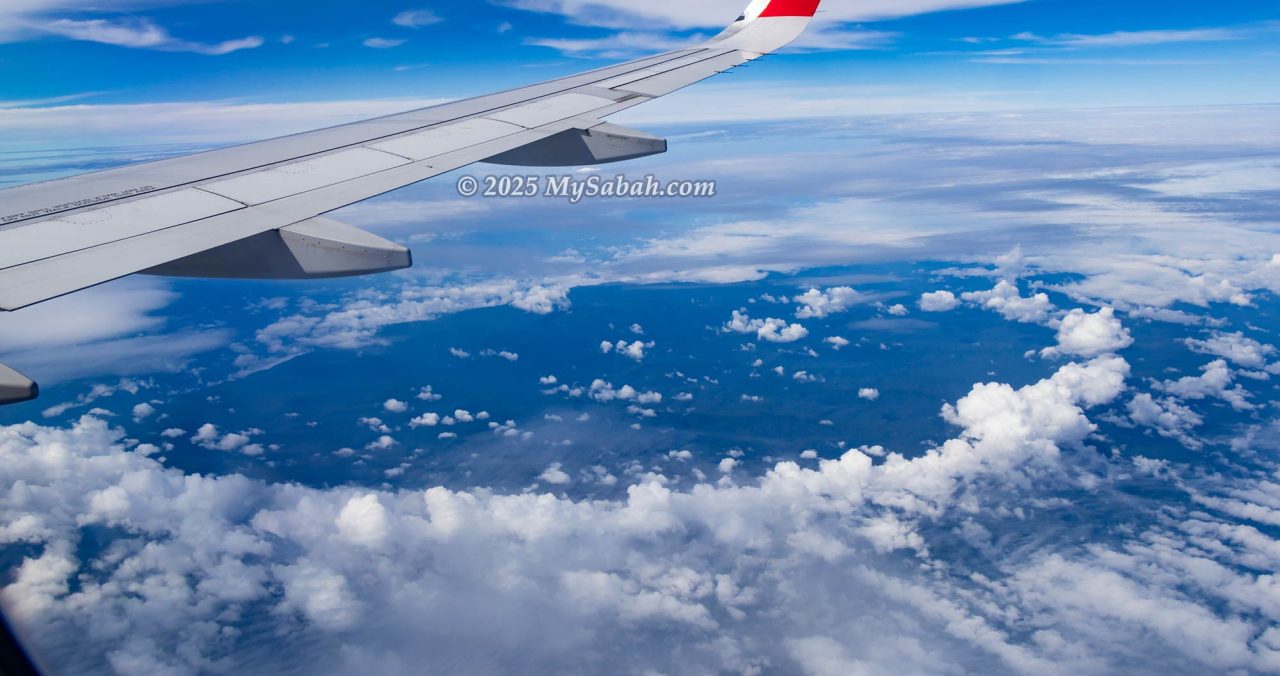
by Maliau Basin, also known as “Sabah’s Lost World,” is renowned for its pristine Bornean rainforest and is a candidate to become Sabah’s next UNESCO World Heritage Site. From above, its near-perfect circular shape resembles a giant meteor crater. To put its scale into perspective, the landmass of the Maldives could fit inside this massive basin.
Maliau Basin is often featured as a top jungle trekking destination, with visitors hiking over 35 km across a challenging, undulating landscape deep in the virgin jungle. But guess what? Enjoying the natural beauty of Maliau Basin doesn’t have to be a dreadful adventure. Instead, it can be a leisure holiday at your comfort, as written in this article.
Maliau Basin Studies Centre (MBSC)
Located in the south of Maliau Basin, the Maliau Basin Studies Centre (MBSC) serves as a base for visitors. Instead of serving as a basic campsite, it is like a modern university campus. It is fully equipped with tap water, electricity (available from 7:00 AM to 11:00 PM by power generator), accommodations, offices, labs, and activity halls.

Whether you are a casual tourist, a naturalist, a hiker, or a researcher, there is a place for you. As a nature photographer, I consider this place a daily “loot box.” The longer you stay, the more luck you get. I stayed for 6 days and 5 nights, and I am excited to share my great finds here.

After I checked in at MBSC, a guide named Mr. Azree was assigned to me. Azree is from Ranau. Although he is a civil engineer, working at Maliau exposed him to nature’s beauty. He admitted he would miss Maliau if he were away for too long. He has been a guide for 19 years and is highly skilled in birdwatching. He shared stories about everything I saw, as if he were introducing his own family members.
I visited during the school holidays, so student groups of over 50 people fully booked the accommodation. They were from primary and middle schools in Tawau and Keningau. MBSC is a great choice as an outdoor classroom. However, I usually avoid going to the same places they do, as their noise tends to scare away birds and wildlife.


If you are not particularly interested in physical activity, you can join a night safari or just stroll around the compound. MBSC is not fenced, so you can see wildlife pass by even if you sit on the balcony or in the dining hall. Because I wanted to see as many wildlife as possible, I hiked a lot along the nature trails.
Wildlife Sighting
Maliau Basin has the most iconic mammals of Borneo. Ten of them are endangered or vulnerable species, such as the pygmy elephant, the banteng (tembadau, wild cattle), and the orangutan. However, this is not a zoo, so you will need luck to see them. As Maliau Basin is a Class I forest reserve that prohibits logging and hunting, the wildlife here is more “chilled” (except for the elusive red leaf monkey). Though they keep a distance from you, you can still get fairly close to them.
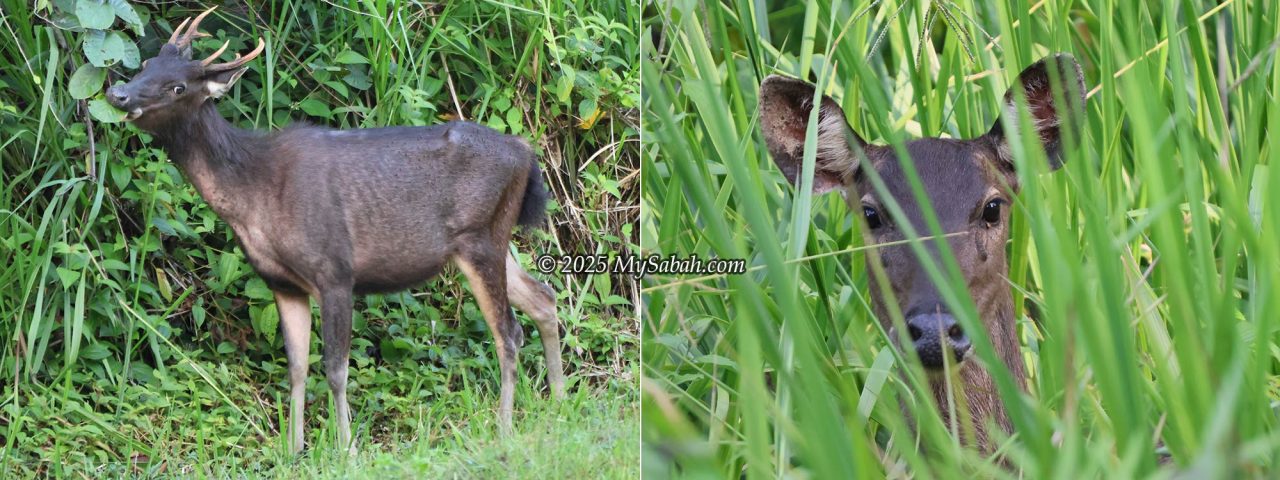
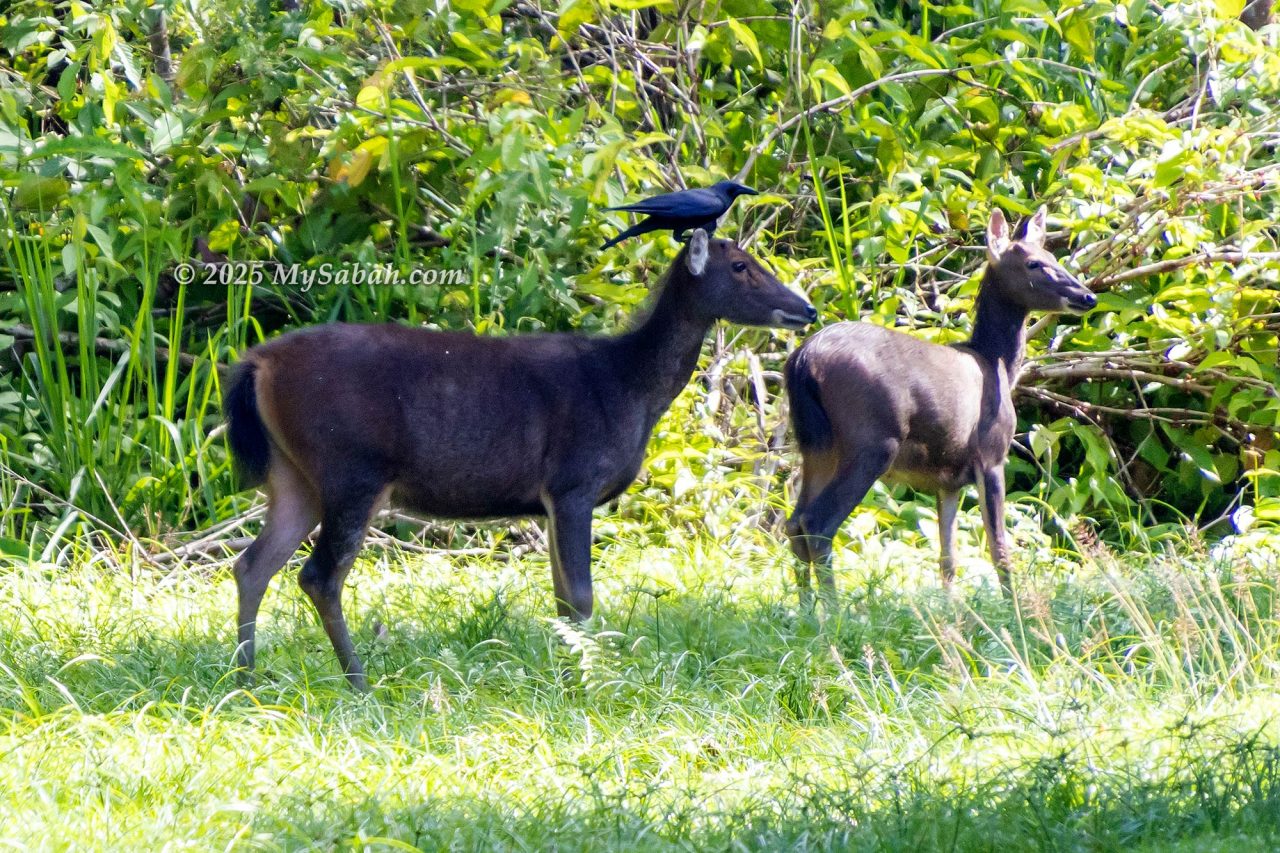
The Bornean Sambar Deer, the largest deer species in Borneo, is a guaranteed sighting as early as Day 1. Dozens of them graze along the road leading to MBSC. One of them was only 15 feet away from me. Suddenly, it made a loud call like a trumpet before dashing into the grass. That was as loud as a car horn. I was “honked” at least five times during my stay. I bet this is their strategy to stun their predators to buy more time to flee.

My “jackpot” on this trip was the pygmy elephants, which are the smallest elephants in the world. This encounter was a total surprise. On Day 2, I was walking with Azree to a fruiting fig tree by the roadside, which had been reported to have a bearcat feasting on it. Out of the blue, an adult elephant emerged from the tall grasses less than 30 metres away from us. Lone elephants are known to be aggressive, so we quickly retreated.
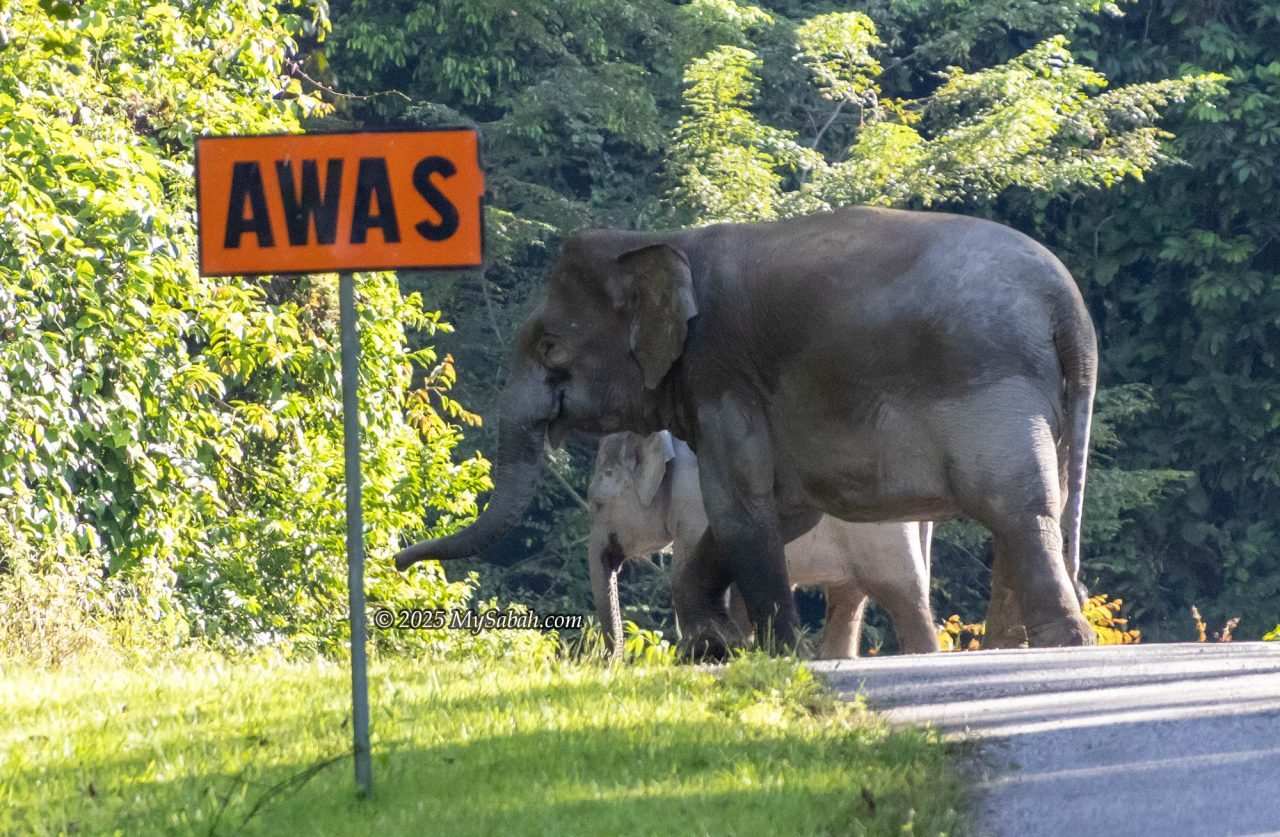
The elephant saw us but did not appear bothered, so we observed her from 80 metres away. It walked to the middle of the road, stopped, and kept looking at a spot in the dense grass, as if it was waiting for something. Then, a calf appeared and joined its mother. Slowly, they moved into the forest on the other side of the road. Mr. Abel, the driver who has worked at MBSC for over 20 years, said I was lucky. Before I arrived, there had been no elephant sightings for three months.
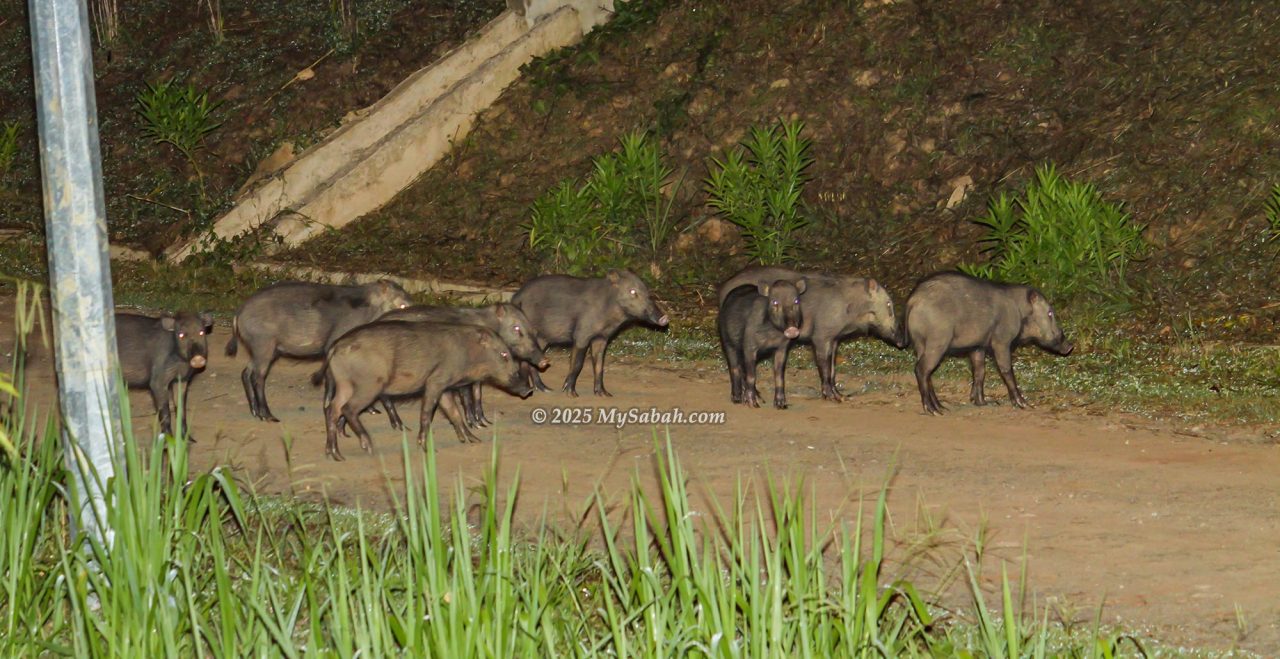
There used to be many wild bearded pigs around MBSC. However, African Swine Fever wiped out over 90% of them, making them a rare sight. The good news is that, since the hunting ban, they have been returning slowly, though they are still rarely seen. The driver lamented that he sees only one every three months. This reminds us how fragile our ecosystem is. We should never take it for granted.
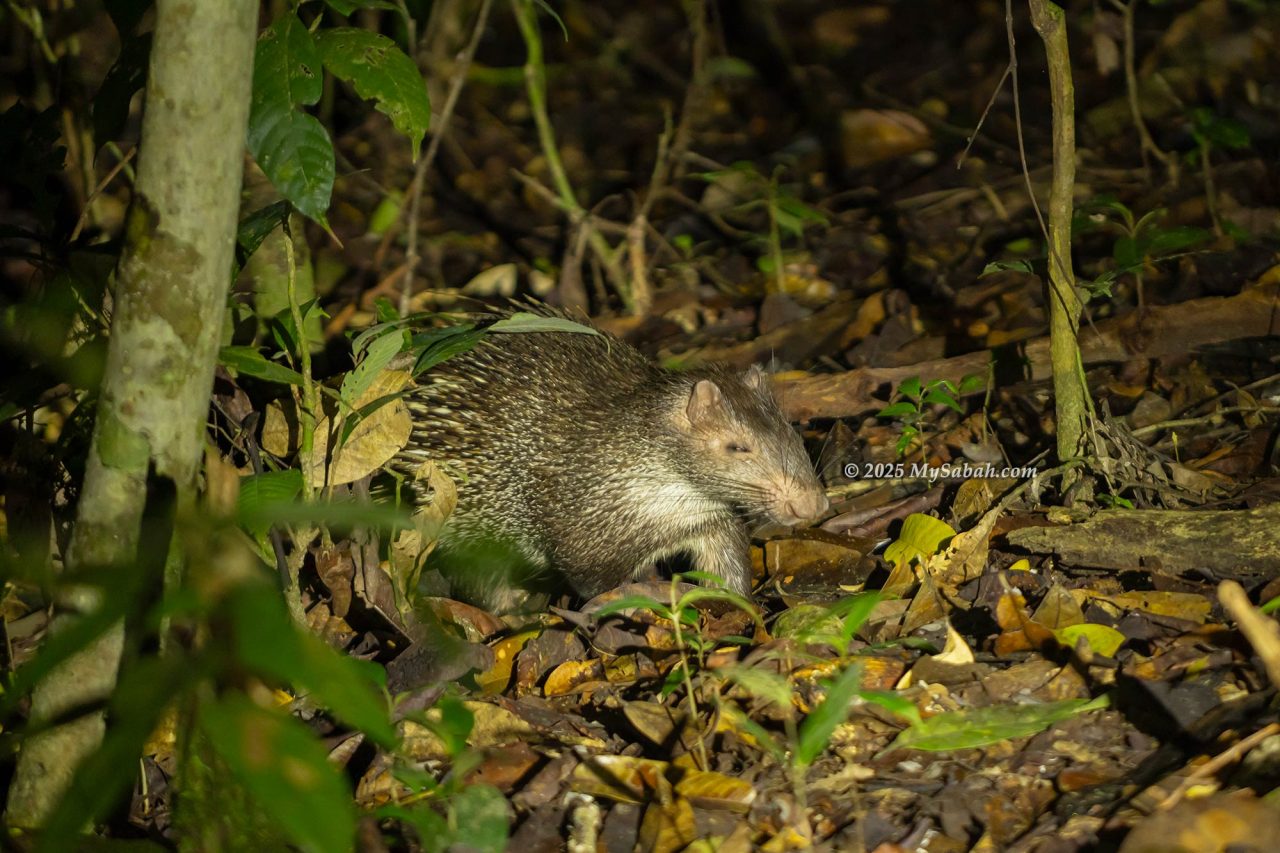
I also had some luck during night walks. The most memorable was a pair of Bornean Porcupines chasing each other, probably as part of a mating ritual. They were oblivious to my presence and ran only a few feet away. The Bornean Porcupine is endemic to Borneo and resembles a cute capybara with spines. I also saw a Moonrat and a Greater Mouse-deer (Tragulus napu) for the first time, and I heard the fierce warning calls of a barking deer.
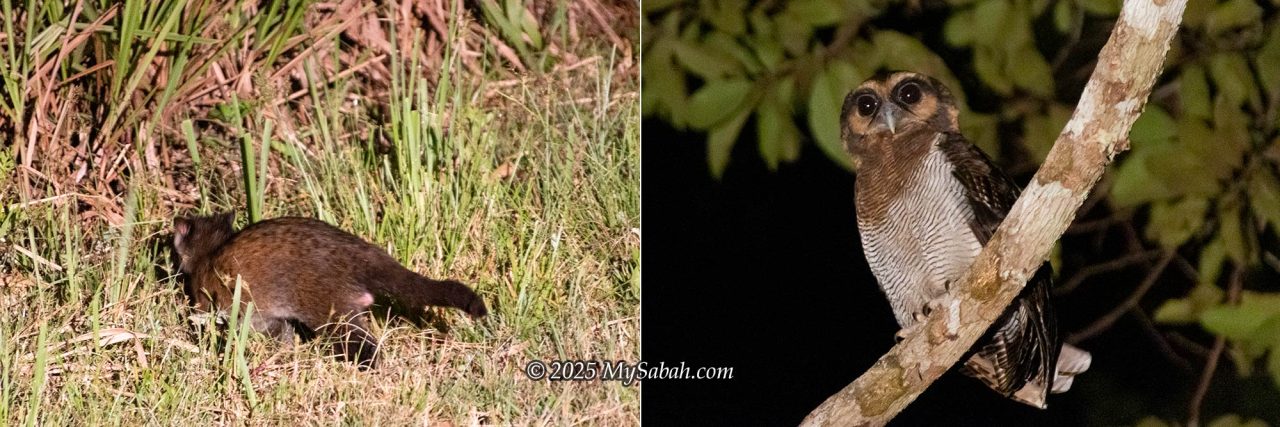
The following night, I saw a Long-tailed Porcupine in the compound. At first, I thought it was a cat-sized rat. According to Azree, it loves pumpkin. Out of the three porcupine species in Sabah, I saw two at MBSC. They are becoming rare because people hunt them for their bezoars, which are worth more than gold. I also saw a Banded Palm Civet (endemic to Borneo), a Malay Civet, and a Short-tailed Mongoose around the same spot at different times.
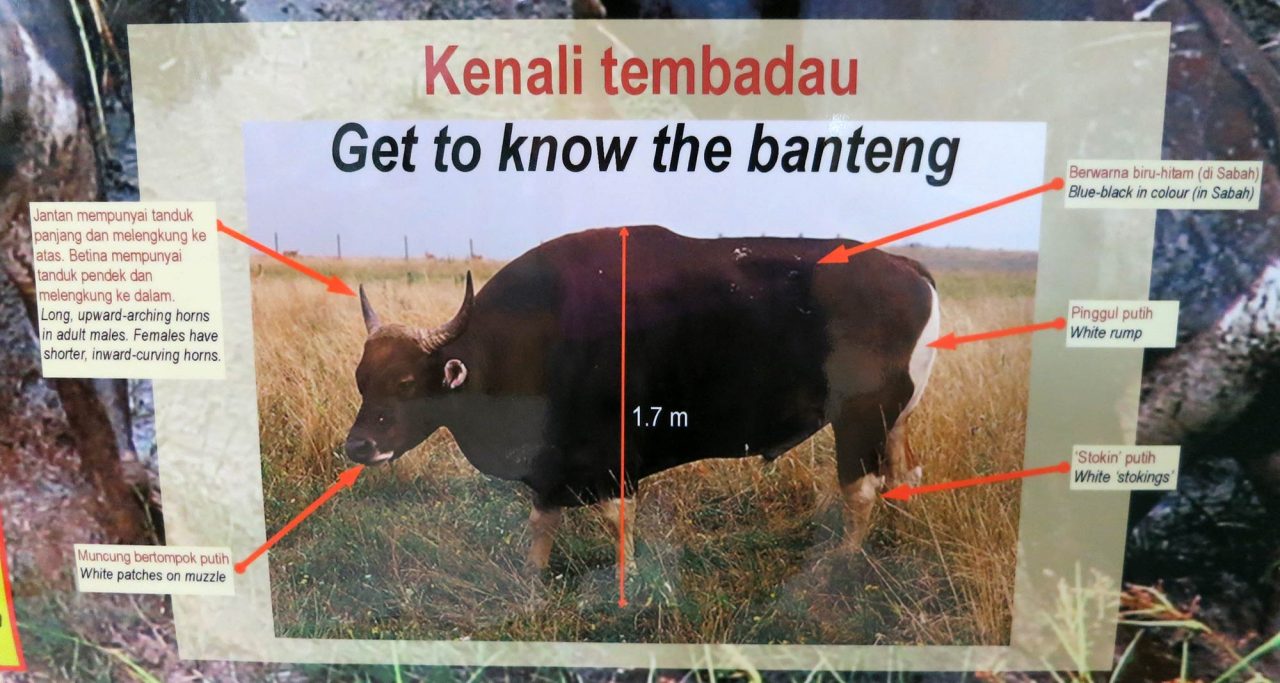
Other top-tier wildlife you might see in MBSC include the Orangutan, Tembadau, Tarsier, Clouded Leopard (Neofelis diardi), Leopard Cat (Prionailurus bengalensis), and the Tufted Ground Squirrel, provided that “Lady Luck” smiles on you.
Birdwatching
Birdwatching is another popular activity at MBSC, as 290 bird species (almost half of Borneo’s 622 recorded species) are found in the Maliau Basin. Even if you do not see them, you will likely hear them. I heard the eerie, laughing calls of Helmeted Hornbills every day, and the loud calls of the Great Argus that tear through the night. Do bring binoculars to MBSC; you can thank me later.
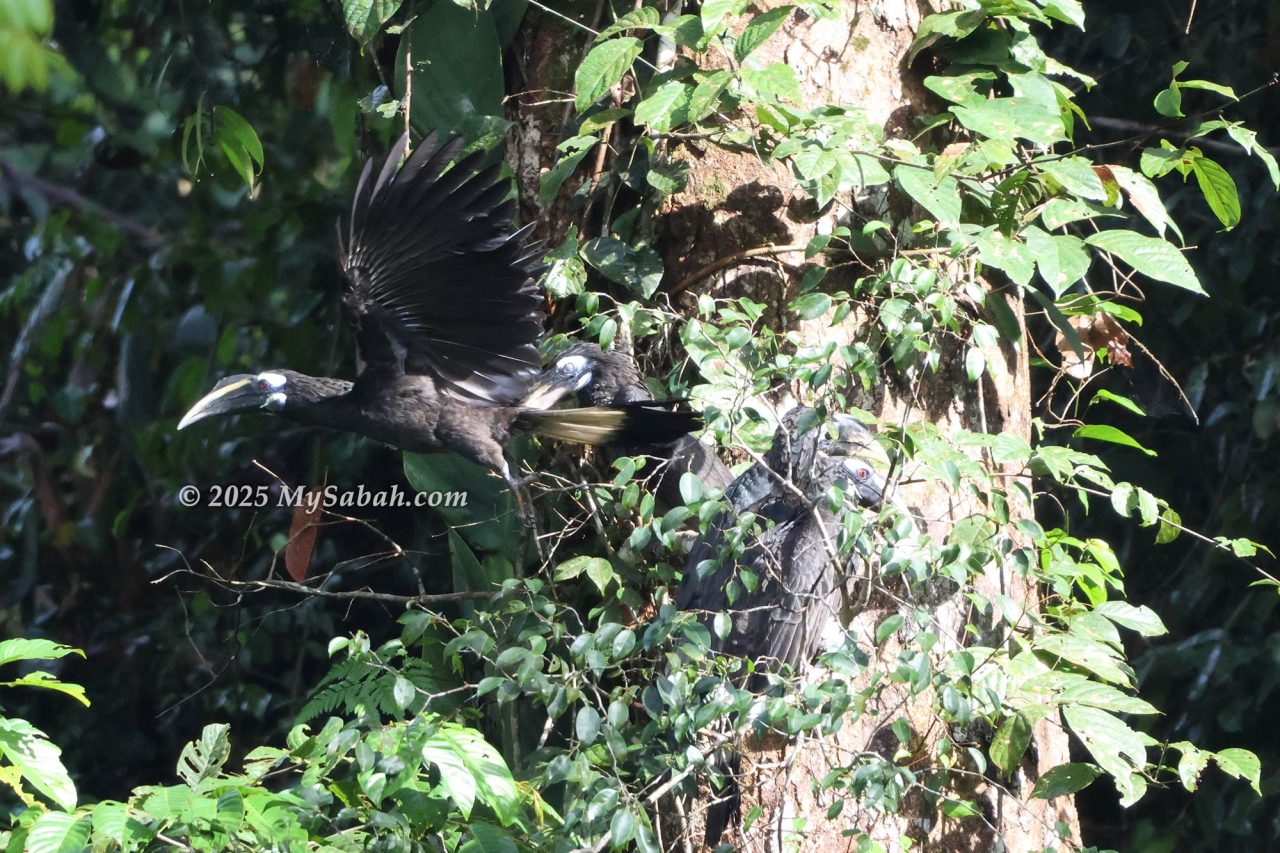
The most noticeable birds are the big and noisy hornbills. The best time for birdwatching is around 6 am. Just walk slowly along the asphalt road in front of the office building and look up at the trees, where dozens of hornbills gather and call to their mates to start their day. Sometimes there are over 30 of them in a single morning.
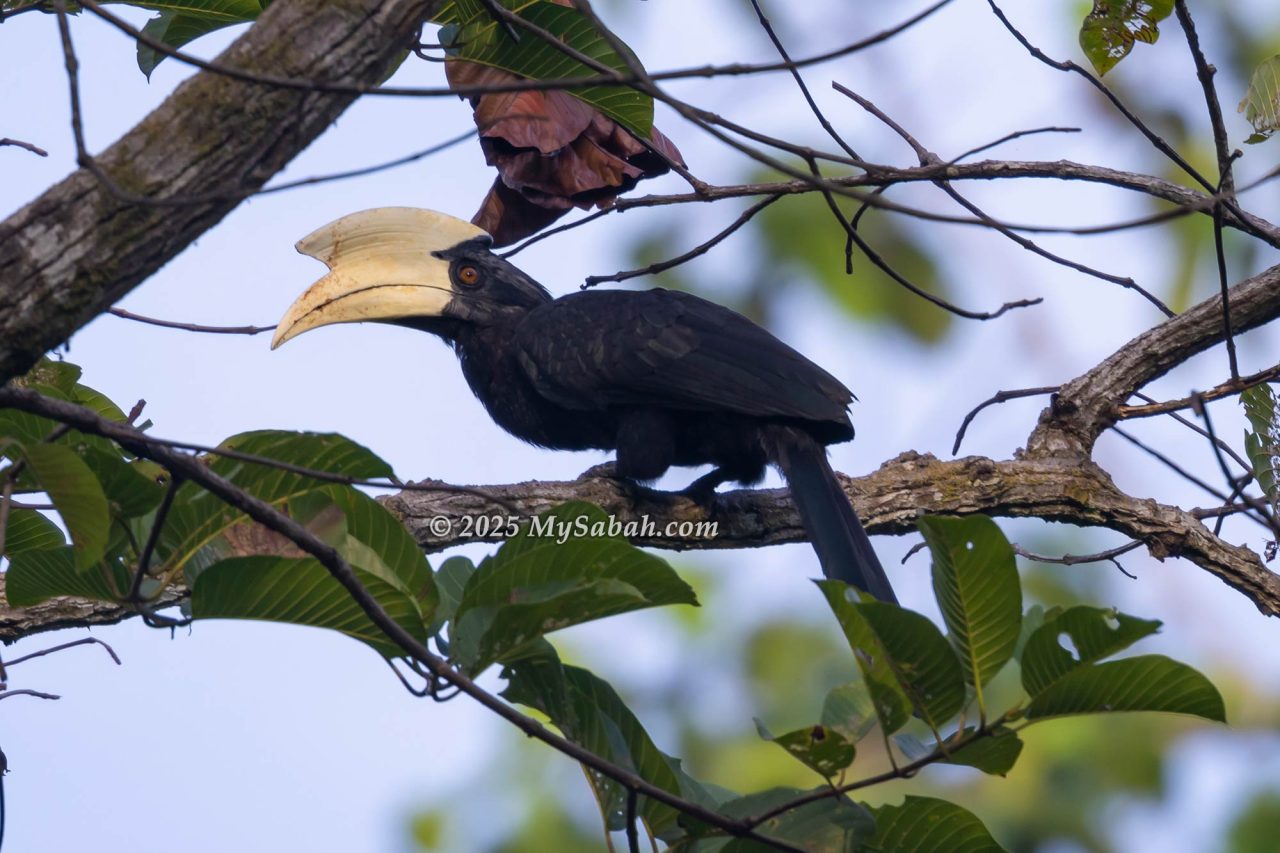
Of the eight Bornean hornbill species, I saw five at MBSC with minimal effort. Most were Black Hornbills and Bushy-crested Hornbills. I also saw four Rhinoceros Hornbills and a pair of Wreathed Hornbills. The most prized sighting was the Helmeted Hornbill. I saw a pair perched high in a tree. One of them banged its forehead hard against the trunk as if using it as a sandbag. Azree mentioned that the Helmeted Hornbill uses its casque as a weapon. He has even seen two Helmeted Hornbills fight by bumping heads in flight, like goats, which made a very loud sound.
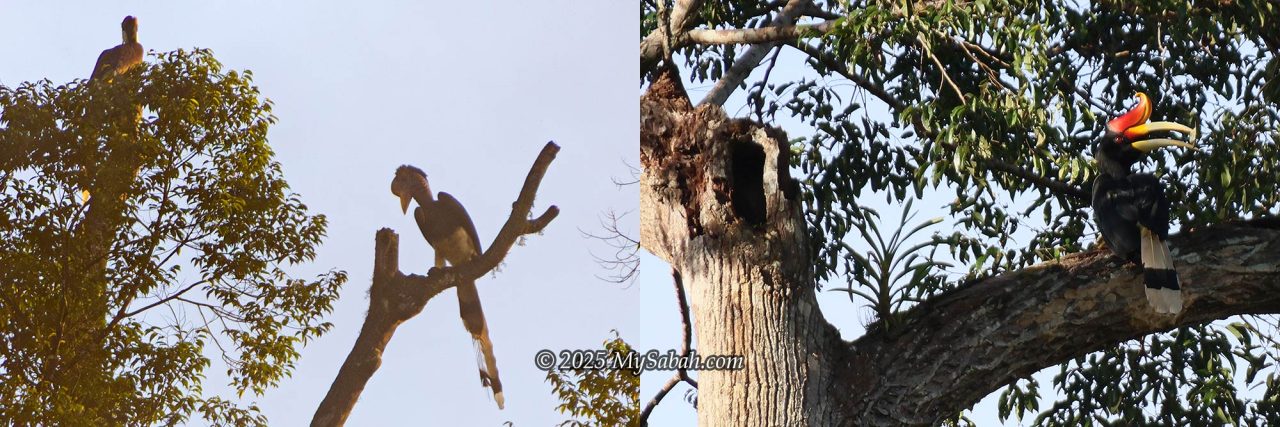
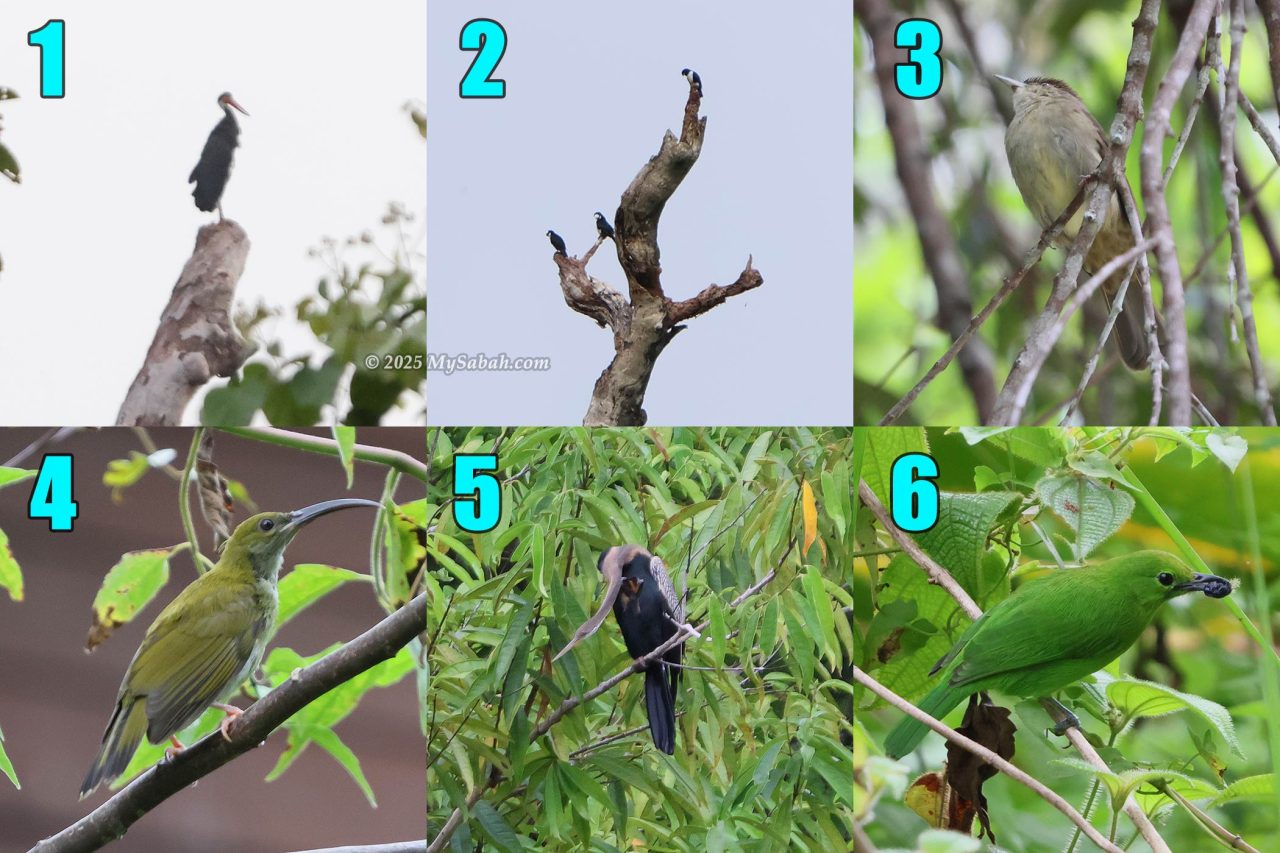
Also ranking high on the bucket list for birders are the Storm’s Stork and the Bornean Falconet. Both were seen while I was looking for hornbills in the morning. There are fewer than 500 Storm’s Storks left in the world. Azree said he had not seen a Storm’s Stork here for three months, so he was pleased about the sighting. The Bornean Falconet is also called the White-fronted Falconet. It is endemic to Borneo and is one of the smallest raptors in the world. It is so tiny that it likely could not even defeat a chicken.
You do not need to walk far to see birds. Among the trees and shrubs around Maliau Lagoon, I saw the Dark-throated Oriole (Oriolus xanthonotus), Lesser and Greater Leafbirds, Long-billed Spiderhunter, Lesser Fish Eagle, Buff-vented Bulbul, Common Iora, Oriental Darter, Chestnut-breasted Malkoha, and Crested Serpent Eagle.
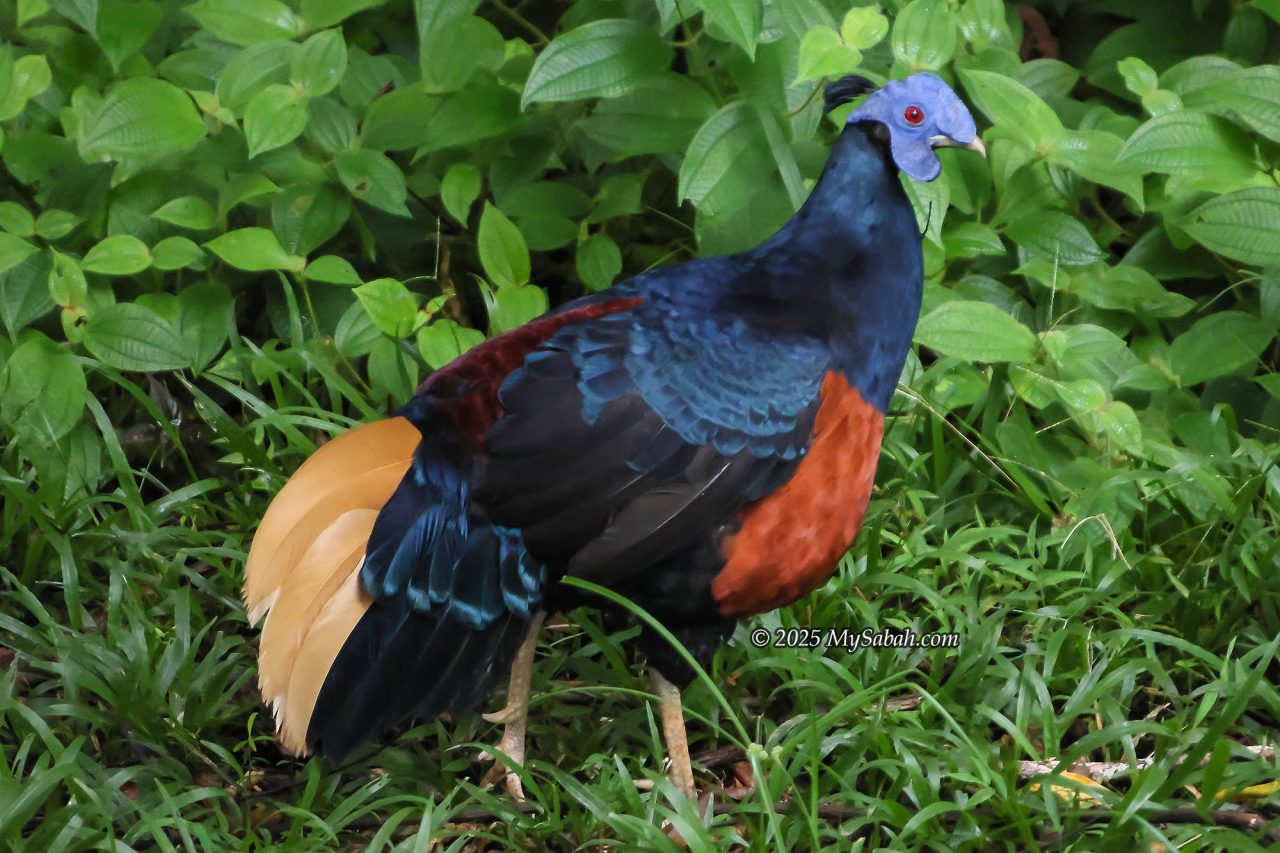
We also walked the jungle trails to find birds that prefer forest habitats. Azree whistled while walking and listened for a response. Broadbills and pittas responded by calling back but never showed up, perhaps because they were tired of his old trick. However, a young Sabah Partridge was likely desperate for a mate. It answered and stood less than 20 feet away from us.

Special birds can appear at any time, even when I am not actively looking for them. I searched for the Blue-winged Pitta and Frogmouth but did not find them. Nevertheless, a rare Blue-banded Pitta checked me out when I was taking photos of a giant Mengaris tree alone in the woods. A flock of Crested Firebacks wandered around the dining hall while I rested after a meal. I also bumped into a sleeping White-crowned Shama during a night walk.
At MBSC, I heard the calls of the Great Argus, Hooded Pitta, Blue-winged Pitta, Blue-eared Barbet, and Golden-whiskered Barbet, though I did not see them. If you are fortunate, you might see other trophy birds of Borneo, such as the Bornean Bristlehead, Banded Kingfisher, Bulwer’s Pheasant, and Bornean Ground Cuckoo (Carpococcyx radiceus).
Night Safari
To avoid predators, many wildlife species are nocturnal. The night safari is a low-effort way to find them. You simply sit on a chair mounted on the back of a truck. The truck drives along the road while spotters scan the surroundings with spotlights. Trees are generally the best spots to find wildlife. They primarily target tree-dwelling and larger mammals, such as the Slow Loris.

The car will stop if the spotters see eyes reflecting the light. The guide will then explain their findings. I tried it once and saw Dark Flying Squirrels, a Bearcat (Binturong, Arctictis binturong), Common Palm Civets, Sambar Deers, a Malay Civet, a tree frog, fireflies, and a sleeping Yellow-bellied Prinia. The “holy grail” is the Clouded Leopard (I haven’t seen one so far). The chance of a sighting is about 1 in 20 rides. The Leopard Cat is more common, with a 20%-40% sighting probability.
The night safari usually lasts about an hour. It is like a little treasure hunt in the dark. The cooling breeze is pleasant, and it is sometimes foggy. Your feet do not touch the ground, so there is no worry about leeches. It is a fun ride even if you find nothing. Personally, I prefer night walks because animals are usually far away during a safari, making them hard to photograph in the dark.
Night Walk
Therefore, I prefer night walks over the night safari. To me, it is a game: I use my flashlight to find animals playing hide-and-seek. You might even find new species that are yet to be described by science.
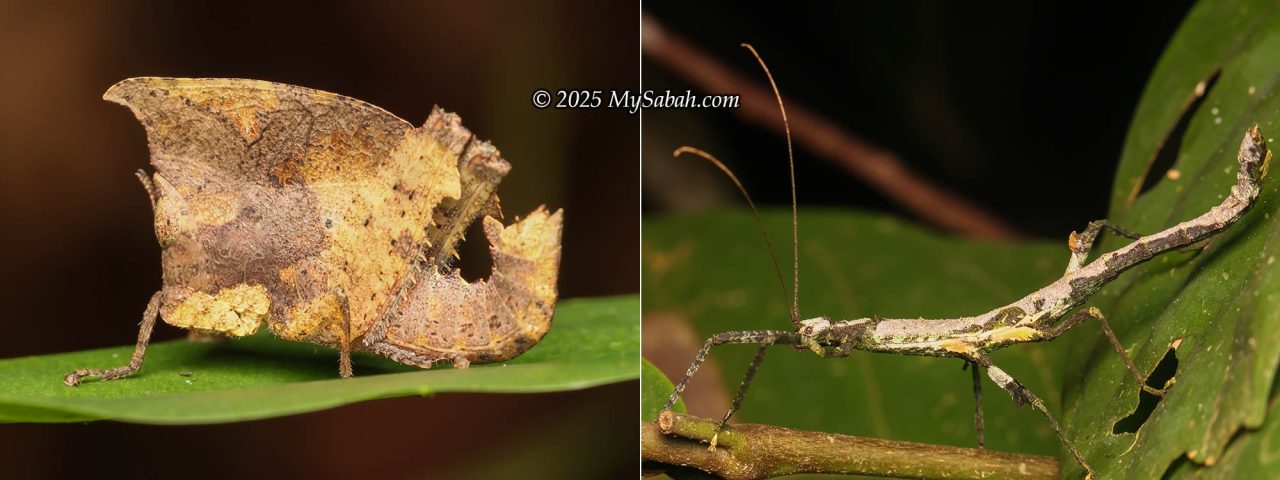
A night walk never disappoints macro photographers who enjoy photographing critters such as insects, lizards, snakes, frogs, and various weird-looking bugs. At MBSC, I found leaf-nosed lizards, a Bent-toed Gecko, a tarantula, daddy long-legs, stick insects, a Malay scorpion, pill millipedes, a house centipede, crickets, a katydid, a lanternfly, Giant Forest Ants (Camponotus gigas), and a few frogs. I was looking for glowing mushrooms but found none.
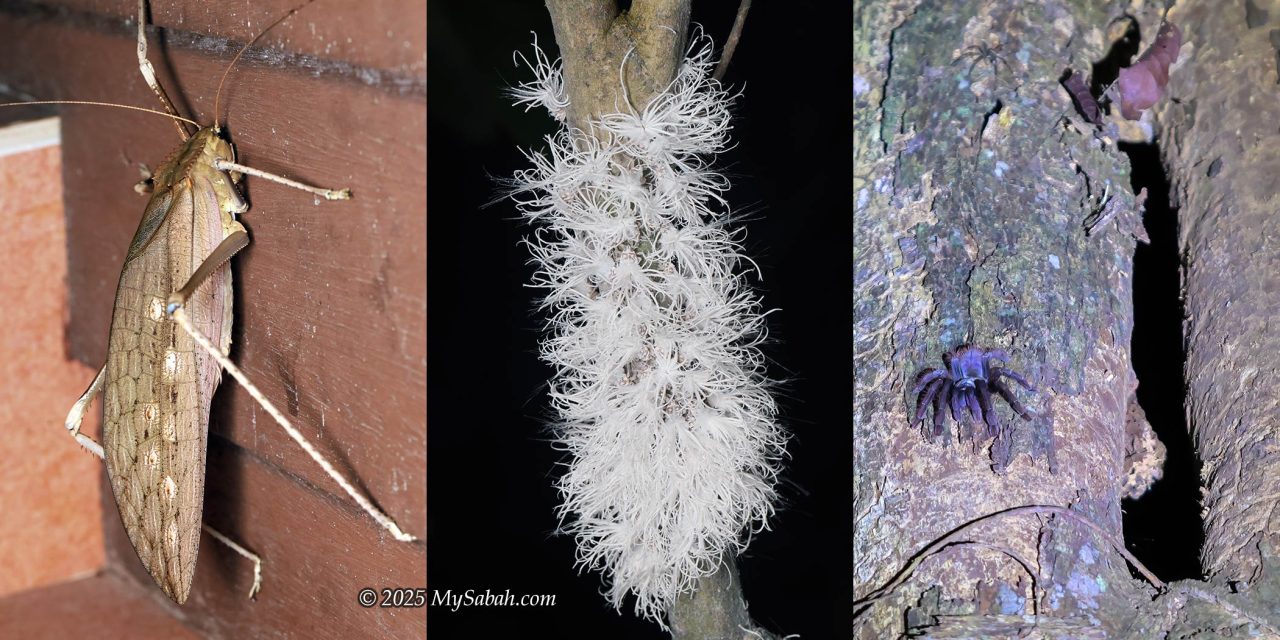
However, you can still come across some extraordinary wildlife, such as the pair of Bornean Porcupines I mentioned earlier. There is also a chance to see a Tarsier, a Leopard Cat, or a Frogmouth. In July 2025, the rangers even saw a rare dark-morph Bay Cat during a night walk. While you are busy looking, be mindful of your steps. Besides leeches, watch out for fire ants. Their painful stings can penetrate socks easily.
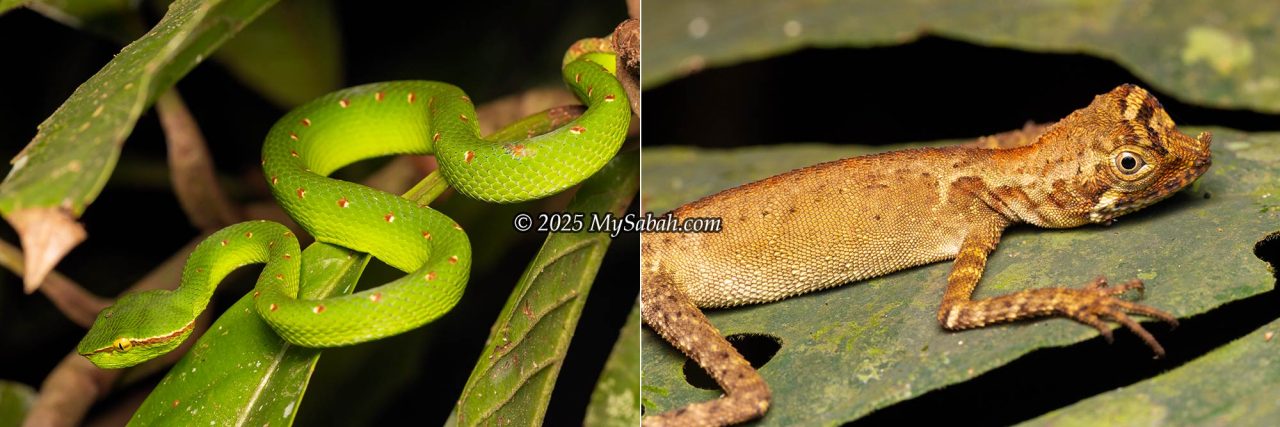
Some tourists love “herping,” which is increasingly popular in Borneo. Herping is a hobby focused on searching for, observing, and photographing reptiles and amphibians. You can request that MBSC assign you a guide who specializes in herping.
Hiking
There are a few jungle trails next to MBSC. They are only 1 to 2 km in length, and some are connected. The trails are relatively short and flat. However, the tropical forest is warm and humid, so I sweated a lot even though the hike was not challenging. Each trail has different features. It is better to have your guide accompany you for safety and because they know the area well.
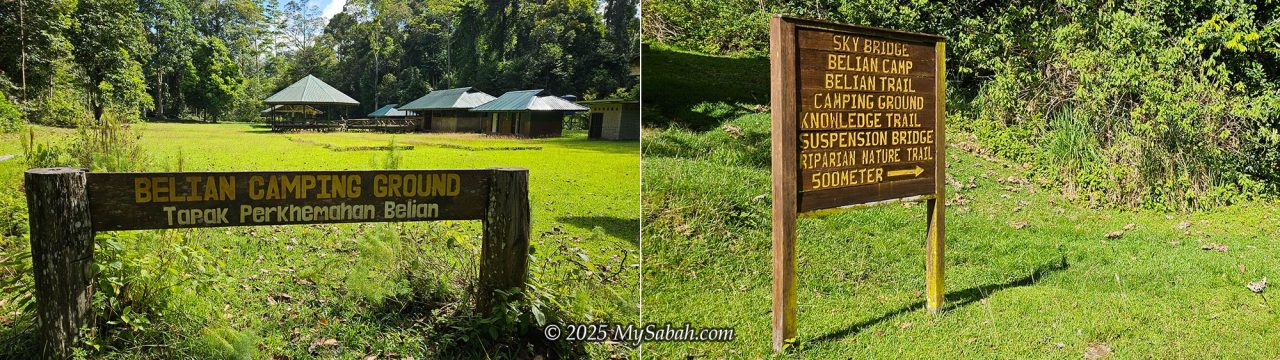
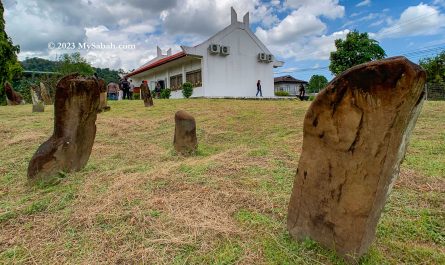
The most interesting trail is the Belian Camp Trail, which is about 800 metres from MBSC. The trail is named after Bornean Ironwood (Eusideroxylon zwageri), known locally as Belian. The trail runs next to Belian Camp, believed to be the site of a former village called Kampung Lonod. It is suspected that people lived here 50 to 100 years ago because of traces found there, such as non-native coffee plants, wooden poles, and bamboo pegs on Mengaris trees.
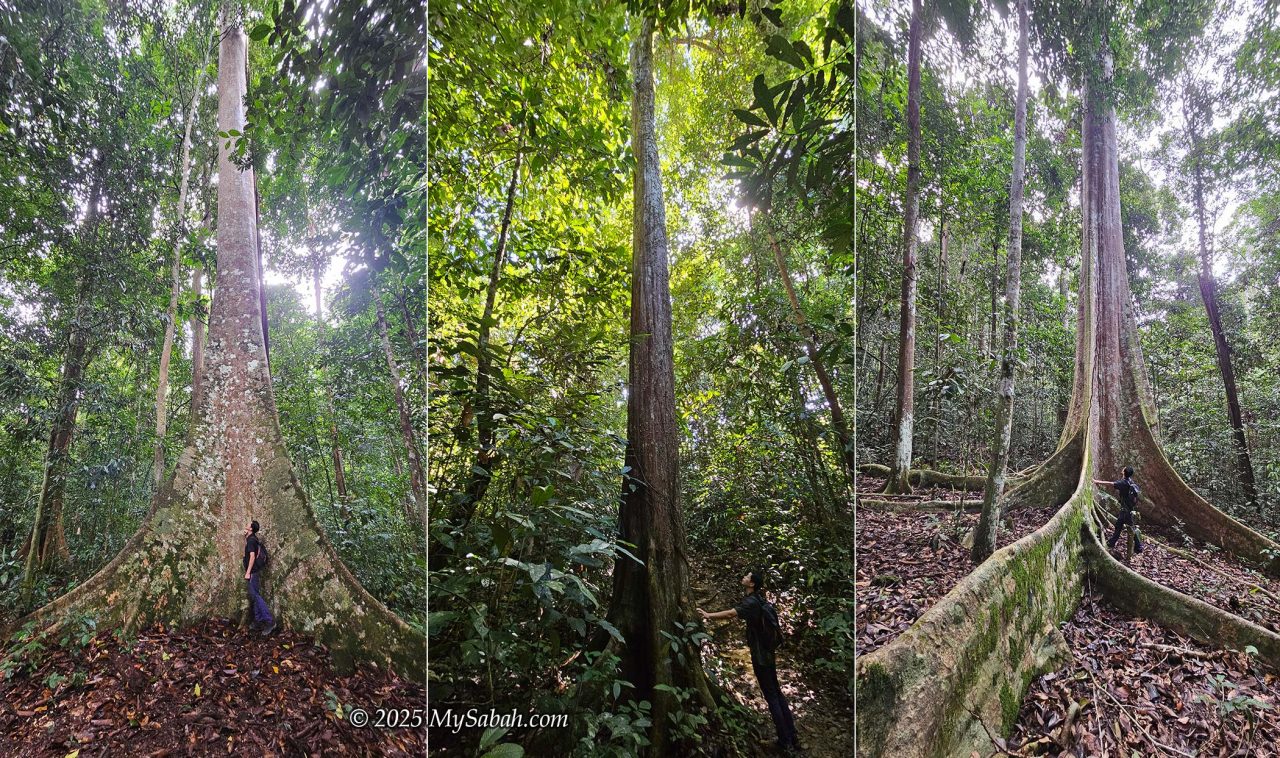
Some Belian trees appear to be aligned as if they were planted. One of the Belian trees is over 100 years old. Belian tree is a slow-growing species that increases by only 0.2 to 0.4 cm in diameter every year. The seeds of the Belian are a food source for porcupines, which can crack open the hard shell and withstand the toxins. The Belian Trail is my favorite for animal sightings.
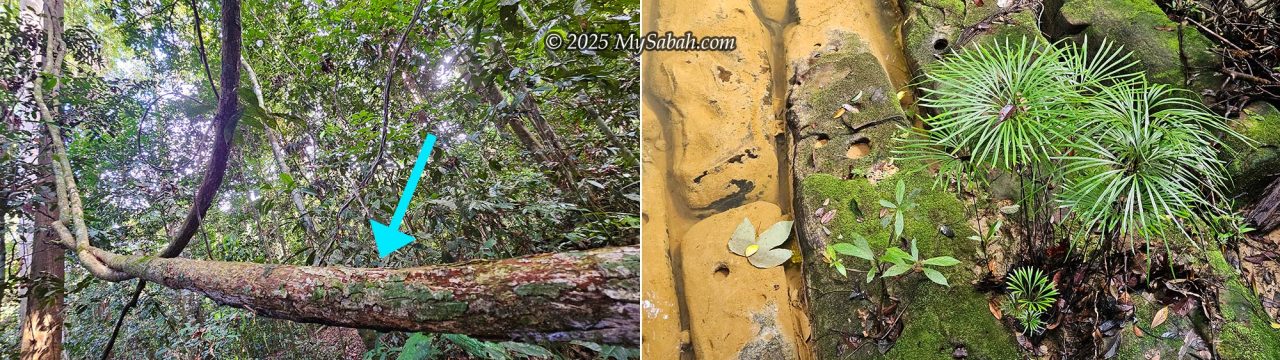
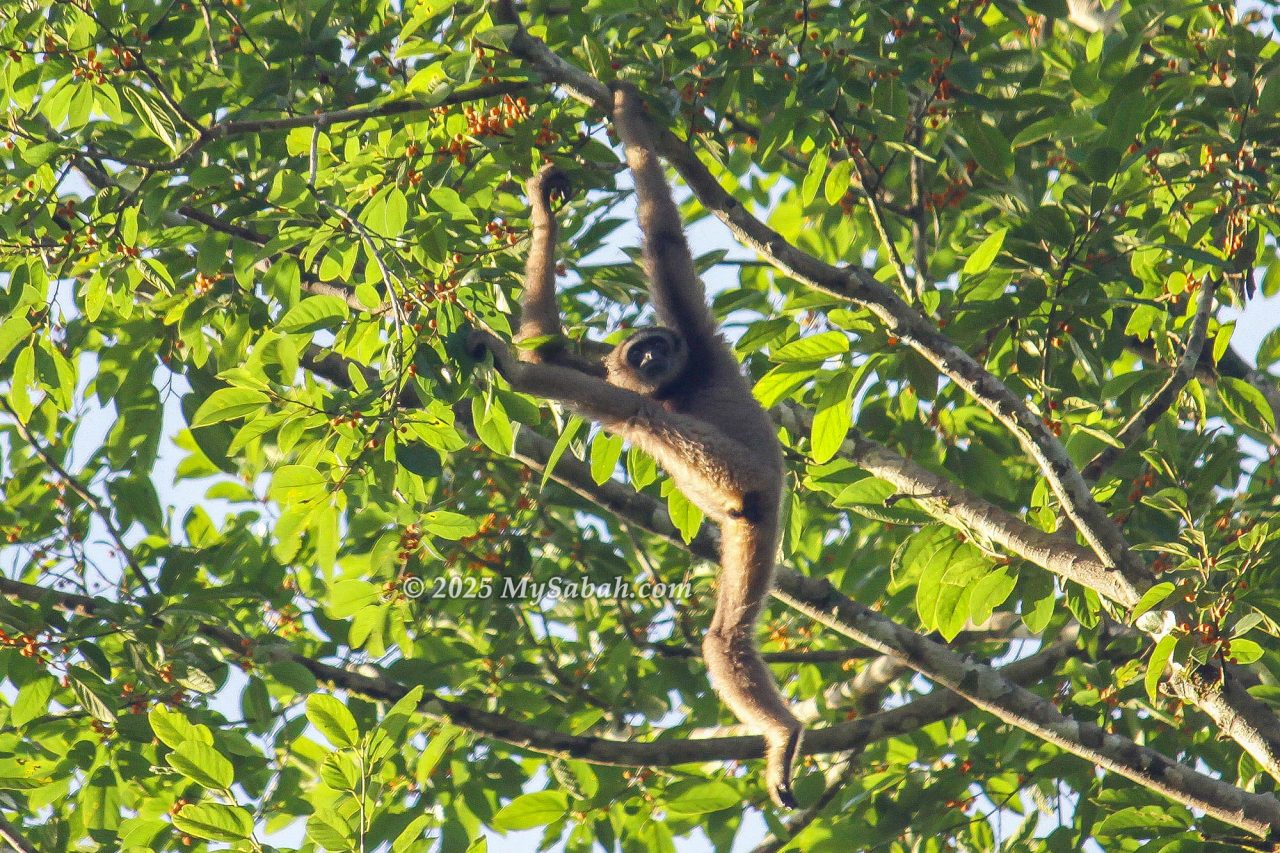
The time when Bornean Gibbons start singing loudly is the perfect time for a morning hike and birdwatching. In the afternoon, cicadas take over the choir alongside a few dancing Wood Nymph butterflies (Ideopsis gaura). You will see very little wildlife in the afternoon as they hide from the heat. However, Azree once saw a 6-foot Rough-necked Monitor (Varanus rudicollis) playing dead on the trail, so expect the unexpected.
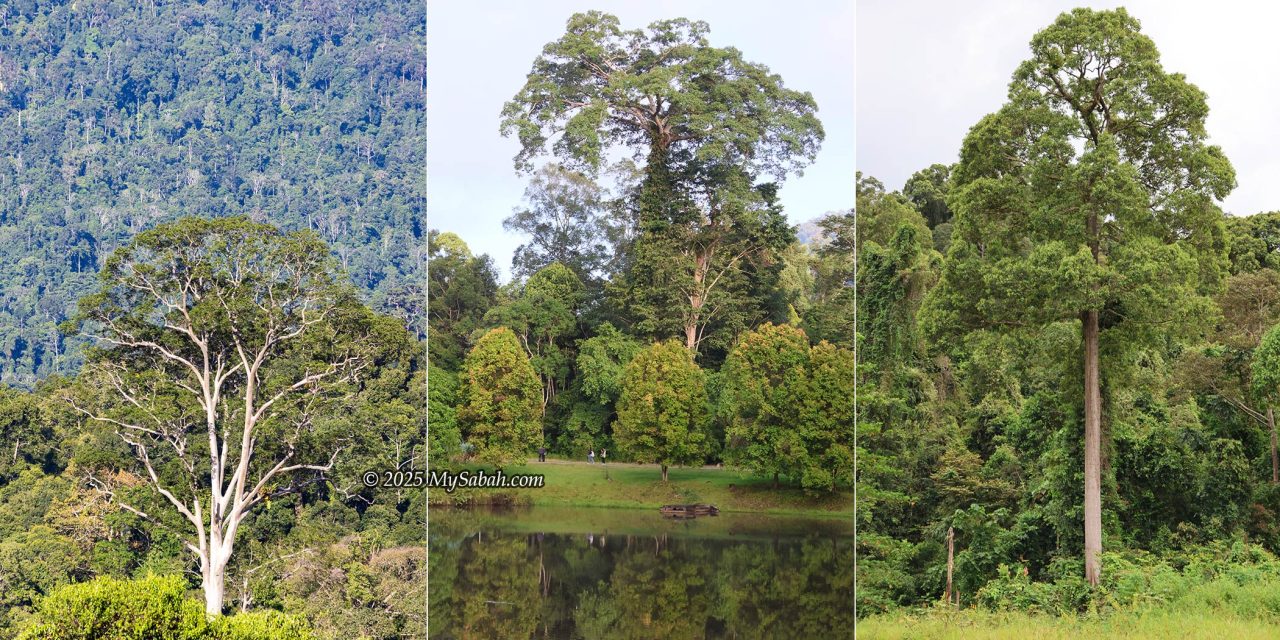
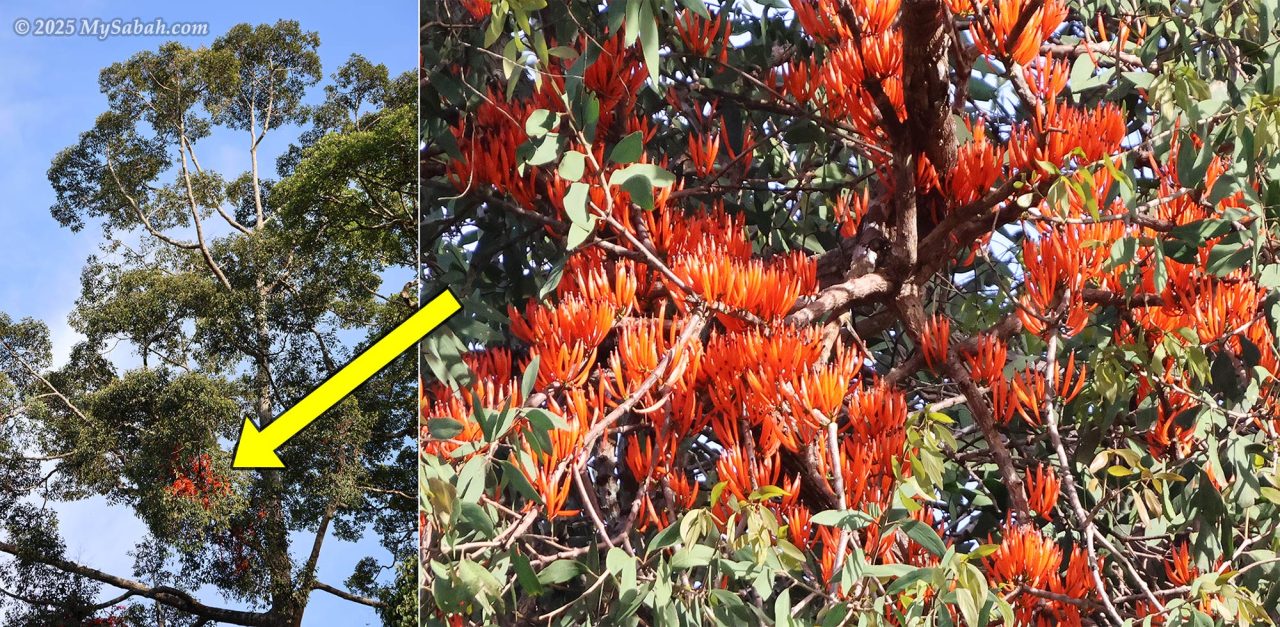
The afternoon is a good time to look at trees and plants in a well-lit environment. The forest around MBSC is regenerated mixed dipterocarp forest, yet it does not lack towering tropical trees. Being tall and slender, with smooth, light-colored bark, the Mengaris tree is one of the most recognizable beauties of the rainforest. It can reach heights of 85 metres.
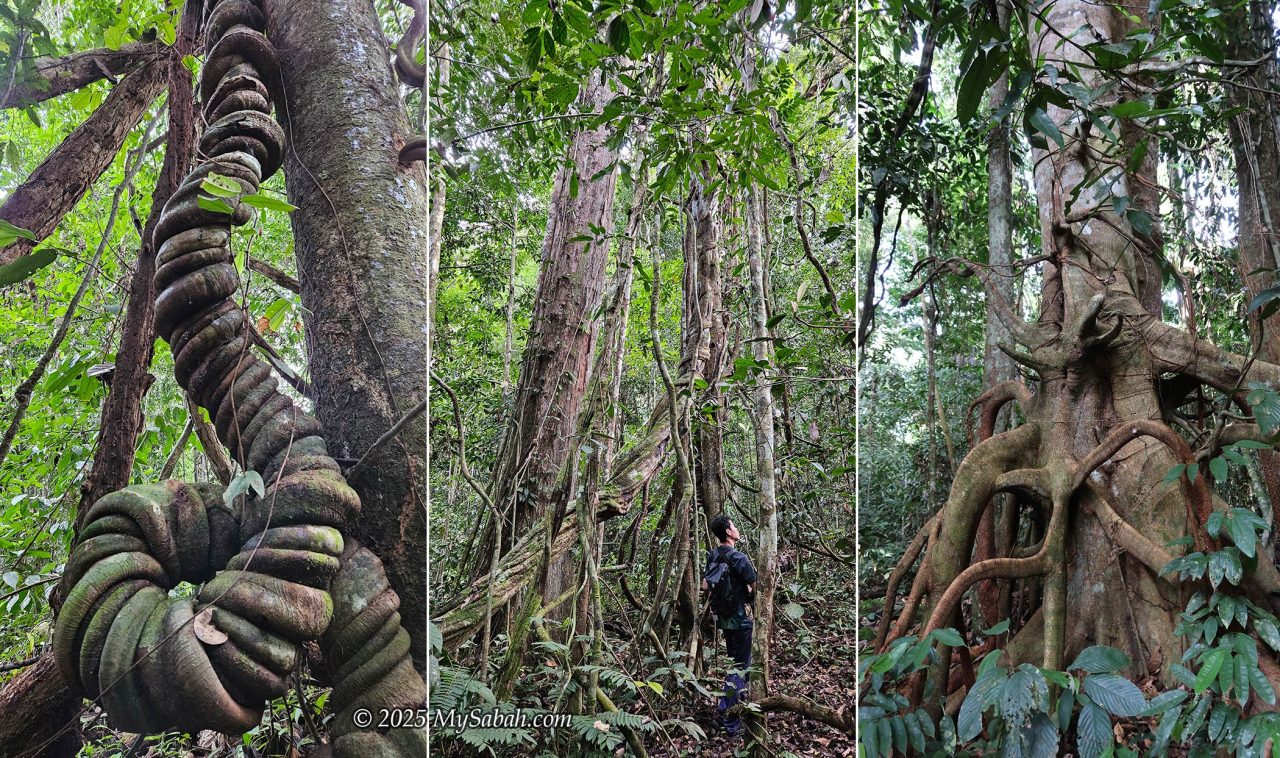
The Seraya Kuning Siput (Yellow Seraya) is a tropical tree species that grows here. The Banyan is a strangler fig tree and is often considered a haunted tree, hence the name Kayu Hantu (Ghost Wood). The vegetation of the Borneo rainforest is multi-layered. Under the huge canopies are dense undergrowth, crawlers, epiphytes, and lianas. There are 1,800 plant species recorded in Maliau.
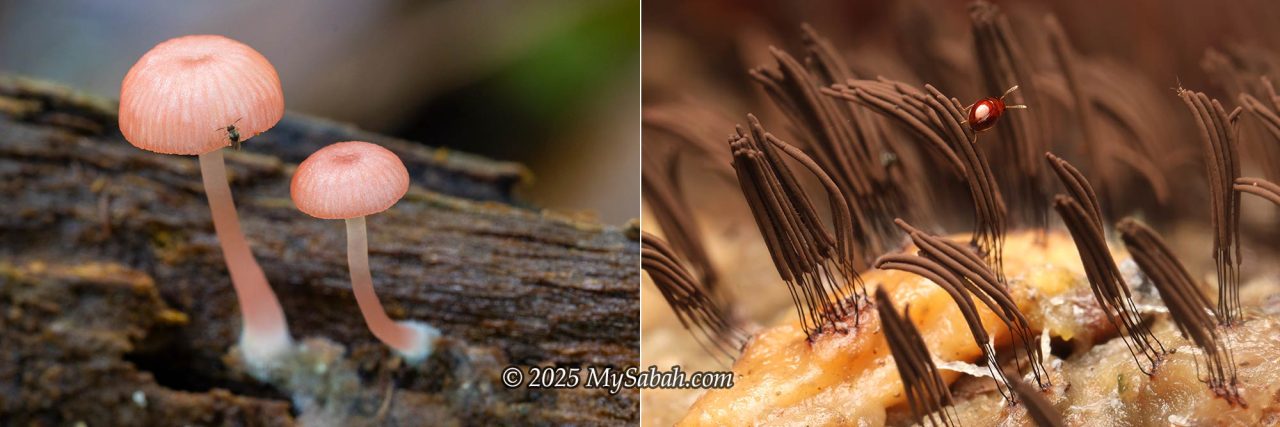

The happiest moment of my trip was seeing the super-rare Thismia plant for the first time. It is so rare that this species likely has fewer than 10 photos online. Also known as the Fairy Lantern, Thismia has no chlorophyll and cannot produce food through photosynthesis. It is a parasitic plant that steals nutrients from fungal networks.
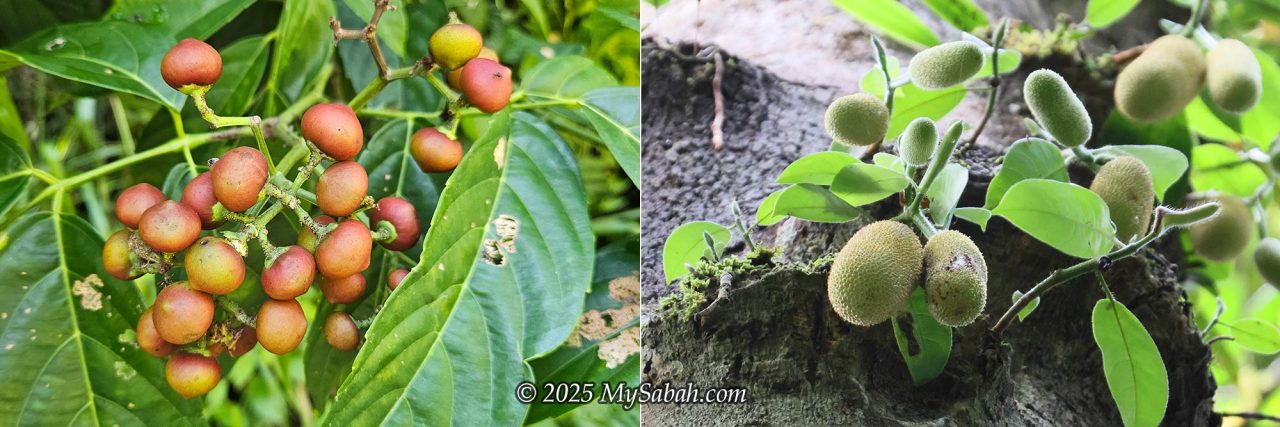
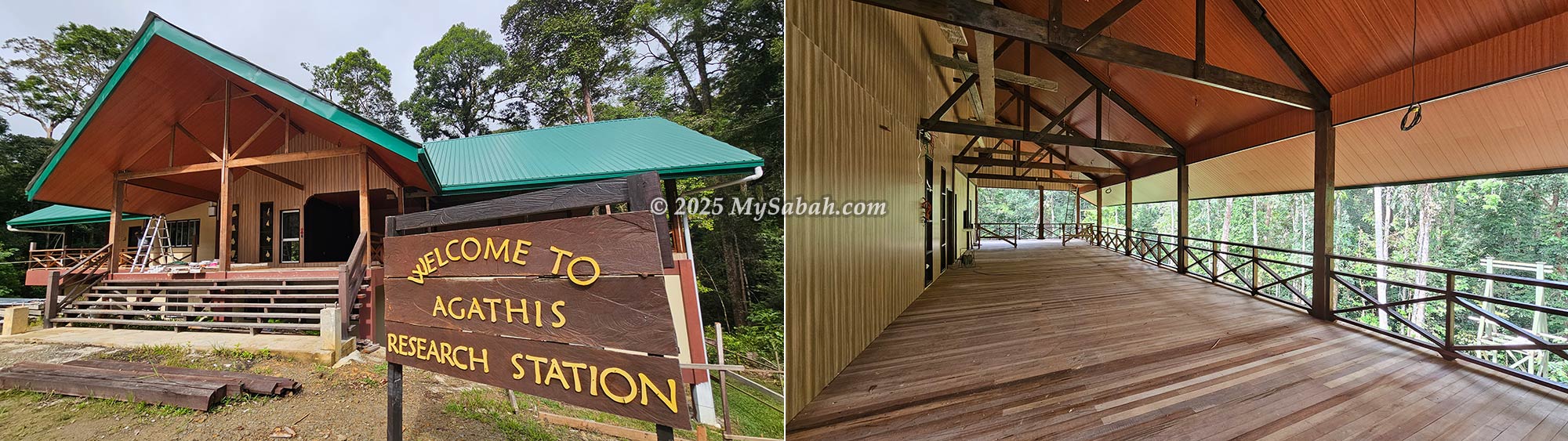
Agathis Camp is 30 minutes away from MBSC. It is a pristine, mossy, damp hill dipterocarp forest. I saw an agarwood tree (Gaharu), which is the most valuable tree for its perfume wood, as well as wild fruits such as Tampoi and a durian-sized cempedak.
Sky Bridge
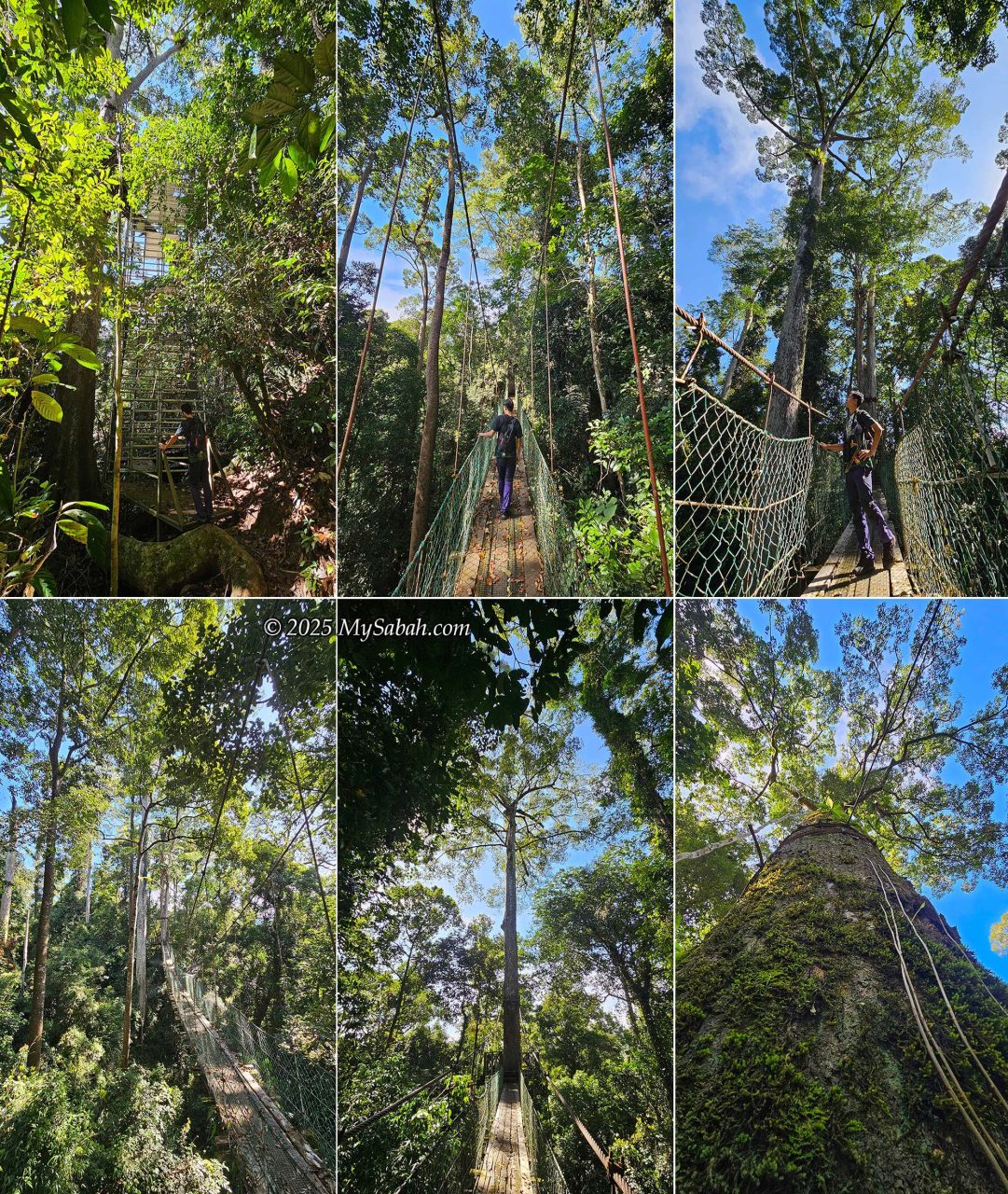
Many wildlife species live in the canopy and are best observed from the Sky Bridge canopy walk near Belian Camp. You need to cross a bridge that offers a view of the tea-colored Maliau River. Maliau is said to derive from a word meaning “milky,” “murky,” or “reddish,” perhaps referring to the color of the river water.
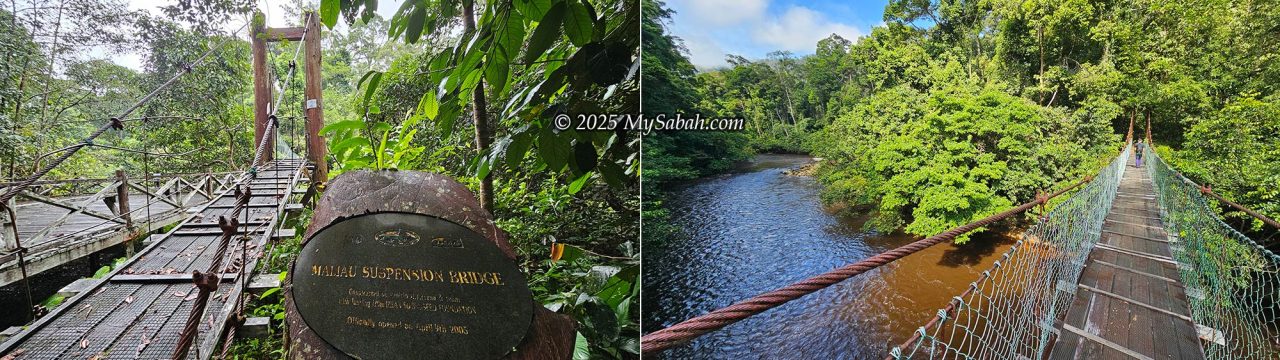
It is quite thrilling to walk across the bouncy suspension bridges that connect large trees such as Shorea leprosula. The Sky Bridge is approximately 20 to 30 metres above ground and over 300 metres long. For some, it is scary, but it is a must-try experience. The most frequently seen birds are the Asian Fairy-bluebird, the Asian Paradise Flycatcher, and the Rhinoceros Hornbill.
Maliau Rim Observation Tower
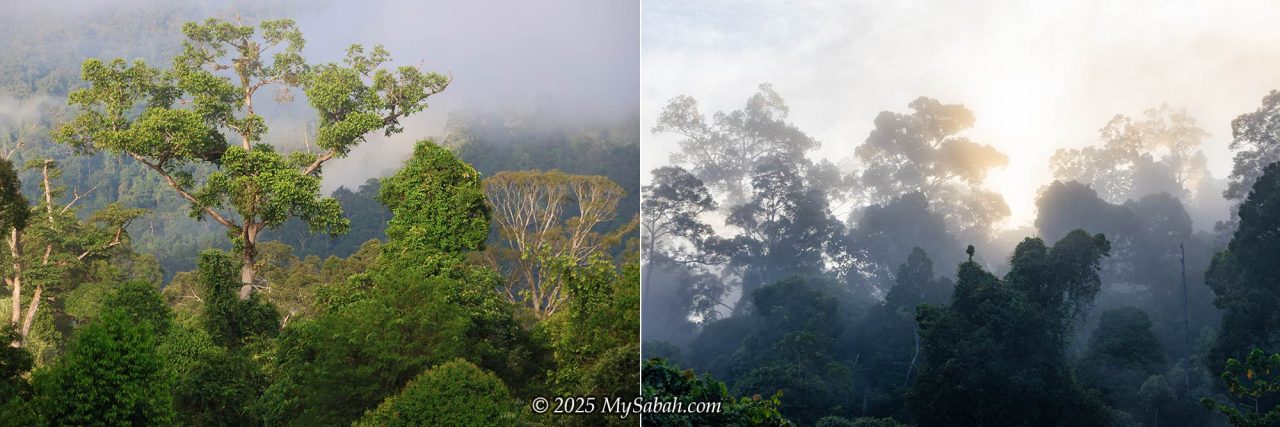
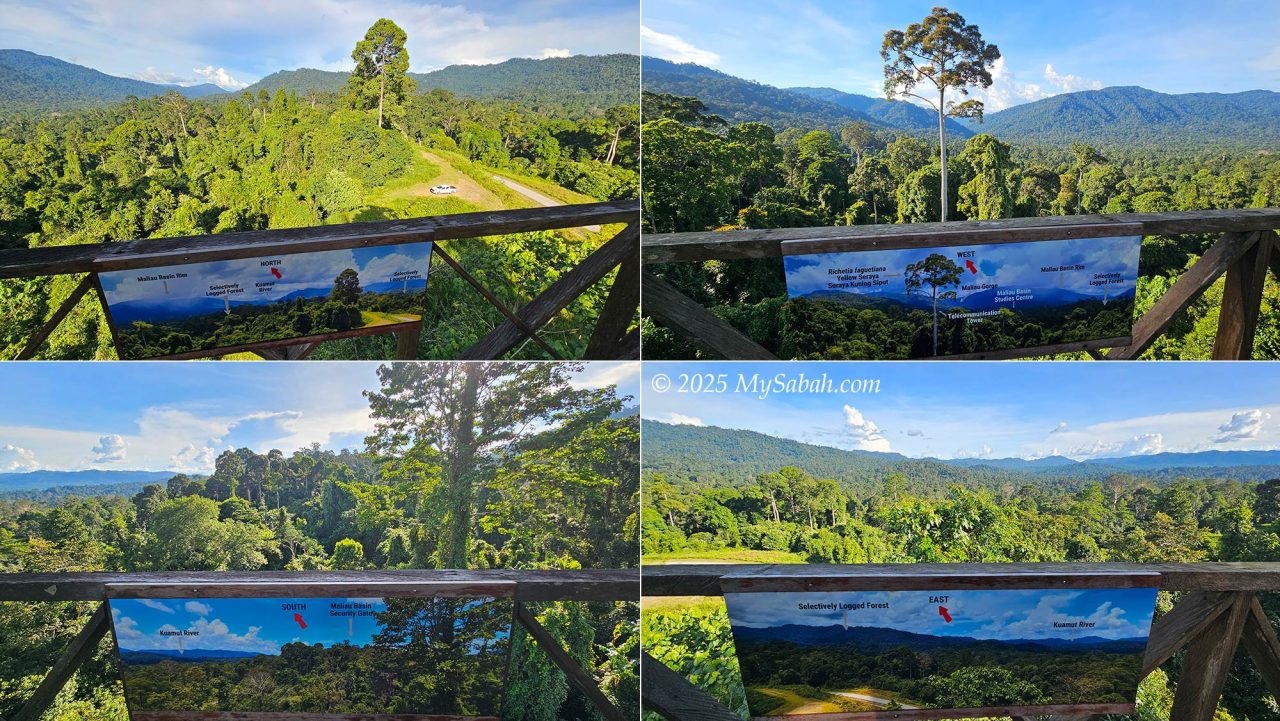
The Maliau Rim Observation Tower is less than 3 km from MBSC. It is a wooden platform several floors high. From the top, you have a panoramic view of the surrounding rainforest and the rim of the Maliau Basin. The most prominent tree is the Yellow Seraya (Richetia faguetiana), which is the tallest tropical tree species in the world.
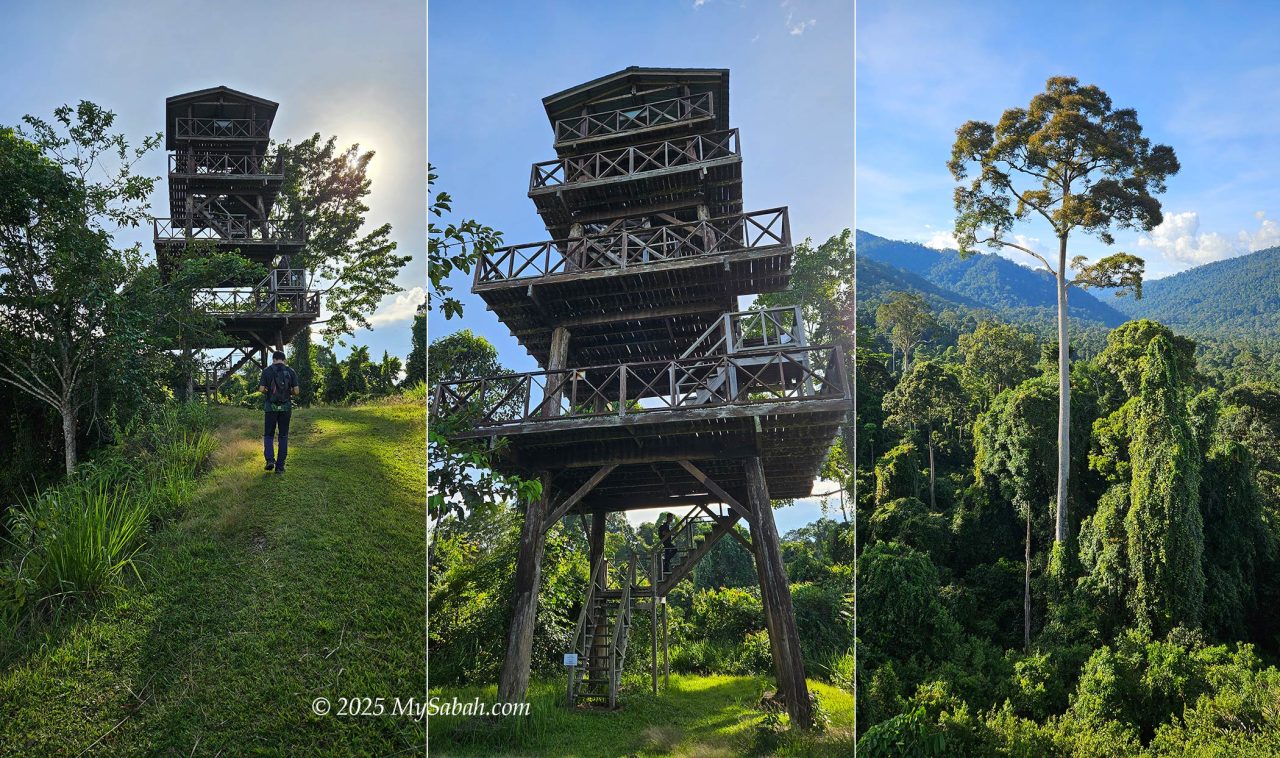
It is a place to do nothing and simply enjoy the views to cleanse your mind. I highly recommend visiting during sunset and sunrise. When the sunbeams pierce through the fog and trees, the view is spectacular. You can feel the forest gradually awakening or falling asleep under the orchestra of primates, birds, and cicadas.
Maliau Nature Gallery
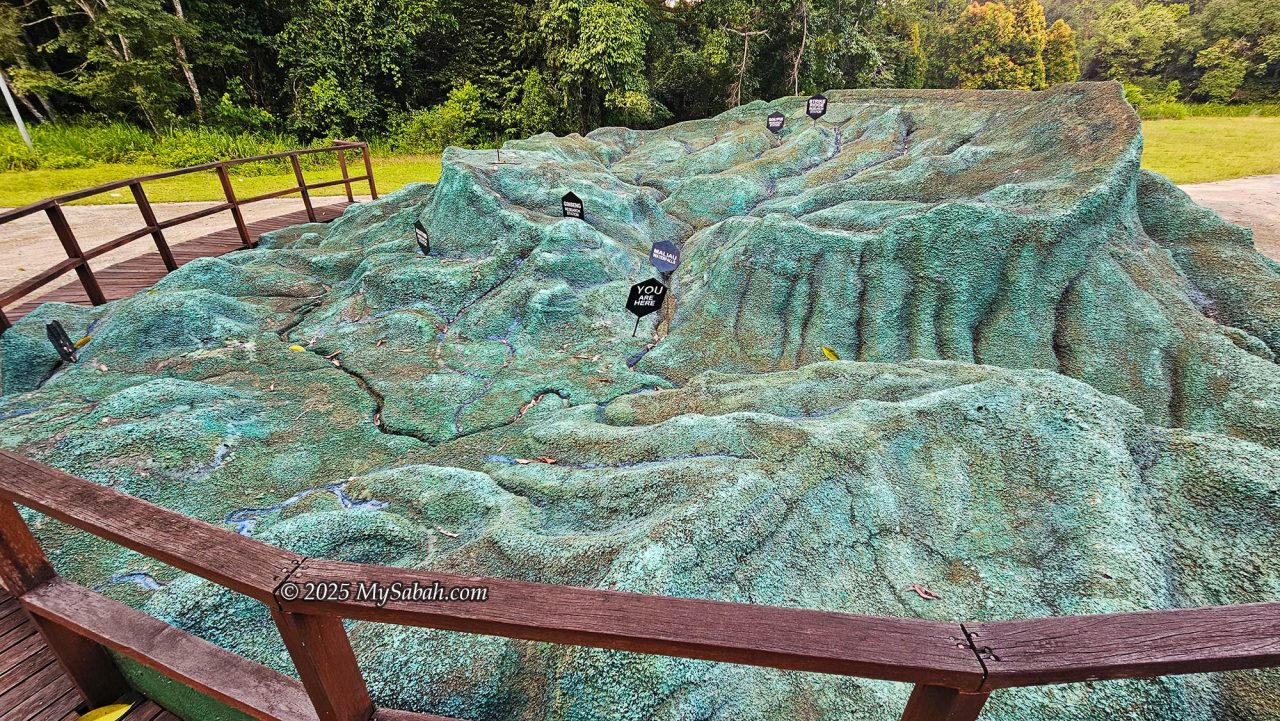
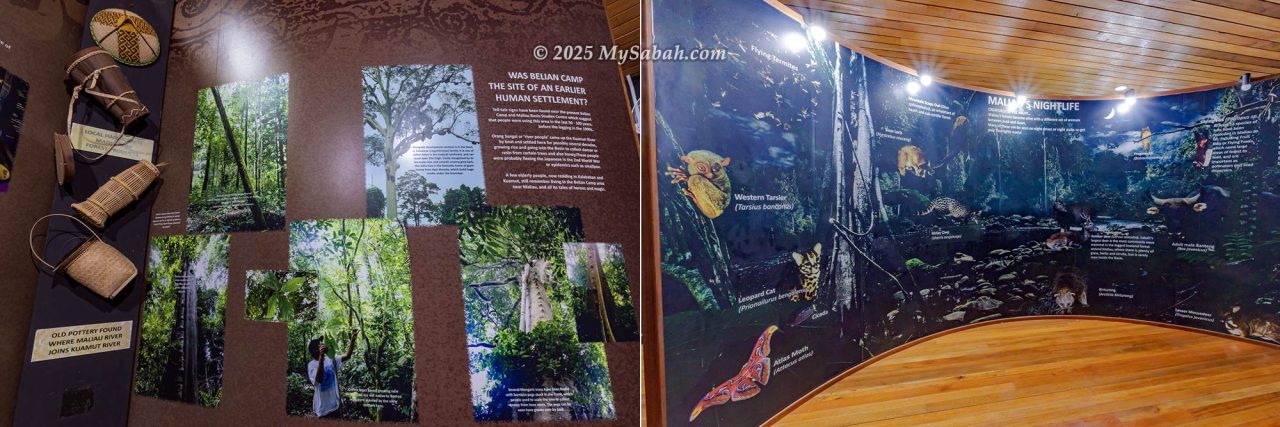
In the centre of MBSC is a Nature Gallery about the Maliau Basin. Hundreds of colorful photographs and information panels are exhibited. They do a good job of presenting the flora, fauna, stories, conservation, and geology of the basin in an easy-to-read format.
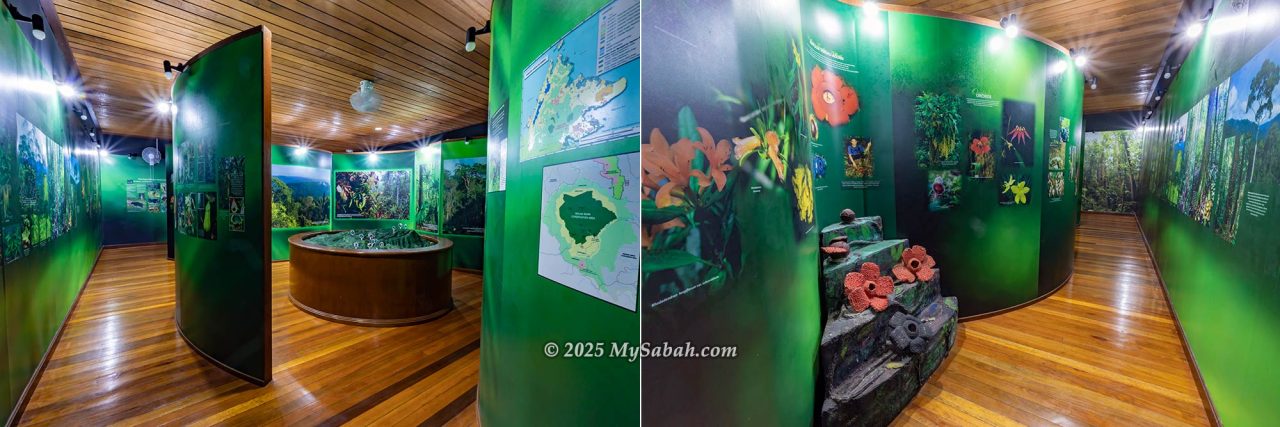
If you are interested in the Maliau Basin, spending an hour or two there will cover almost everything you need to know. I usually save this visit for rainy periods when outdoor activities are cancelled.
Accommodation at MBSC
There are four types of accommodation at MBSC: Chalet, Rest House, Hostel (dormitory), and Camping. You can check the official website (maliaubasin.my) for more details. Please note that there are separate rates for Malaysians and international visitors.
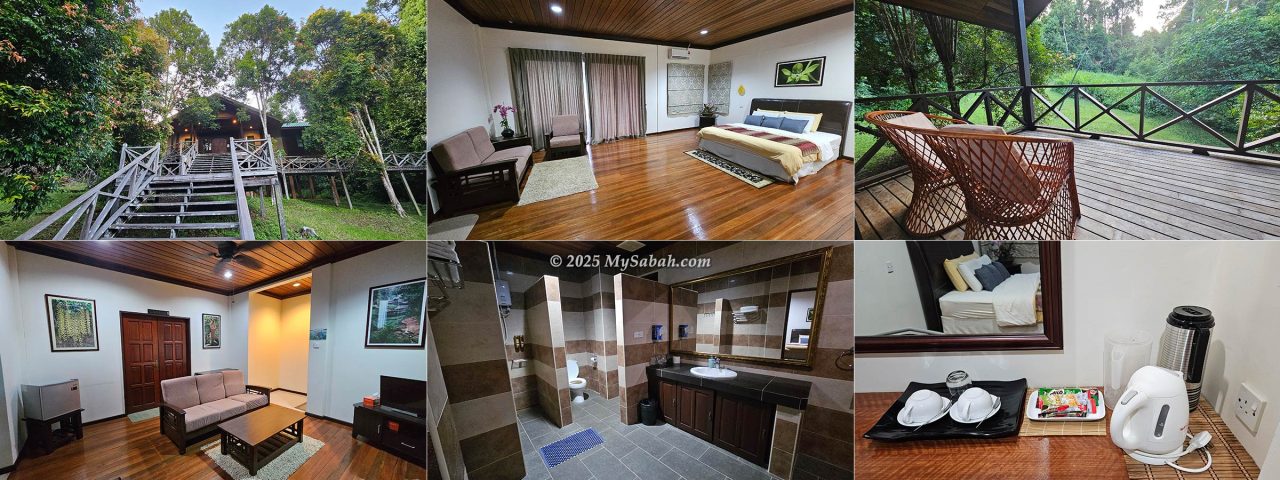
I stayed in their hostel before, and it was clean and comfortable. During my last trip, I stayed in a VVIP Chalet, which had everything I needed:
- Spacious master bedroom
- Air-conditioning (7:00 AM to 11:00 PM)
- Rechargeable standing fan
- Mini fridge
- Attached bathroom and toilet
- Towels, soap, and shampoo gel
- Hot shower and a bathtub
- Balcony with a forest view
- Electric Kettle and thermal flask

I strongly recommend following their social media accounts, as they occasionally offer promotions with deep discounts. The longer you stay, the luckier you will be with wildlife sightings. Spending three or more nights will definitely pay off.
Facebook: Maliau Basin
Instagram: maliaubasin_official
TikTok: @maliaubasin_official
Phone (WhatsApp): +60 17-348 8435
Facilities
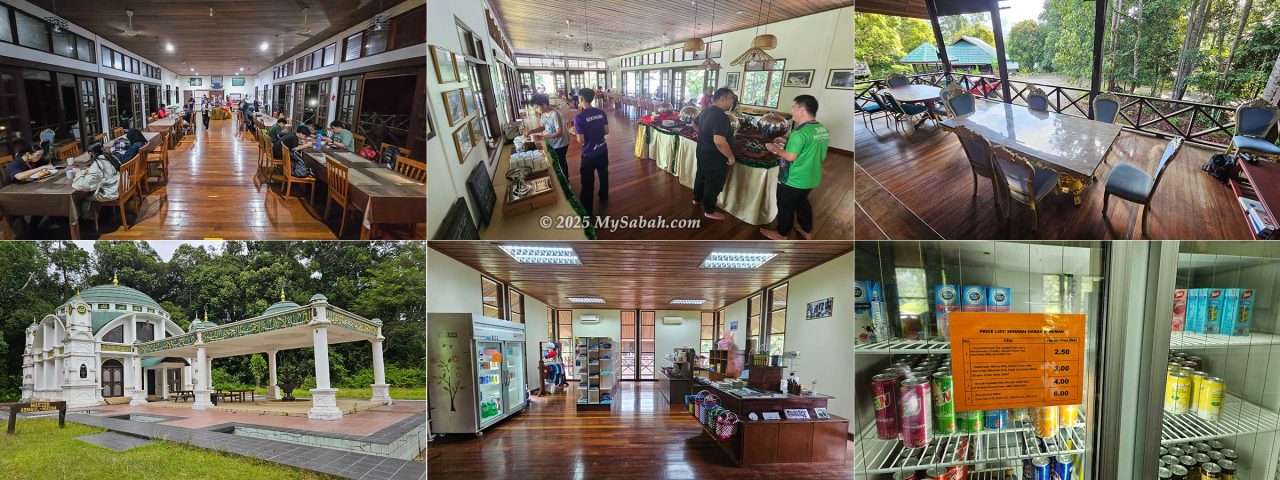
- Most buildings are modern structures built from wood, brick, and mortar. Boardwalks or paved roads connect key buildings.
- Electricity is available via a power generator from 7:00 AM to 11:00 PM daily.
- Internet access via Maxis and Celcom is available, but it is slow and unstable.
- Wifi is available at the Dining Hall.
- The food is good and balanced. I suggest adding the “meals included” option to your booking.
- The food is Halal and served buffet-style, featuring both Western and Malaysian dishes.
- There is a mosque in the compound for prayers.
- There is a Gift Shop in the office building that sells souvenirs, drinks, and snacks.
Things to Bring
- Change of clothing
- Hiking shoes and sandals/slippers
- Raincoat / Umbrella
- Binoculars
- Camera
- Phone and charging cables
- Power bank
- Toiletries
- Personal medicines

For hiking and night walks:
- Backpack
- Drinking water
- Insect repellent
- Anti-leech socks
- Flashlight
How to Get There
Most travelers take the route from Kota Kinabalu City to MBSC via the Kimanis and Keningau-Tawau roads. The 308-kilometre ride takes about 6 hours. Most roads are paved with asphalt. A 4WD is recommended, although a sedan can manage it if the driver is careful. If a 4WD has a full tank in Keningau, it can usually last the round trip to MBSC.

The most challenging sections are the steep uphill and downhill sections of the Kimanis-Keningau road, which can overheat the brakes of less-experienced drivers. After Keningau, the entrance to the Studies Centre is about 3 hours away. After Nabawan town, be extra careful because the road is rough with many bumps and potholes. It is better not to drive there at night.
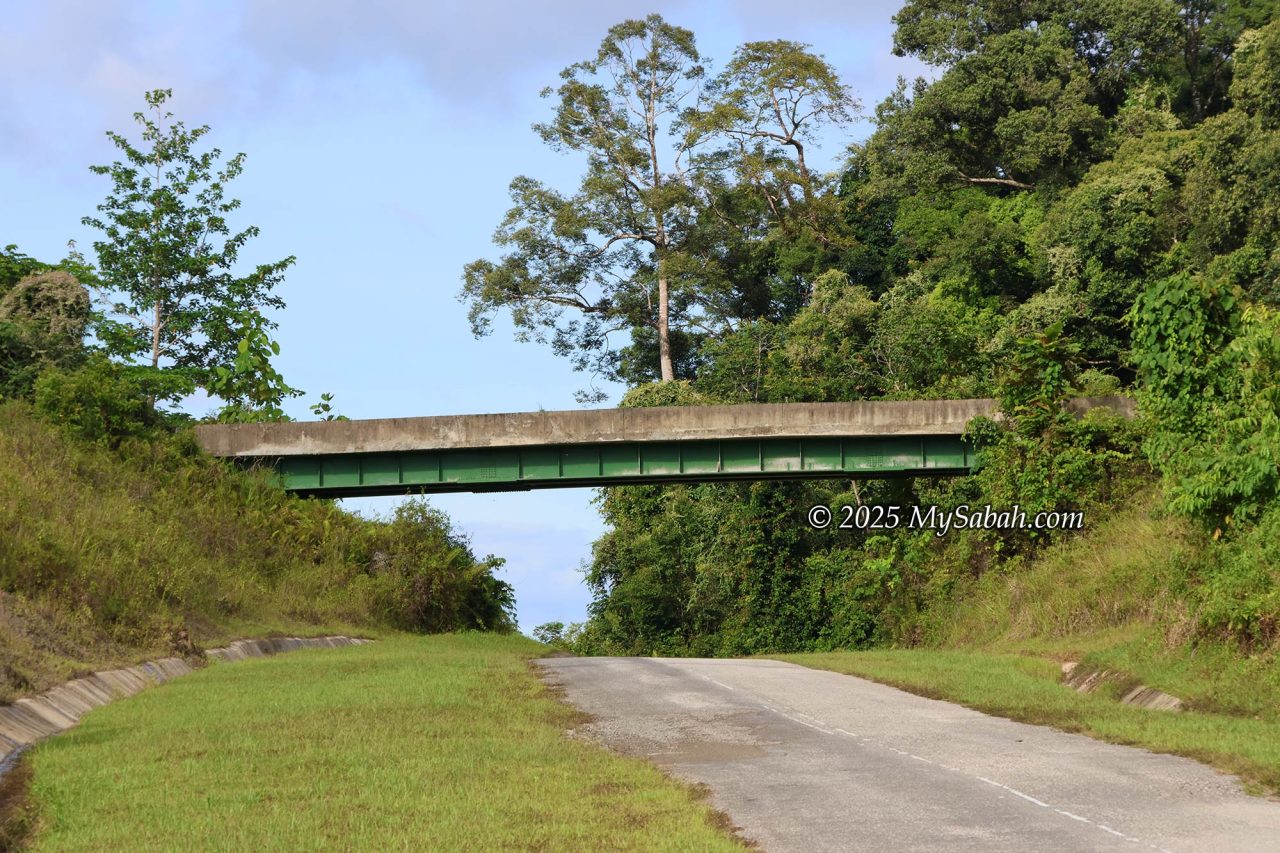
After the Maliau Gate, 27 km remain to reach MBSC. This stretch consists mainly of asphalt and gravel roads. Just drive slowly to enjoy the forest view. The distance is far, but it brings you to the best spot to see wildlife. Consider hiring a 4WD and a driver for a stress-free journey.
Photos taken in Sabah, Malaysia Borneo