
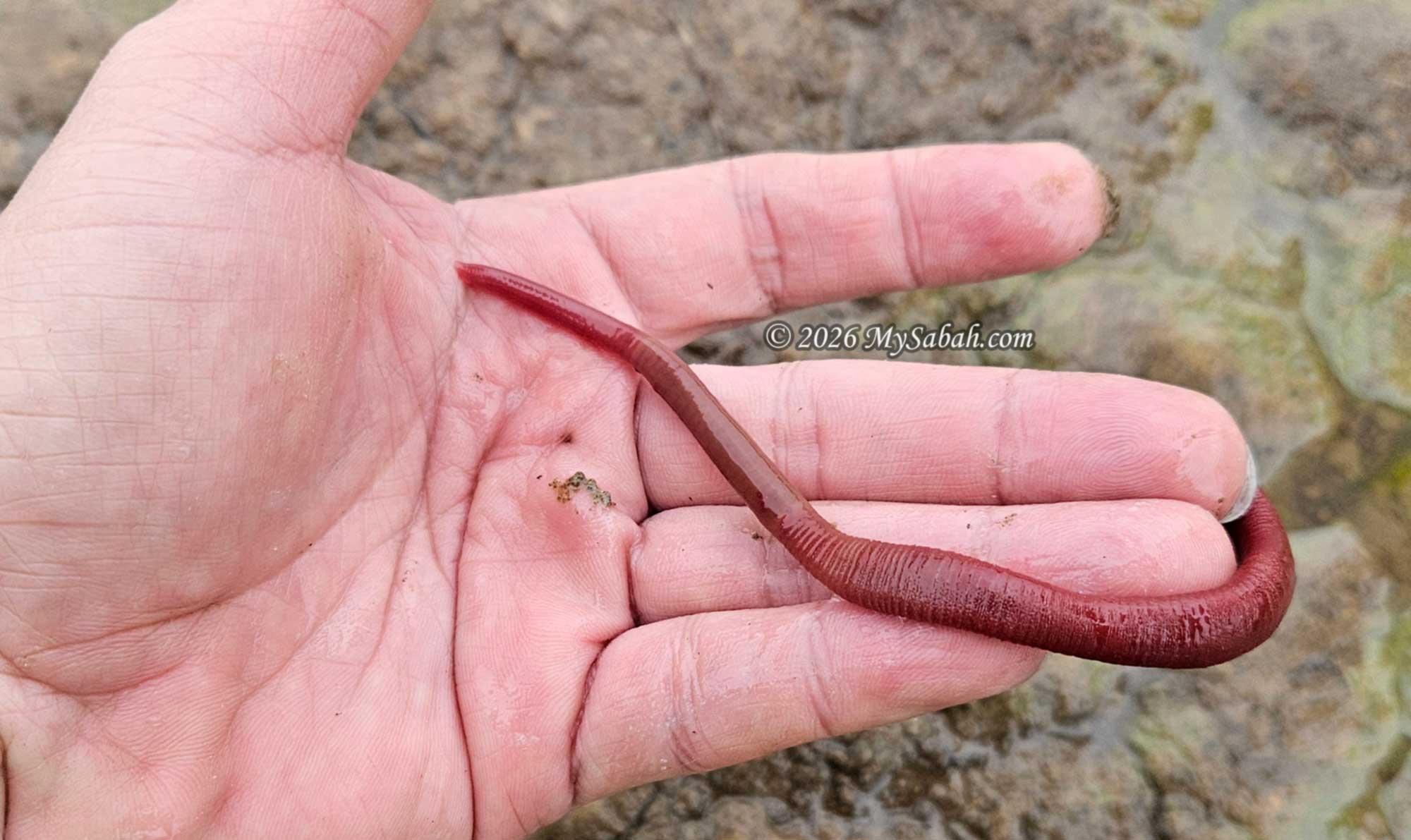
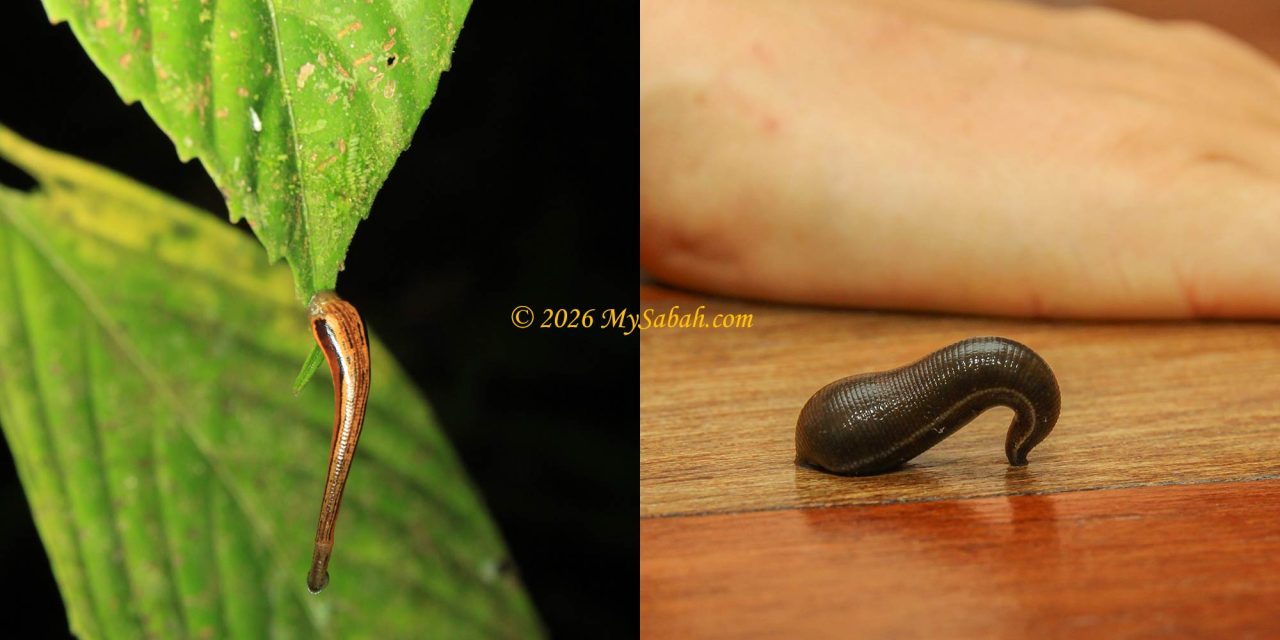
There are many scary stories about leeches. When people tell these stories, they often “add salt and sugar,” so I do not really believe most of them. One of the biggest exaggerations I have heard was about someone camping in the jungle. When he woke up, he saw a cucumber-sized object hanging from his arm. When he looked closer, it was a leech filled with his blood. At the time, I thought no leech could grow to such size. In reality, tiger leeches and brown leeches found in Borneo are typically only one to two inches long.

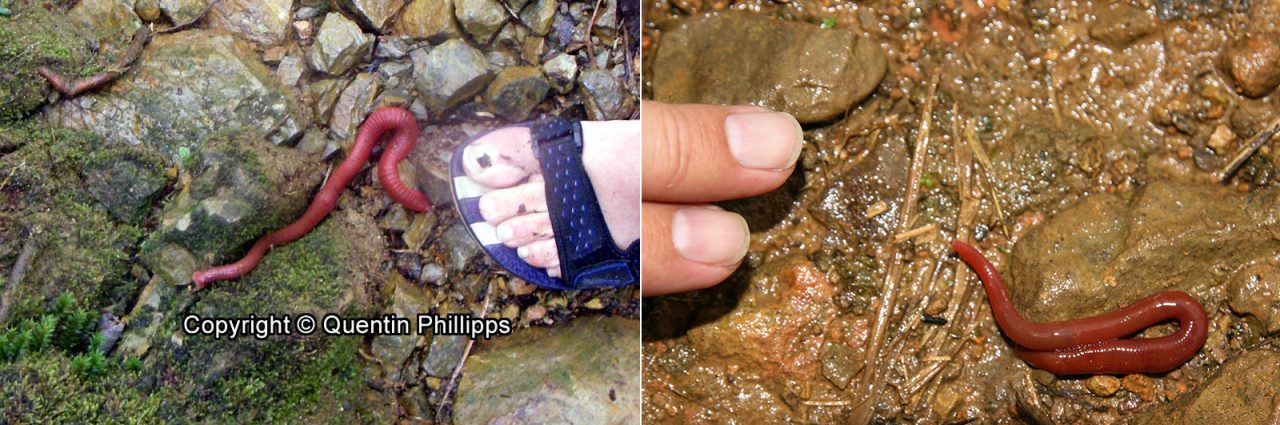
In 2007, I attended a talk by Mr. Quentin Phillipps, a bird photographer who lives in London (and the author of the book “Birds of Borneo”). The giant leech photos he presented were so shocking that I asked for his permission to share them. These photos were taken after Quentin finished climbing Mount Kinabalu in Sabah, Malaysia, on his way back down. It was raining heavily, and several giant earthworms had crawled out of the soil. Quentin came across one particularly large individual, nearly one meter long.

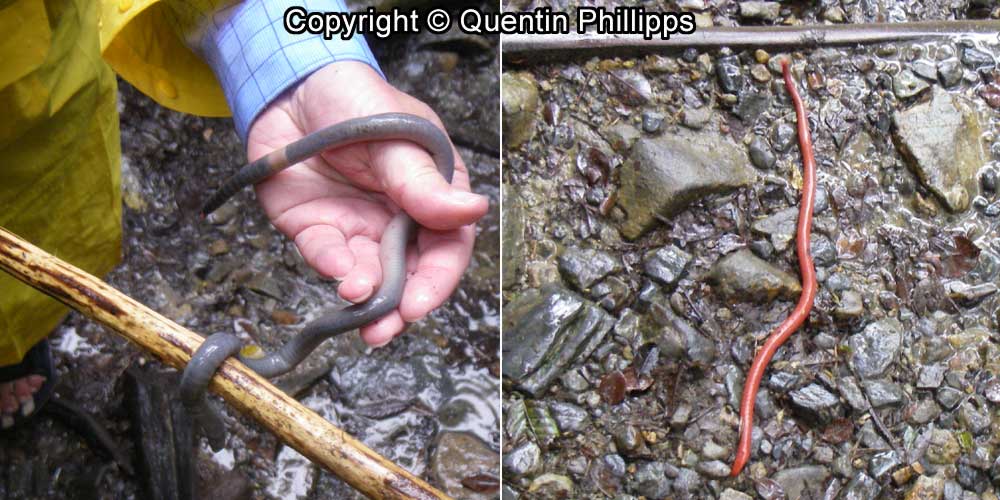
While he was busy examining the giant earthworm, he noticed a giant leech about 30 cm (around one foot) long approaching. Surprisingly, it was not heading toward Quentin at all. Instead, it chased the earthworm all the way back to its burrow.
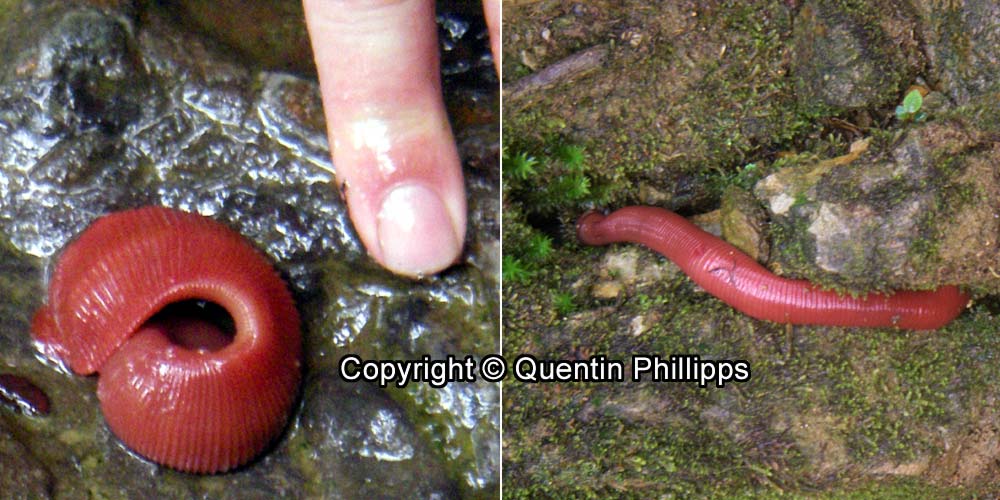
I know that some leeches attack fish and frogs, but they usually show a strong preference for warm-blooded animals such as buffalo. This is why the behavior of this giant leech puzzles me. Look at the photo below to see the length of the leech relative to an adult’s foot. There is no doubt that it is at least one foot long when its body is fully extended.

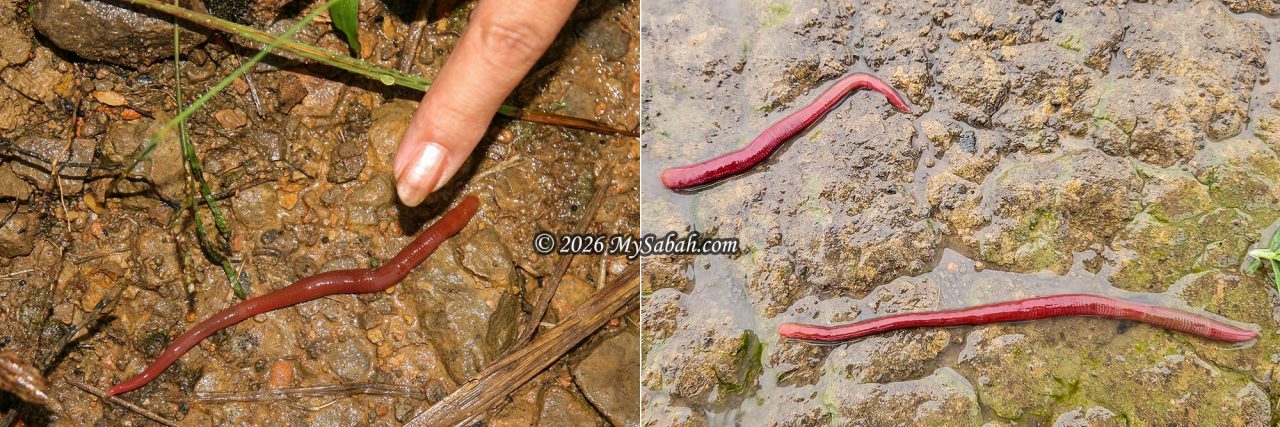
Personally, I saw the Kinabalu Giant Red Leech twice in Kota Belud at two different hilly locations after heavy rain. These giant leeches prey on earthworms, which also come out on rainy days, so you have a better chance of spotting them in the open. However, most people mistake them for earthworms and walk right past them.
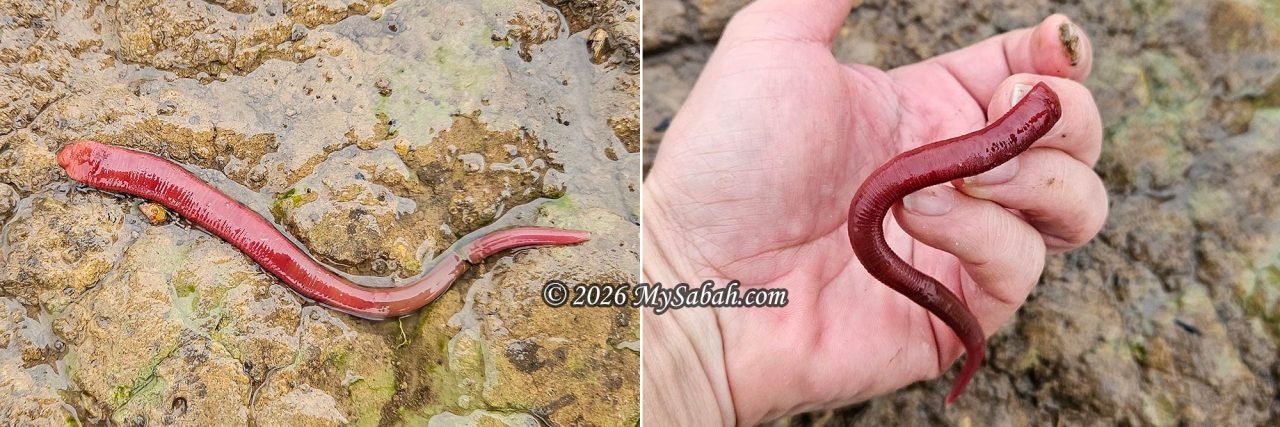
For fun, I asked my friends what these were. Without hesitation, they would reply, ‘It’s an earthworm,’ and look at me as if I had asked a stupid question. Then I would pick up the giant leeches and place them on my palm. They would freak out when they saw the worm move like tiger leeches, the infamous bloodsuckers.

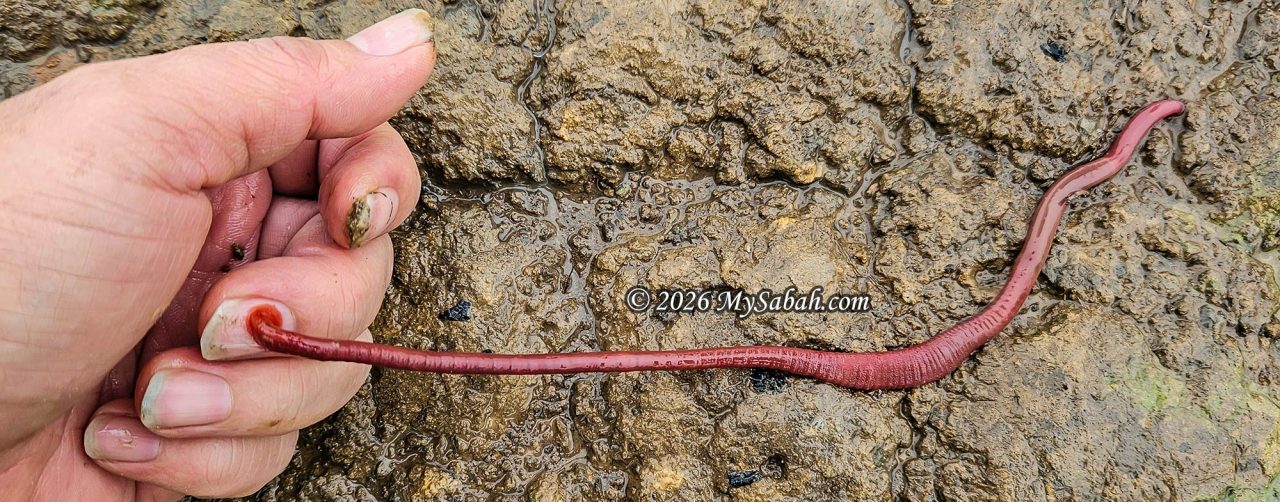
Unlike other leeches, the Kinabalu Giant Red Leech does not suck blood. It has a suction cup at its tail, but it lacks the front sucker that modern leeches use to pierce skin and feed on blood. Instead, it preys on earthworms by swallowing them whole, much like slurping a noodle. A 430-million-year-old fossil reveals that ancient leeches began as marine hunters rather than bloodsuckers. They swallowed their prey whole, or possibly drank the internal fluids of small, soft-bodied animals, similar to what the Kinabalu Giant Red Leech does today. Giant horse leeches in England also feed on toadlets.

In 2014, the BBC filmed the Kinabalu Giant Leech for the first time. You can watch the footage showing the leech swallowing a large earthworm, almost like spaghetti. Some viewers may find the scene unsettling, so discretion is advised. The scientific name of the Kinabalu Giant Red Leech is Mimobdella buettikoferi, and it is endemic to Mount Kinabalu. I also recorded a video of a giant leech I found in Kota Belud, which you can see below.

However, I noticed that the Kinabalu Giant Red Leeches in Kota Belud are only half or even one-third the size of those found on Mount Kinabalu. Although they look very similar, they live at different elevations, so they might actually be a different, undescribed species. I will leave that for scientists to figure out.
Photos taken in Sabah, Malaysia Borneo
Update (Mar 8, 07): This is not a True Cattle Leech. Its real name is Kinabalu Giant Red Leech. It is not a blood sucker coz it only feeds on giant earthworm.
I very much love summer 🙂
Someone very much loves winter 🙁
I Wish to know whom more 🙂
For what you love winter?
For what you love summer? Let’s argue 🙂